 ThreeMatchBan
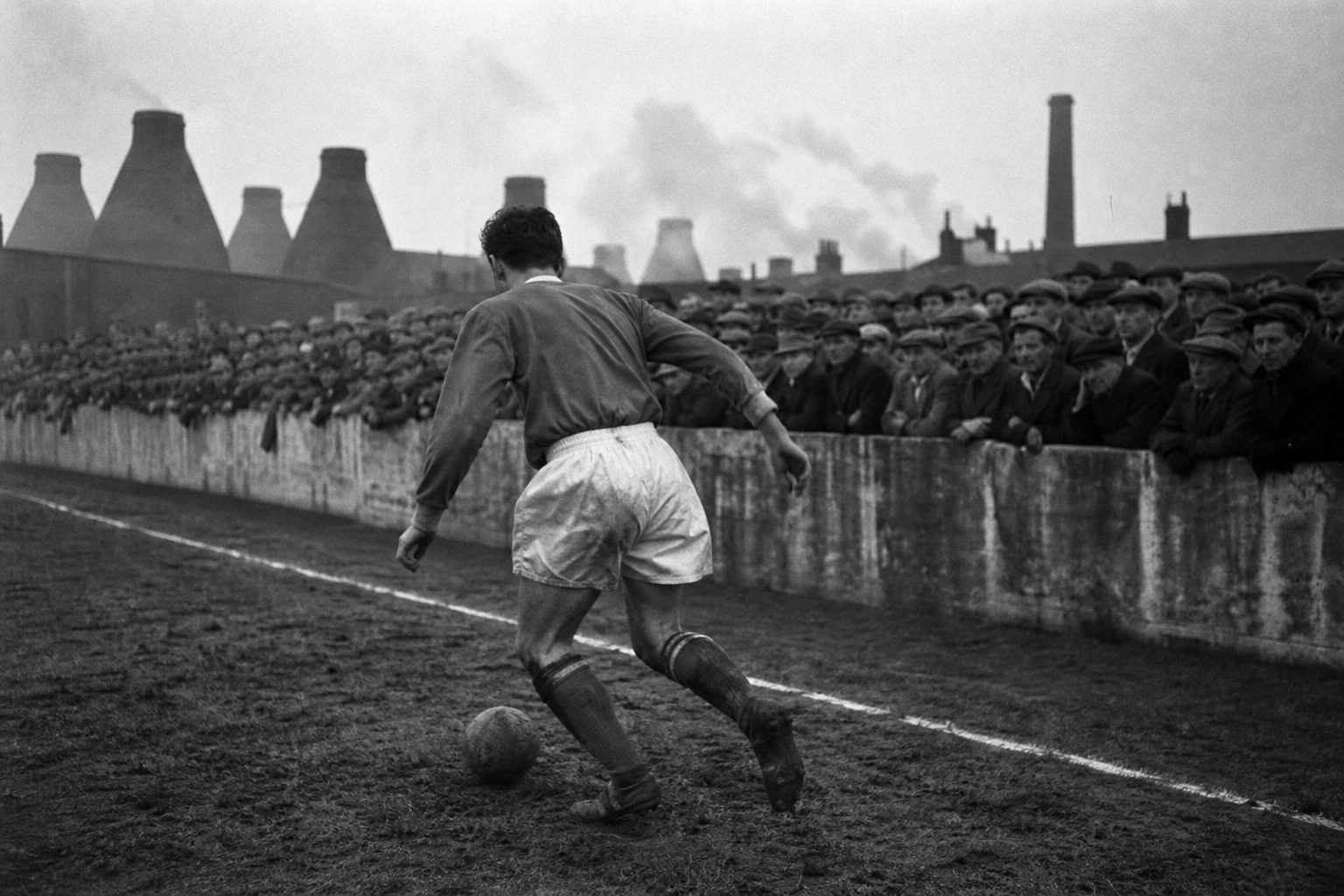
Stoke City is one of English football's oldest clubs. It traces its origins to 1863 and was one of the twelve founder members of the Football League in 1888, and for most of its life it has played in the Potteries, the cluster of six towns in Staffordshire whose bottle kilns made it the heart of the British pottery industry. The Victoria Ground was home for more than a century until the club moved to a new stadium on a windswept hill at the edge of the city in 1997.
The red and white stripes have rarely been near the top of the table. They have often been unforgettable.
Sir Stanley Matthews, the wizard of the dribble
Stanley Matthews was born in Hanley, one of the six towns, and made his Stoke debut as a teenager in the early 1930s. He became the most famous footballer in the country, a winger whose dribbling could leave full-backs on the floor, and after moving to Blackpool he won the 1953 FA Cup final that still carries his name. In 1956 he was named the first European Footballer of the Year.
The remarkable part came later. Matthews returned to Stoke in 1961, aged 46, helped them win promotion back to the First Division in 1963 and kept playing in the top flight until he was 50. He was knighted while still a registered player, the first footballer to be honoured that way.
Banks, Eastham and the League Cup of 1972
Stoke's only major trophy came in March 1972. Tony Waddington's side, built around experienced players other clubs thought were past their best, beat Chelsea 2–1 in the League Cup final at Wembley, with George Eastham, then 35, scoring the winner. Gordon Banks, England's 1966 World Cup winner, was in goal. Months later a car crash cost Banks the sight of one eye and ended his career at the top level, a loss Stoke never quite recovered from in that era.
Waddington, manager from 1960 to 1977, was the man who had persuaded Matthews to come home, and he had a gift for getting one more good season out of players everyone else had written off. Banks was a Stoke player when he made his most famous save, clawing away Pelé's downward header in Guadalajara at the 1970 World Cup, a moment still shown whenever goalkeeping is discussed.

Pulis, the long throw and the Premier League decade
Stoke returned to the top flight in 2008 under Tony Pulis and stayed for ten seasons. Few teams have been described with such a mix of admiration and irritation. Rory Delap's long throws, launched from the touchline after a quick wipe of the ball with a towel, turned every throw-in near the box into a set piece, and big clubs dreaded a cold night at the Britannia. In 2011 Stoke reached their first FA Cup final, losing 1–0 to Manchester City, and the following season they played in the Europa League.
Mark Hughes replaced Pulis in 2013 and tried to change the club's image, bringing in technical players such as Xherdan Shaqiri, Bojan Krkić and Marko Arnautović. Stoke finished ninth three seasons in a row. Then it unravelled: Hughes was sacked in January 2018 and the club went down that May, ending a decade among the elite.
More on Stoke City
Hughes' record as a manager comes under scrutiny in a short treatise on Mark Hughes alongside questions over Roberto Martínez, written just as Hughes was settling in at Stoke. The debate over whether relegated clubs deserve parachute money, with Stoke among the clubs it touches on, is laid out in the case against rewarding clubs for relegation. Matthews himself makes a memorable appearance as a product endorser in the look back at footballers and advertising. A lighter take on the Welshman's working week can be found in a day in the life of Mark Hughes. And the club's crest and its redesigns are covered in the history of the Stoke badge.