 ThreeMatchBan
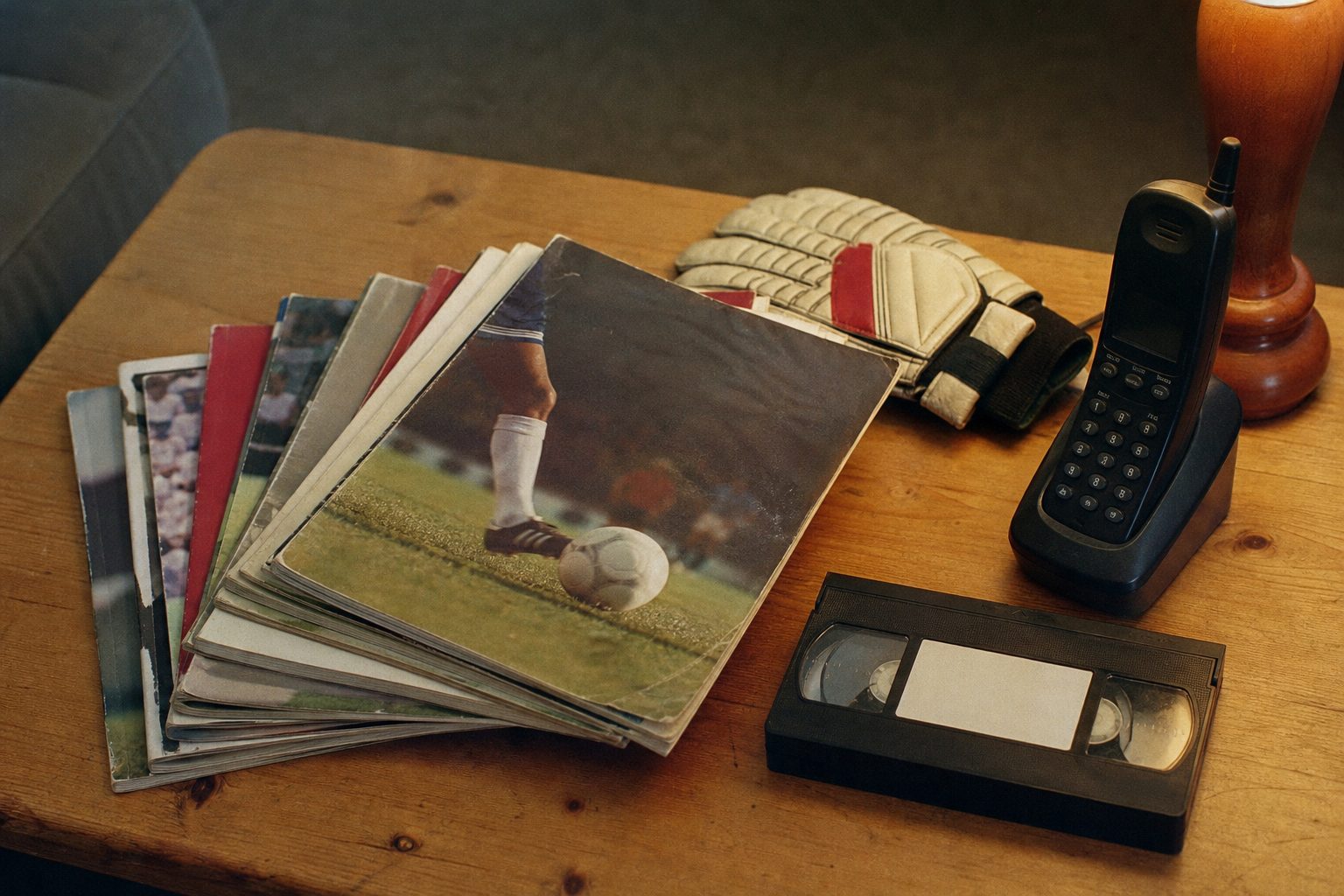
Advertisers will use anything to sell a product: glamour, shock, a large man painted orange slapping strangers in a fizzy-drink commercial or, perhaps the most dependable of all, a footballer.
Modern top-flight players top up enormous salaries with boot deals and endorsements, and the biggest contracts go to a handful of global stars. It was not always so. For most of the twentieth century footballers were paid modestly, and an invitation to smile into a camera for a few quid was usually accepted gratefully, as a nest egg for retirement.
Matthews, Keegan and the early pioneers
Stanley Matthews, the most famous English footballer of his era, was promoting cigarettes in 1952, a sign of how differently sport and health were viewed. The idea of a player’s face lending trust to a product was already well established.
Few players took to it like Kevin Keegan. Through the late 1970s and early 1980s, when he was European Footballer of the Year and then the star of Southampton and Newcastle, his face seemed to appear beside every other product in the pages of Shoot! and Match. He also did television, most famously splashing on aftershave alongside the boxer Henry Cooper in a Brut commercial that is still remembered decades later.
An advert in Shoot! in 1980 for Trevor Francis’ Electronic Striker, a tabletop game with a wonderfully minimal look, showed that a famous name could lift a modest product. It also showed that stylists had not yet been invented.
The 1990s: shirts, gloves and a sofa
That was still true in a 1994 edition of Match, in which Lee Sharpe, then one of Manchester United’s brightest young players, advertised the club’s shirt hotline while almost disappearing into a patterned sofa in a chunky knit jumper. It may not have been the photograph he would have chosen for posterity.
By 1992 the approach was becoming more sophisticated. Rather than simply placing a star’s face beside the product, advertisers began building an image for both. For Sondico gloves, England goalkeeper Chris Woods was the safe pair of hands, though highlights of his less assured moments would later turn up on the blooper videos of the era. Two years later, a 1994 issue of Match featured a young Ryan Giggs in a brooding, slightly menacing pose, a hint of the marketing machine that would grow around him through the rest of his United career.
Some choices were bolder. A 1997 edition of Shoot! carried a Diadora advert starring David May, a dependable Manchester United defender who had scored in the Champions League and helped the club to league titles, but who was not the obvious face of a boot campaign. It is hard to recall a playground full of children wanting to be David May. Diadora, to their credit, believed they could change that.
Coaching tapes and soccer schools
Not every player got to pose with a new favourite product, so many turned to what they knew best once they retired: teaching the game. Alan Ball and others ran soccer schools for youngsters. Bobby Charlton went further and put his expertise on videotape, priced at a hefty £39.95. Buyers did at least get a free ball and holdall thrown in, so it was not quite daylight robbery.
The home video boom of the late 1980s and early 1990s produced plenty of these, alongside skills tapes and season reviews, a world explored in more detail in the video age of football.
The products that did not need a star
Some companies skipped the celebrity endorsement altogether and relied on the product to speak for itself. The back pages of old magazines were full of them: knitted football jumpers that no child ever wanted and odd training gadgets that promised to transform a young player’s technique. Their charm lies in their earnestness. Nobody was winking at the reader.
Abroad, the tradition took on a life of its own. Hugo Sánchez’s toothpaste commercial and René Higuita’s turn for a fruit drink show that the strange marriage of footballer and product was never an English speciality.
Today the money involved has grown beyond recognition. Boot deals run into tens of millions, social media posts are contracted and audited, and image rights are negotiated as carefully as transfer fees. Something has been lost along the way. A player now is a polished brand from the age of sixteen, while Lee Sharpe on that sofa looked exactly like a young man who had been asked to sit there for twenty minutes and would rather have been training.
Whether the knitwear makers are still trading is unclear. A stamped addressed envelope may be the only way to find out.