 ThreeMatchBan
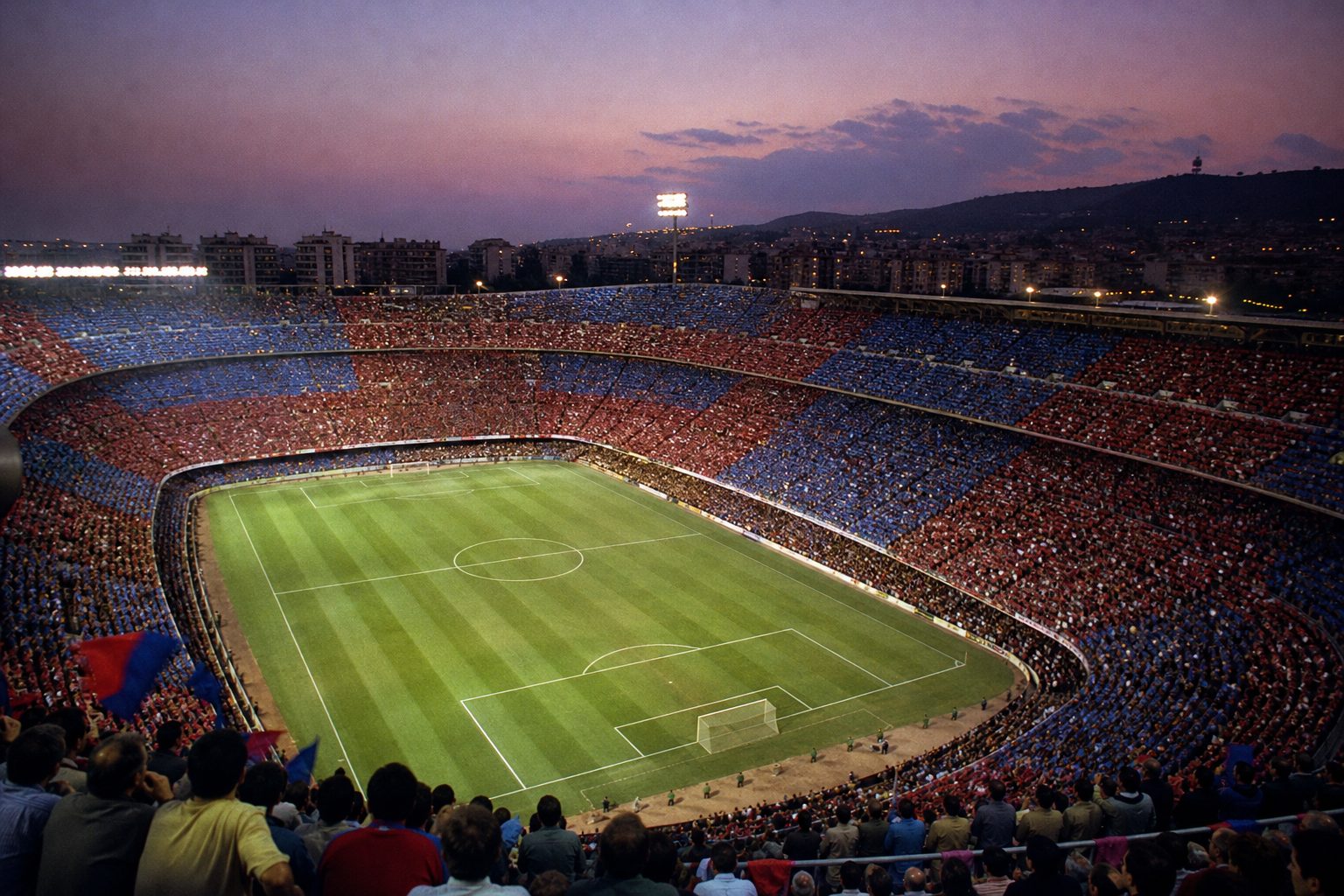
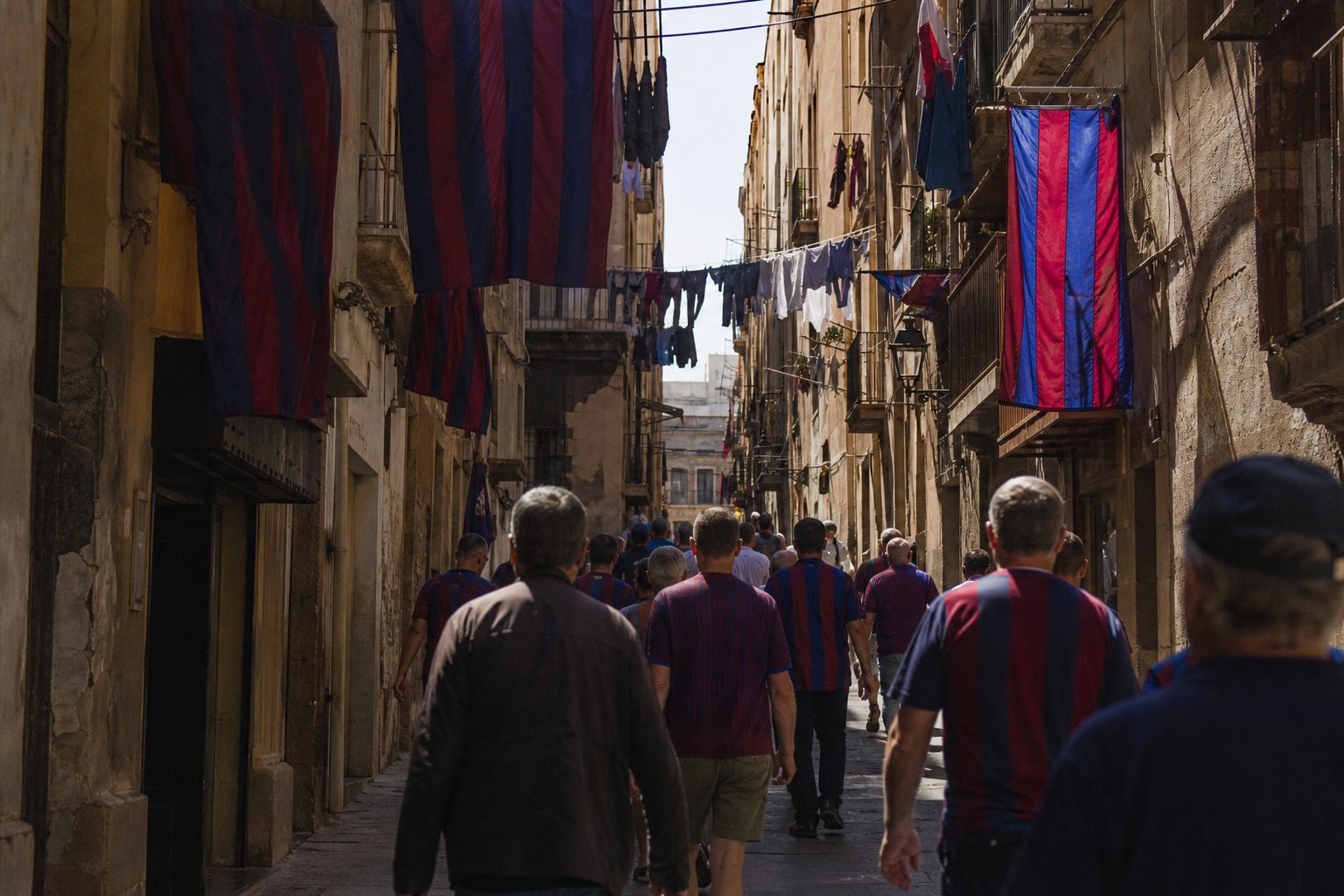
FC Barcelona began with a newspaper advertisement. In October 1899 Joan Gamper, a Swiss businessman who had settled in the city, placed a notice asking for players to form a football club, and a mix of Catalans, Swiss, English and German residents answered. Within a few decades the club had become far more than a sports team: during the long years of the Franco dictatorship it was one of the few places where Catalan identity could be expressed in public, which is where the famous motto "més que un club" (more than a club) draws its weight.
The Camp Nou opened in 1957 and grew into the largest stadium in Europe. A major rebuild began in 2023 and sent the club up the hill to the Olympic stadium on Montjuïc while the work went on.
Cruyff and the making of modern Barcelona
No single figure shaped the club like Johan Cruyff. He arrived as a player in 1973 and helped end a long wait for the league title in his first season. He came back as manager in 1988 and built what became known as the Dream Team: Ronald Koeman, Michael Laudrup, Hristo Stoichkov and a young Pep Guardiola at the base of midfield. Four successive league titles followed, along with the club's first European Cup, won at Wembley in 1992 when Koeman's free-kick beat Sampdoria 1–0 in extra time.
The ideas outlived the man. Guardiola took over in 2008 and his side, built around Xavi, Andrés Iniesta and Lionel Messi, won the Champions League in Rome in 2009 and again at Wembley in 2011, beating Manchester United both times. A fifth European crown followed in Berlin in 2015, Luis Enrique's team beating Juventus 3–1. For many neutrals the 2011 side remains the best club team they have ever seen.
The British connection
Barcelona has a long and slightly surprising British thread. Terry Venables became manager in 1984 and won La Liga in his first season, then took the club to the 1986 European Cup final in Seville, where they lost to Steaua Bucharest on penalties. His striker in that title-winning side was the Scot Steve Archibald, signed from Tottenham.
In 1986 Venables added two more British forwards: Gary Lineker from Everton and Mark Hughes from Manchester United. Lineker scored a hat-trick against Real Madrid in his first season and added the Copa del Rey in 1988 and the European Cup Winners' Cup a year later under Cruyff. Hughes struggled to settle and was loaned to Bayern Munich before heading back to Old Trafford. Bobby Robson managed the club in 1996–97, a single season that brought the Cup Winners' Cup, the Copa del Rey and the Ronaldo who scored 47 goals, with a young José Mourinho at his side as interpreter and assistant.
Rivals, cups and Champions League nights
The rivalry with Real Madrid, El Clásico, dominates Spanish football, but Barcelona's European nights against English sides have produced plenty of memories too. Arsenal lost the 2006 Champions League final to them in Paris, after Jens Lehmann's early red card. In February 2011 the roles reversed for one night, when Arsène Wenger's side came from behind to win 2–1 at the Emirates in the last 16, only to be knocked out in the return at the Camp Nou.
More on Barcelona
Lineker, Hughes, Archibald and Venables are exactly the kind of faces that turn up in the Brit abroad sticker quiz, 33 British players and managers who left home to work overseas. Edinson Cavani's chalked-off strike for Napoli at the Camp Nou in the 2011 Joan Gamper Trophy, the pre-season friendly named after the founder, features in the list of forgotten wonder goals that never counted. The Arsenal win over Barcelona and the tabloid puns that followed fill the week in headlines from February 2011. Laudrup, one of the few players to star for both Barcelona and Real Madrid, appears in pen and ink in the collection of world football characters drawn as cartoons. For the league around the club, the La Liga hub covers the wider Spanish game.