 ThreeMatchBan
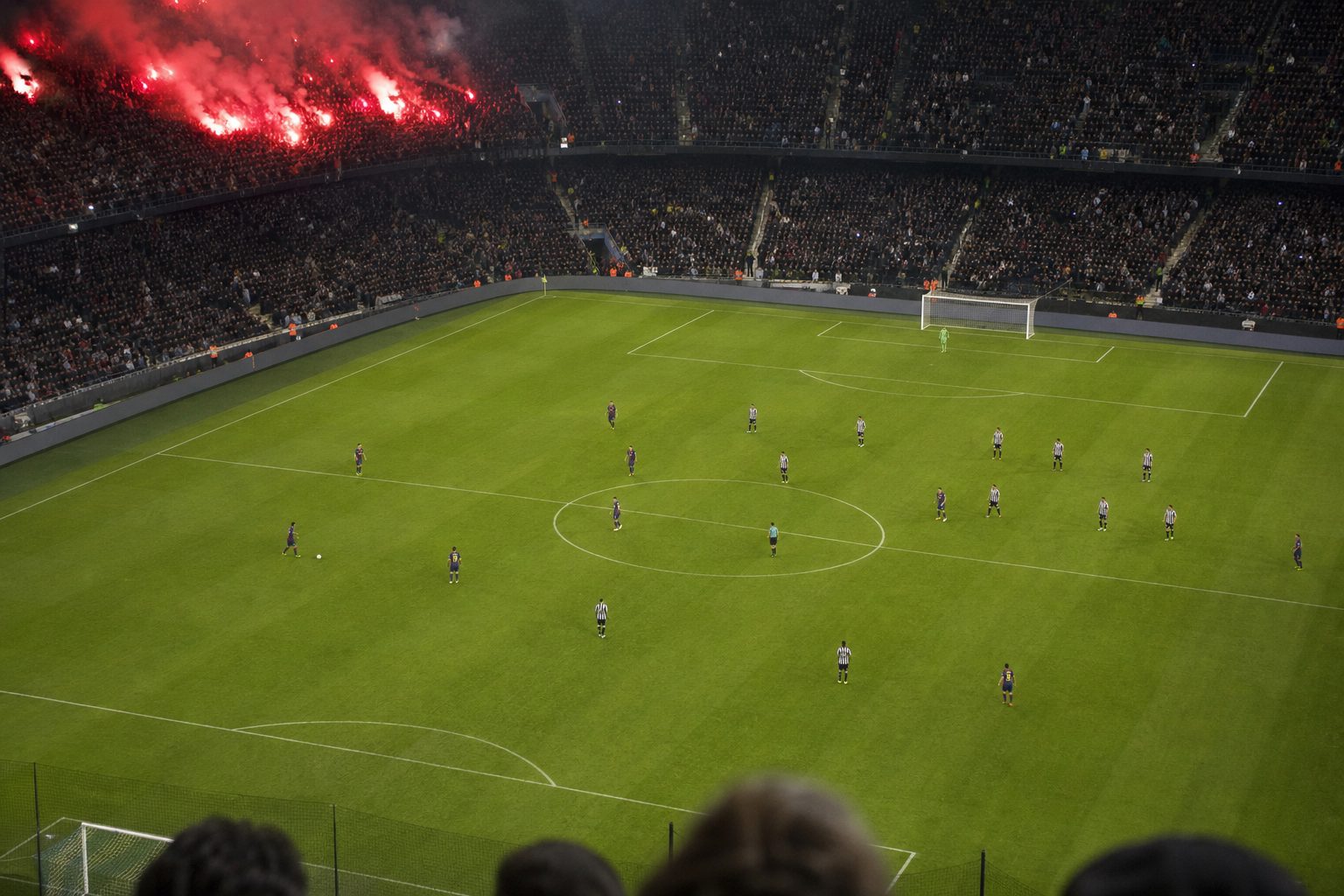
“Sat in your own half and then just counters.” That was the verdict of one football fan, posting under a Sky Sports report in February 2013, on Bayern Munich's 3–1 win over Arsenal at the Emirates. He went on to say Bayern were no better than Milan had been against Barcelona the following evening: another top side using the tactics of a lower league.
The English was rough but the point was a serious one. It is the oldest debate in the game, the tension between football scores and performance, between the result and the way it was achieved. Both of those Champions League first legs were won by the better side on the night, and at least one winner was met with real scorn.
San Siro, 20 February 2013
Milan beat Barcelona 2–0 in the first leg of their last-16 tie, with goals from Kevin-Prince Boateng and Sulley Muntari. The statistics looked like a mismatch in the other direction. Milan had around 27 per cent of the ball. They completed 294 passes to Barcelona's 805. For long spells the ball barely left their half.
Barcelona supporters were not shy about it afterwards. Could that really be called football? Three answers come to mind. Milan created the clear chances, all of them. Massimiliano Allegri's plan was a tactical masterclass. And there is no other way to play against that Barcelona side.
Every team that beat Xavi, Iniesta and Messi in the Champions League in those years did it by defending deep and narrow. The performances of Javier Zanetti, Walter Samuel and Lucio for Jose Mourinho's Inter in the 2010 semi-final were among the most remarkable of the era. The question is whether that sort of display deserves praise or contempt. Purists are unmoved. For them winning is not the point; winning in style is.
What counts as style?
What happens when winning in style is not on offer? Is the winning thrown away, or the style? And is style misunderstood? Keeping the ball for three quarters of a knockout tie is extremely hard. Stopping a team that does so from creating a single meaningful attack may be harder still.
The occasions when Barcelona lost to sides with less of the ball often had luck in them. When Celtic beat them 2–1 in the group stage in November 2012, Barcelona could have scored several. In the 2012 semi-final Chelsea survived a missed Lionel Messi penalty and the woodwork more than once. Against Milan there was no fluke. A midfield three squeezed whoever had the ball, and a flat, narrow, disciplined back four was designed to make Christian Abbiati almost a spectator and to give Messi and Iniesta as little room as possible, with or without the ball. It was executed to perfection, and because it lacked flicks and tricks it was easy to mistake for the easy way out.
A purist should be able to appreciate that. Football is more about what a team does without the ball than with it, as Barcelona themselves preached for years under Pep Guardiola. A strong defensive display may not be pretty, but it always shows discipline and concentration.
The case for entertainment
Still, nobody gives up hours each week to watch disciplined men run around a ball they never touch. Excitement made football what it is. It explains the astonishing sums swirling around the sport, and the owners willing to pay millions to put Zlatan Ibrahimovic in their side. People pay to see what Ibrahimovic, Messi or Cristiano Ronaldo can do with the ball, not what Massimo Ambrosini or Luiz Gustavo can do without it.
Seen that way, a team that sets out purely to stop the other side's skill is denying the entertainment. A Barcelona fan had every right to be frustrated. Milan fans, though, would have been just as frustrated to join the long list of sides torn apart by the Blaugrana. Neutrals found the defensive performance of the season refreshing. The same tactics against a Schalke or a Porto would have drawn far less sympathy. Fans who want to test their memory of those great European sides can try identifying Champions League teams from their classic shirts.
Results first
Back to the angry commenter. Lumping Bayern's dominant display in with Milan's was a stretch, and the idea that defending well is a lower-league habit does not stand up. Defending is as much part of the game as attacking, and success in football is measured in results, not in entertainment. For spectators a match is a show. For the players it is a very real competition, and they can be forgiven for caring about the score.
The ties had a twist each. Barcelona won the return at the Camp Nou 4–0 and went through. Arsenal won 2–0 in Munich and still went out on away goals, and Bayern, the side accused of lower-league counter-attacking, went on to win the final against Borussia Dortmund at Wembley. More on Messi's side, at its peak and after, is in the Barcelona section.
The argument about anti-football still runs every week on Twitter, where the label is thrown at any side that defends deep and wins.