 ThreeMatchBan
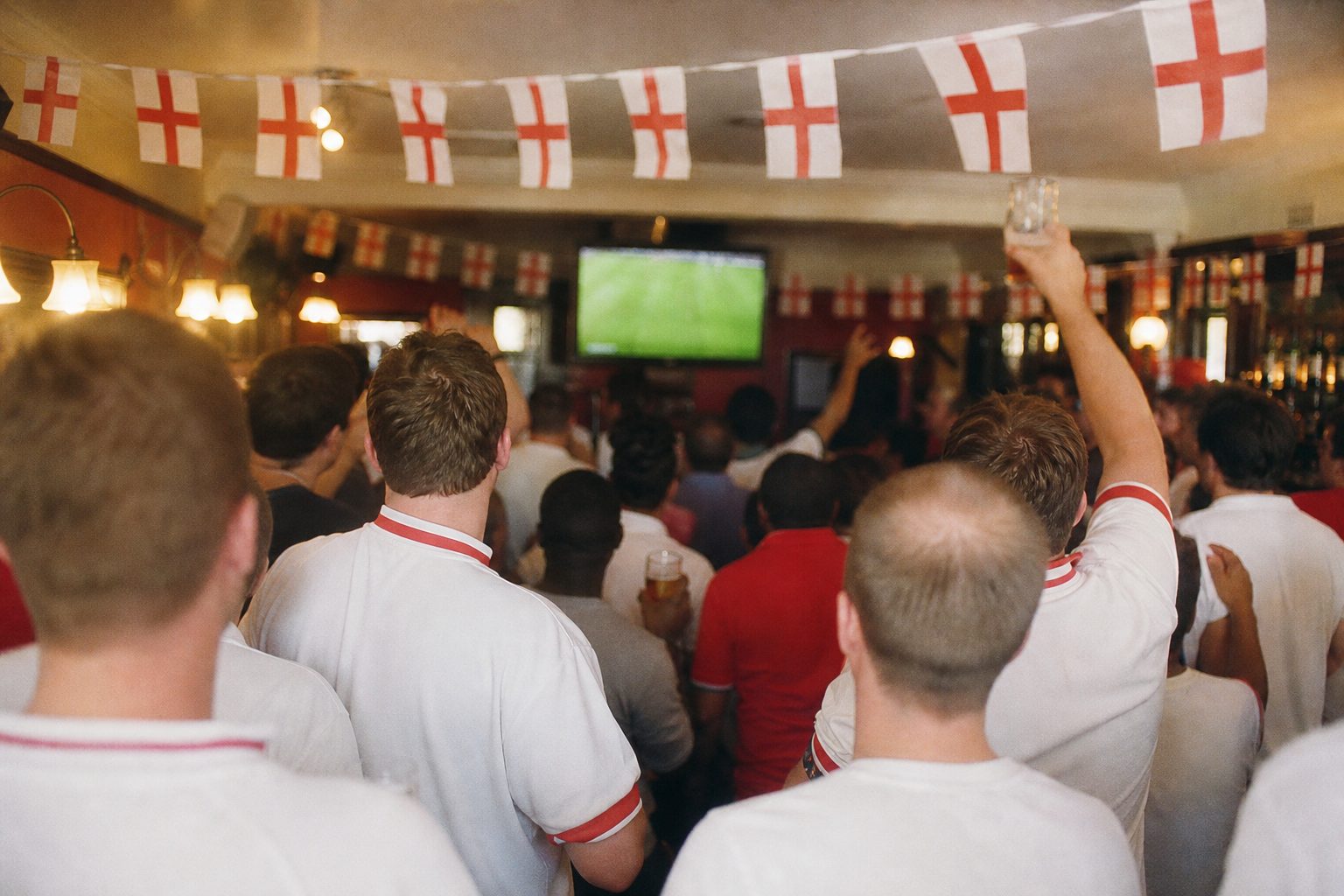
England invented the rules, played the first international match against Scotland in 1872 and then spent much of the next century refusing to believe anyone else might be better at the game. The national team has won one major tournament, the 1966 World Cup, and the gap between expectation and outcome has fuelled sixty years of newspaper columns, pub arguments and penalty shoot-out post-mortems.
1966 and the long aftermath
Alf Ramsey's side beat West Germany 4–2 after extra time at Wembley on 30 July 1966, with Geoff Hurst scoring a hat-trick and Bobby Moore lifting the Jules Rimet Trophy. Four years later England lost to the same opponents from 2–0 up in the quarter-final in León, and failed to qualify for the World Cups of 1974 and 1978.
Bobby Robson's team came closest to repeating 1966 at Italia 90, losing the semi-final to West Germany on penalties in Turin. Euro 96 brought Paul Gascoigne's volley against Scotland, a 4–1 demolition of the Netherlands, another semi-final on home soil and another shoot-out defeat to Germany, this time with Gareth Southgate's penalty saved. The pattern hardened into folklore. Defeats on penalties to Argentina in 1998 and Portugal in 2004 and 2006 only added chapters to it.
Squads, selections and odd call-ups
Choosing an England squad was once a far more unpredictable business. In 1989 Steve Bull of Wolves, then a Third Division player, was called up and scored on his debut against Scotland, something hard to imagine in the age of Premier League dominance. Graham Taylor, Glenn Hoddle and Kevin Keegan all had their own favourites, and Sven-Göran Eriksson's 'golden generation' of Beckham, Gerrard, Lampard and Rooney reached three quarter-finals without getting further.
When Fabio Capello named his first England squad in early 2008, after Steve McClaren's team had failed to reach Euro 2008, it was treated as a cultural event: an Italian disciplinarian with strict rules about mealtimes and mobile phones. Qualification for South Africa went smoothly. The tournament itself did not, ending in a 4–1 defeat to Germany in Bloemfontein.
Southgate, Tuchel and the modern side
Gareth Southgate changed the tone after 2016. His side reached the 2018 World Cup semi-final in Russia, the final of Euro 2020, played at Wembley in 2021 and lost to Italy on penalties, and the final of Euro 2024 in Berlin, lost 2–1 to Spain. No England manager since Ramsey had come so close so often. Thomas Tuchel took over at the start of 2025, the first German to manage the team.
The coverage around the team has changed less than the football. Tabloid back pages still turn a goalkeeping error into a national emergency, and television commentary has its own habits, some of them tiresome.
More on England
The Bull story gets the treatment it deserves in a piece on a Third Division striker playing for England. The 2010 tournament, including the Rob Green error against the United States and the press reaction to it, is covered in a review of how England stumbled and the press pounced, and in the wider World Cup 2010 hub.
Before Euro 2012, a top goalscorer preview weighed up Wayne Rooney's chances against Spain's forwards. Spain went on to retain the trophy, beating Italy 4–0 in Kyiv. The expansion of the Euros from 16 teams to 24 gets a grumpy hearing in an article on the death of the European Championship as it used to be.
Broadcasters face the music in a column asking when co-commentary became so miserable, written during the 2018 World Cup. And a darkly comic obituary from 2011 also carries the England tag.