 ThreeMatchBan
- 1898Wolverhampton is granted its coat of arms, which the club uses as its badge in the early years.
- 1970sA leaping wolf over the club's initials becomes the badge.
- 1979An angular wolf head with triangular eyes appears (some sources say 1982).
- 1996A new badge design follows shield versions of the late 1980s and early 1990s.
- 2018August: a new identity keeps the badge but adds a 3D forged-metal wolf head and custom typefaces.
- 2019The identity is shortlisted for the Design Museum's Beazley Designs of the Year.
The Wolves badge is about as direct as football crests get. The club is called Wolves, so there is a wolf. Getting to that obvious answer still took the best part of a century, and the route ran through a town coat of arms, a leaping animal and a series of shields before arriving at the angular wolf head that now sits on the old gold shirt.
The town arms: the first Wolverhampton Wanderers crest
Wolverhampton was granted its coat of arms in 1898, and in the club's early years that civic design served as the Wolverhampton Wanderers crest. It was the usual pattern for English football at the time: clubs borrowed from the town hall rather than invent anything of their own, and wore it mainly when the occasion demanded.
The town's motto, "Out of darkness cometh light", belongs to that heraldry. The club's colours, old gold and black, are often said to commemorate it, the gold of the light and the black of the dark, though the motto has never been part of the modern club crest.
The leaping wolf and the old Wolves badge
In the 1970s the club finally put its nickname on the shirt. A wolf, leaping over the initials WW, replaced the civic arms, and the old Wolves badge was born. Sources disagree on whether it first appeared in 1970 or 1974, so the timeline here simply says the 1970s.
The leaping wolf belongs to a decade of muddy pitches and long sideburns, and plenty of supporters still have a soft spot for it. It had movement and character, though it was a fiddly thing to reproduce small.
Triangles and old gold: the wolf head arrives
The design that defines Wolves badge history came at the end of the decade. In 1979, or 1982 according to some sources, the club introduced a geometric wolf head built from sharp angles, with triangular eyes staring straight out.
It was a bold piece of graphic design for an English club at the time, closer to a modern logo than a traditional crest. Through the late 1980s and early 1990s the head was placed on shield versions of the badge, and in 1996 a new design followed, but the angular face kept coming back because nothing else looked as much like Wolves.
That head belongs to the Steve Bull years too. Bull scored goal after goal as Wolves climbed out of the Fourth Division in the late 1980s, and the story of how he won England caps from the third tier is told in Steve Bull for England.
2018: the forged wolf and a design award
When Wolves returned to the Premier League in 2018, the club launched a new identity created by the agency SomeOne. Crucially, it did not change the badge. Instead it added a three-dimensional "forged metal" version of the wolf head and a family of custom typefaces called Wolves Display, along with a brighter yellow alongside the black.
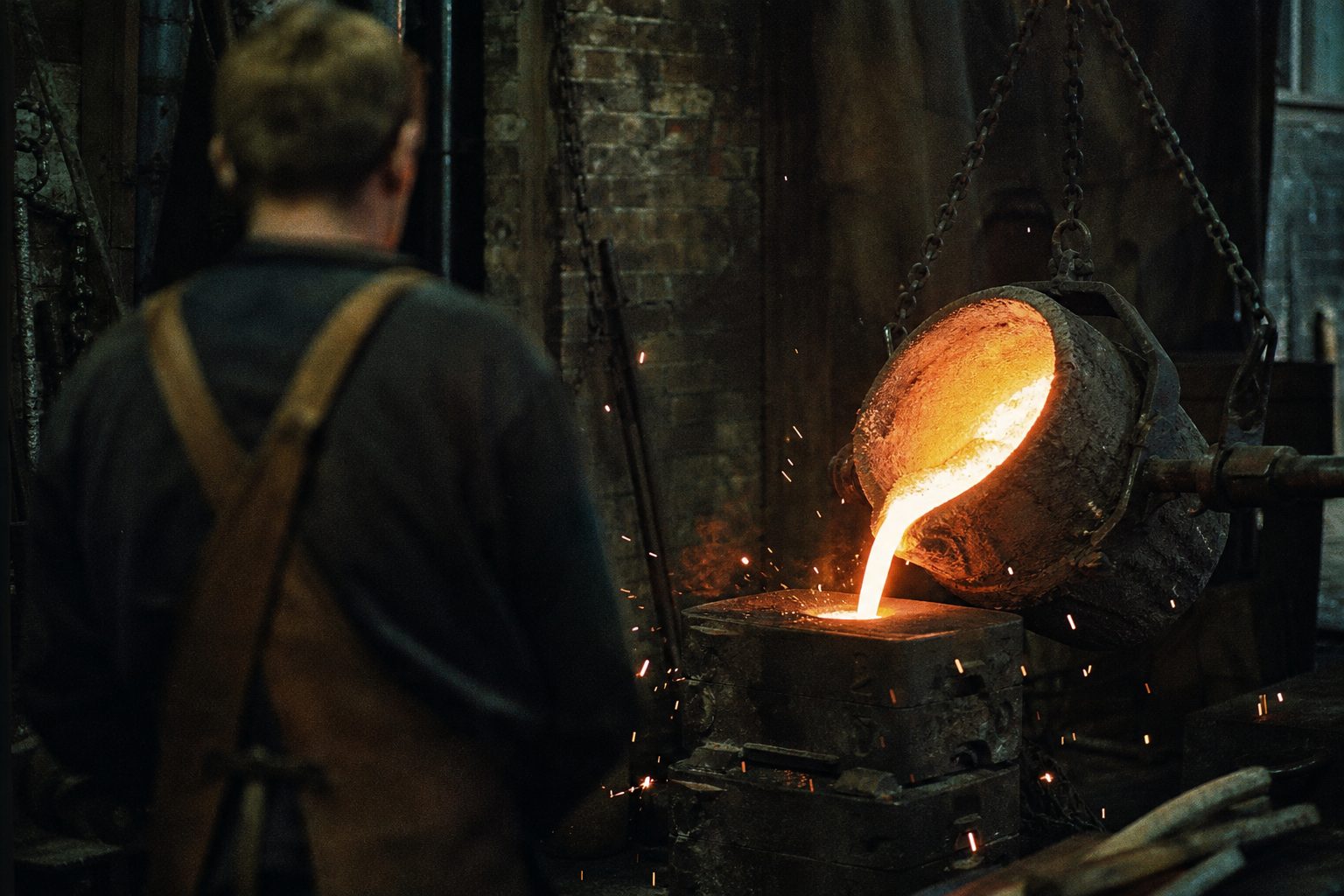
The forged wolf was a deliberate nod to the industrial Black Country. It looked like something cast in a local foundry rather than drawn on a computer, and it gave the club a striking image for screens and stadium walls without touching the crest fans already loved.
Design critics noticed. In 2019 the identity was shortlisted at the Design Museum's Beazley Designs of the Year in the graphics category, a rare honour for a football club. It is sometimes remembered as a new 2019 badge. It was not; the crest stayed exactly as it was.
Wolves crest neighbours and rivals
Other Midlands clubs took very different paths. Stoke went back to a fan favourite from the 1970s and 1980s, covered on the Stoke badge page, and the Nottingham Forest badge settled on a stylised tree. At the other end of the country the Crystal Palace badge also put its nickname, an eagle, at the centre.
Wolves close the alphabet in the evolution of Premier League club badges from Newcastle United to Wolverhampton Wanderers, and all club histories are listed under football badges. For a reminder of how long the club has been around at the top level, see the 1958/59 champions, a Wolves side that wore no wolf at all.
Triangular eyes, no mane, no teeth. It still looks fierce.