 ThreeMatchBan
- 1957An adaptation of the City of Nottingham arms, with N.F.F.C. in place of the castle, is first worn on the shirts.
- 1973A Nottingham Evening Post competition for a new badge is won by David Lewis, a lecturer at Trent Polytechnic.
- 1974The tree badge is first worn on the shirt, around March.
- 1979Forest win the European Cup for the first time, beating Malmö 1–0 in Munich.
- 1980A second European Cup, 1–0 against Hamburg in Madrid; two stars are later placed above the tree.
The Nottingham Forest badge is one of the cleanest in English football: a stylised tree, a few wavy lines beneath it and two stars above. It looks like the work of a branding agency. It was actually the winning entry in a newspaper competition, drawn by a local lecturer in 1973, and the stars were earned rather than designed.
The old Forest badge: the city's arms
For the first decades after the Second World War, Forest's emblem was borrowed from the city. The club adapted the City of Nottingham coat of arms, replacing the castle with the letters "N.F.F.C.", and that version was first worn on the shirts in 1957.
It was a perfectly respectable crest, and plenty of supporters who grew up in the 1960s remember it fondly as the old Nottingham Forest badge. Its problem was ownership. The arms belonged to the city, and the club could not copyright them, which by the early 1970s was becoming a real handicap for any club trying to control what was sold under its name.
The 1973 competition and the tree
Forest's answer was to ask the public. The Nottingham Evening Post ran a competition for a new badge in 1973, and the winner was David Lewis, a lecturer at Trent Polytechnic. His design was a single tree, drawn in simple flowing lines, with wavy bands underneath.
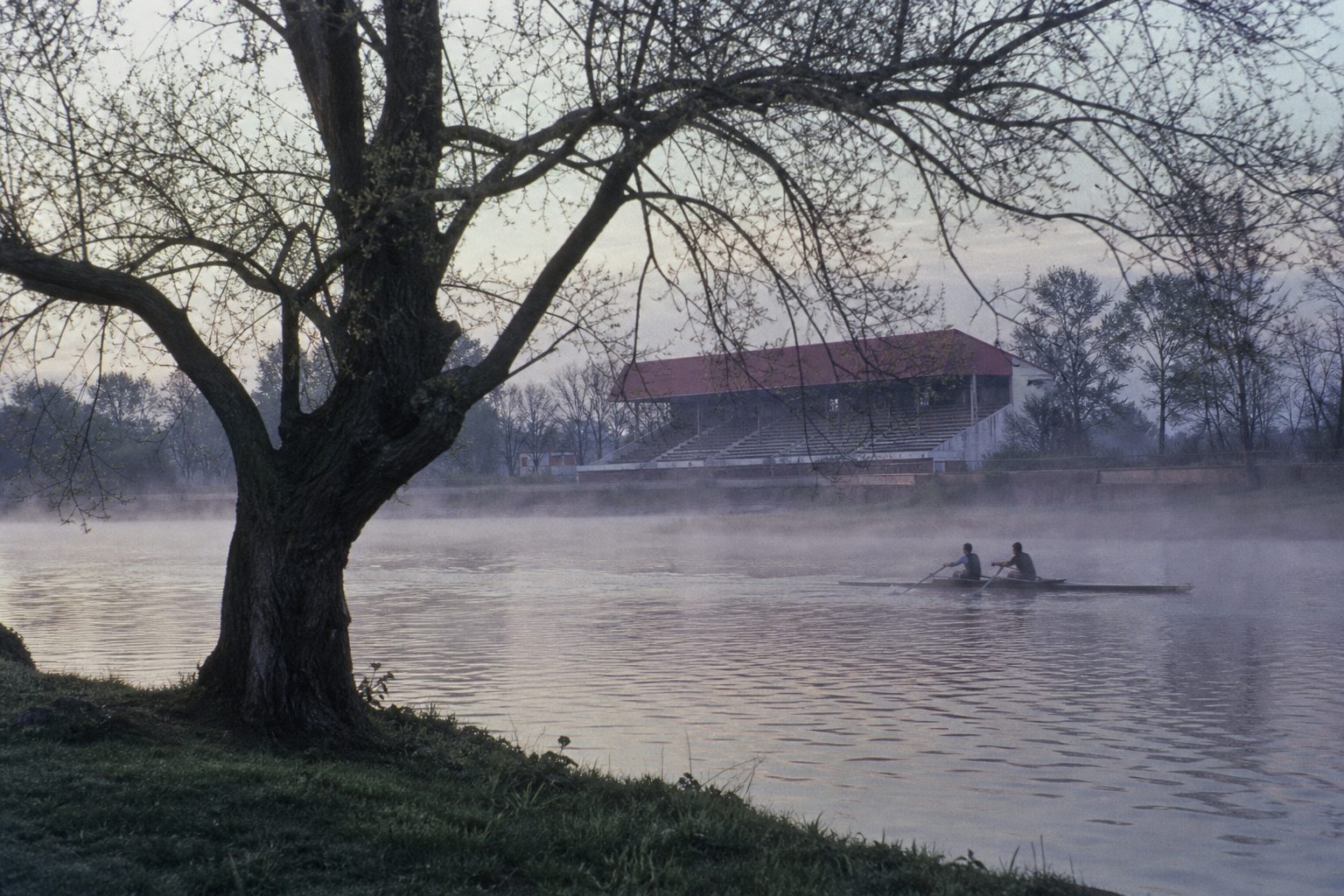
The meaning is easy to read. The tree stands for Sherwood Forest and for the "Forest" in the club's name. The wavy lines are the River Trent, which runs right past the City Ground. There is no castle, no Latin and no heraldic animal, just two pieces of local geography reduced to a few shapes.
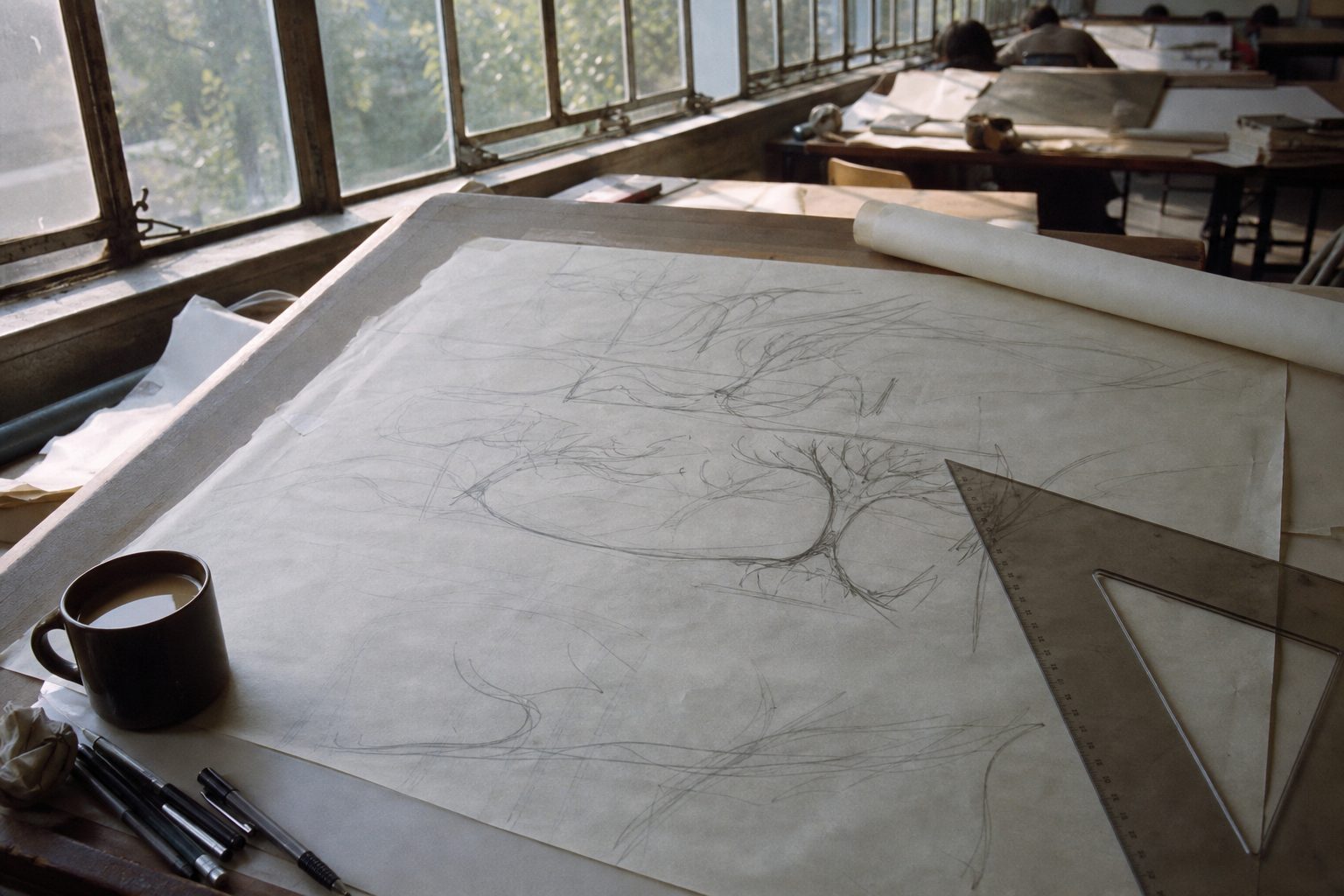
The process itself deserves credit. Modern crest changes tend to involve agencies, months of research and carefully managed launches: Everton worked with Kenyon Fraser after their 2013 row, and Tottenham spent nine months with Studio Nomad on their 2024 remaster. Forest simply asked the readers of the local paper, picked a winner and put it on the shirt. Half a century later the result still looks modern, which is more than can be said for several expensive redesigns of the 1990s and 2000s.
The tree first appeared on the shirt around March 1974. Within a few years it would be on the chest of a side that changed the club's history.
Two stars for two European Cups
Under Brian Clough and Peter Taylor, Forest went from the Second Division to champions of Europe in a startlingly short time. In 1979 they beat Malmö 1–0 in Munich to win the European Cup, Trevor Francis heading the goal. A year later they retained it, beating Hamburg 1–0 in Madrid with a John Robertson strike.
After those triumphs, two stars were placed above the tree, one for each European Cup. They are probably the most valuable decoration on any English badge relative to the size of the club, and they turn a modest design into a statement. Few crests carry their trophies so plainly.
Detailed claims about later tweaks, a new shade of red or a ring added in the 2000s, rest on thin evidence, so they are best treated with caution. The essentials of the Lewis tree, the river lines and the stars have stayed put.
Nottingham Forest crest details
- The tree: Sherwood Forest and the club's name.
- Wavy lines: the River Trent beside the City Ground.
- Two stars: the European Cups of 1979 and 1980.
- Colours: Garibaldi red and white.
The copyright problem that pushed Forest to a competition was common to many clubs. Chelsea's 1986 redesign was driven by the same issue, and so was Fulham's switch in 2001. Tottenham's badge took the opposite path to simplicity, starting with a crowded shield and stripping it back to a single cockerel. Further north-west, Manchester United's crest leans on a ship and a devil rather than geography.
Forest sit in the evolution of Premier League badges from Newcastle to Wolves, and the full collection of club histories is in the football badges section.
A Trent Polytechnic lecturer drew the badge of the Clough years. Very few designers can say the same about their work.