 ThreeMatchBan
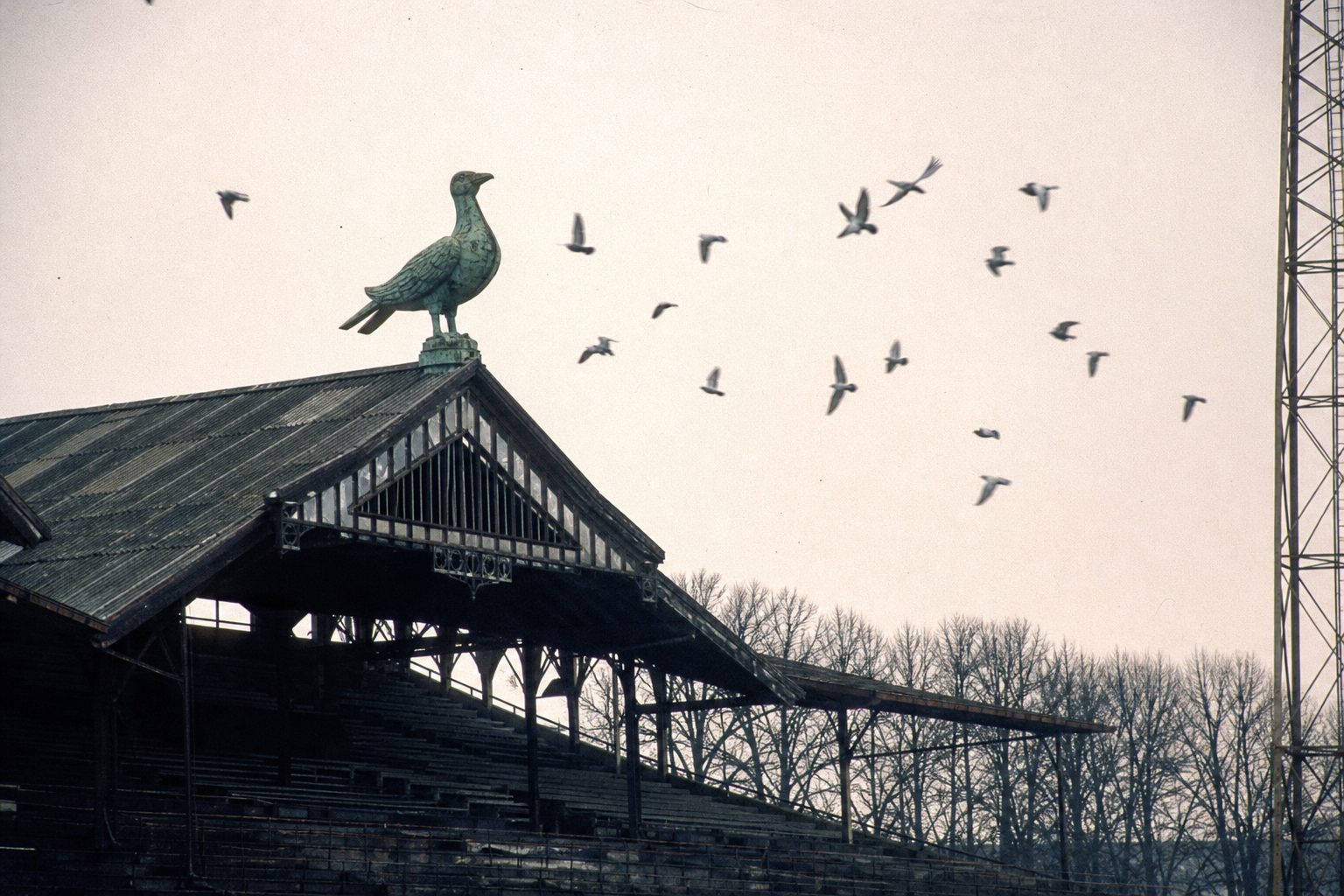
- 1909A copper cockerel on a ball, made by W.J. Scott, is placed on the West Stand.
- c. 1956A club shield with Bruce Castle, seven trees, lions and the motto is drawn up ahead of the 75th anniversary.
- 1983A badge with two lions alongside the cockerel and ball is introduced; it is updated in 1992.
- 1995The shield colours change, with a darker blue and the castle and ball in brown.
- 2006The badge is simplified to the cockerel alone, a lean bird on a ball designed by Chris Mitchell.
- Nov 2024A remastered identity with Studio Nomad redraws the cockerel and revives the THFC monogram of the 1950s.
The Tottenham badge has had one constant for well over a century: a cockerel standing on a ball. Everything else around it, the lions, the castle, the trees and the Latin, has come and gone. Read in order, the Tottenham crest tells the story of a club adding layers of local history in the 1950s and peeling them away again in the 2000s.
The 1909 cockerel
The bird arrived in 1909, not on a shirt but on a roof. A copper cockerel standing on a ball, made by W.J. Scott, was fixed to the West Stand at White Hart Lane, and the image became the club's symbol long before badges were a regular feature of football kit.
The choice was not random. Tottenham Hotspur take their name from Harry Hotspur, the fiery Percy knight of the fourteenth century, and the cockerel connects to him through spurs: a fighting cock wears them, and so did he. It is a slightly roundabout link, but it has proved remarkably durable.
The club shield and the old Tottenham badge
Around 1956, ahead of the club's 75th anniversary, Spurs drew up a full club shield. It was crowded with meaning. Bruce Castle, the Tudor manor house in Tottenham, sat on it, along with seven trees standing for Seven Sisters and Page Green, two lions from the arms of the Northumberland family, the Percys, and the motto "Audere est Facere": to dare is to do.
The shield did not replace the cockerel so much as stand beside it. In 1983 the club introduced a badge combining the two lions with the cockerel and ball, updated in 1992, and that is the version many supporters picture when they think of the old Tottenham badge. In 1995 the shield's colours were changed, with a darker blue and the castle and ball turned brown.
For anyone dating memorabilia, those details help. Lions alongside the bird place an item somewhere between 1983 and 2006. A brown castle narrows it to 1995 or later, and a darker blue backs that up.
2006: the cockerel alone
In 2006 the club cleared the decks. The badge was simplified to the cockerel alone, a leaner bird standing on its ball, drawn by the designer Chris Mitchell. The lions, castle, trees and motto left the main mark, and Spurs had a logo that worked on everything from a shirt to a training bib to a television graphic.
Simplifications rarely please everyone, and losing "Audere est Facere" from the main badge meant losing the most quotable thing on it. Yet the lean cockerel suited the era, and it is now so familiar that a younger generation of supporters has never known anything else on the shirt.
The 2024 remaster
In November 2024 the club unveiled a "remastered" identity, the product of nine months of work with the agency Studio Nomad. The cockerel was redrawn, the THFC monogram of the 1950s was revived and heritage colours and patterns were brought back into the wider identity. According to the design press, the club name was also dropped from the crest lockup.
It was a careful piece of work rather than a reinvention. The bird was still a cockerel on a ball, the colours stayed navy and white, and the revived monogram gave older fans something from their own matchday memories to recognise. Other clubs have gone the same way: Chelsea flattened their lion for 2026/27, and across north London Arsenal's crest now cannot change at all without supporter consultation.
Tottenham crest elements
- Cockerel on a ball: on the club since 1909, linked to Harry Hotspur's spurs.
- Two lions: from the Northumberland, or Percy, family crest.
- Bruce Castle and seven trees: local landmarks, the trees for Seven Sisters and Page Green.
- Audere est Facere: to dare is to do.
- Colours: navy and white.
The Tottenham story is part of the evolution of Premier League badges from Newcastle to Wolves, and the other club histories, including Fulham's 2001 shield, sit in the football badges section. Anyone heading to a game can find pubs near the new ground in the away fans' guide to Tottenham.
The badge has been redrawn several times. The bird on the ball has never been in danger.