 ThreeMatchBan

An earlier ‘Latin Wonderkids’ list, compiled in 2009, picked players who were all playing in South America at the time. Within months every one of them bar one had moved to Europe, and the exception had already been and come back. Young South American talent does not stay on the continent long. Each of the five players below, picked out in the spring of 2011, looked likely to be in European football within a year or two.
Juan Manuel Iturbe, Cerro Porteño
Born in Argentina to Paraguayan parents, the tricky little forward had already been labelled the “Paraguayan Messi”. It is an unfair comparison for any player, and yet his performances for Argentina at the South American Under-20 Championship and for Cerro Porteño in that year's Copa Libertadores made it almost understandable.
Short and stocky, he could surge past defenders with a sudden burst of acceleration. The Messi talk came from his habit of drifting in off the wing and mixing one-twos with dribbles and feints, and he could finish those moves too. His game recalled Carlos Tevez as much as Messi. Eligible for both Argentina and Paraguay, he had played youth football for each before choosing Argentina.
European clubs had been watching him for a couple of years, and he had already signed a pre-contract with Porto, making him their player when he turned 18 that June. Porto's record of buying well in South America was reason enough to take him seriously. His later career was less straightforward: after a fine season on loan at Verona he moved to Roma in 2014, but never quite became the star that early hype promised.
Lucas, São Paulo
His full name is Lucas Rodrigues Moura da Silva, so, to ensure maximum confusion whenever he shared a pitch with Lucas Leiva, he was known simply as Lucas. He was a very different player from the Liverpool midfielder: a quick, stocky attacking midfielder who started at Corinthians before moving to São Paulo, where he drew comparisons with Kaká. That was more about position than style, but he was every bit as explosive.
He dazzled at the South American Under-20 Championship, scoring a hat-trick in a 6–0 thrashing of eventual runners-up Uruguay. He mixed bursts of aggressive dribbling with slide-rule passes, which made him frightening in the final third. Brazil's problem over the next decade, it seemed, might be fitting him into the same side as the equally gifted Paulo Henrique Ganso. Not a bad problem to have.
The prediction held. Lucas joined Paris Saint-Germain in January 2013 and Tottenham five years later. In May 2019 he scored a second-half hat-trick in Amsterdam to take Spurs past Ajax and into the Champions League final, and in 2023 he went home to São Paulo.
Ivan Pillud, Racing Club
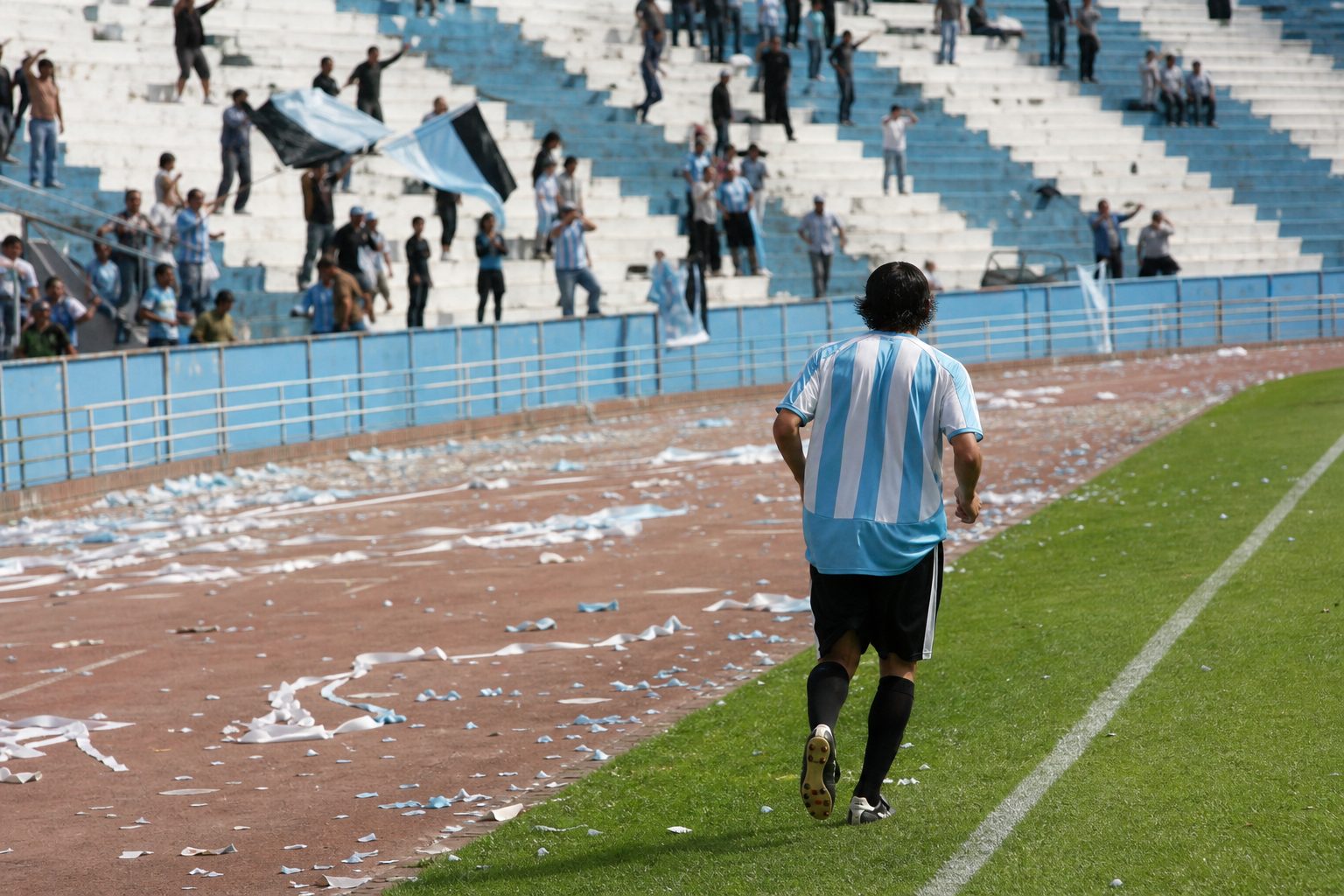
Pressure? Try having your national coach compare you with a living legend. That is what Argentina coach Sergio Batista did when he mentioned the 24-year-old right-back in the same breath as Javier Zanetti. Watching Pillud for Racing Club that season, the comparison made sense. In a 3-4-3 that asked most of its wing-backs, he was a force of nature up and down the flank, combining attacking threat, defensive sense and remarkable stamina.
He had started at Tiro Federal in the Argentine second division and spent a short spell at Newell's Old Boys before a big move to Espanyol, where he barely played. Back at Racing on loan, he overcame early injuries to become a revelation and a contender for Argentina's Copa América squad that summer.
Bryan Carrasco, Audax Italiano
Almost a Brazilian-style full-back, Carrasco could play as a pure defender, a winger or a marauding wing-back. He had gained notoriety for a ridiculous piece of simulation in a Chile v Ecuador Under-20 qualifier, slapping himself in the face with an opponent's hand and then collapsing. Behaviour like that is hard to defend, but he was an exciting, enterprising player: strong, fast, confident on the ball and hard in the tackle. Tottenham were repeatedly linked, though at 20, and only a season into Audax Italiano's senior side, he needed more experience first.
Santiago Garcia, Nacional
The stocky, explosive 20-year-old Uruguayan striker had scored 39 goals in 69 games for Nacional of Montevideo and five in nine for Uruguay's under-20s. A place in the senior squad alongside Diego Forlán, Luis Suárez and Edinson Cavani looked a matter of time, as did a move to Europe. The 2011 Copa América contenders show how crowded that Uruguay forward line already was.
The series continued, and a later instalment picked out Paulo Dybala and Casemiro a year on. For the earlier generations weighed down by expectation, there is the story of Argentina's hidden Maradonas. More South American football writing from the scout behind this list could be found on GolGolGolGolGol and on his Twitter.