 ThreeMatchBan
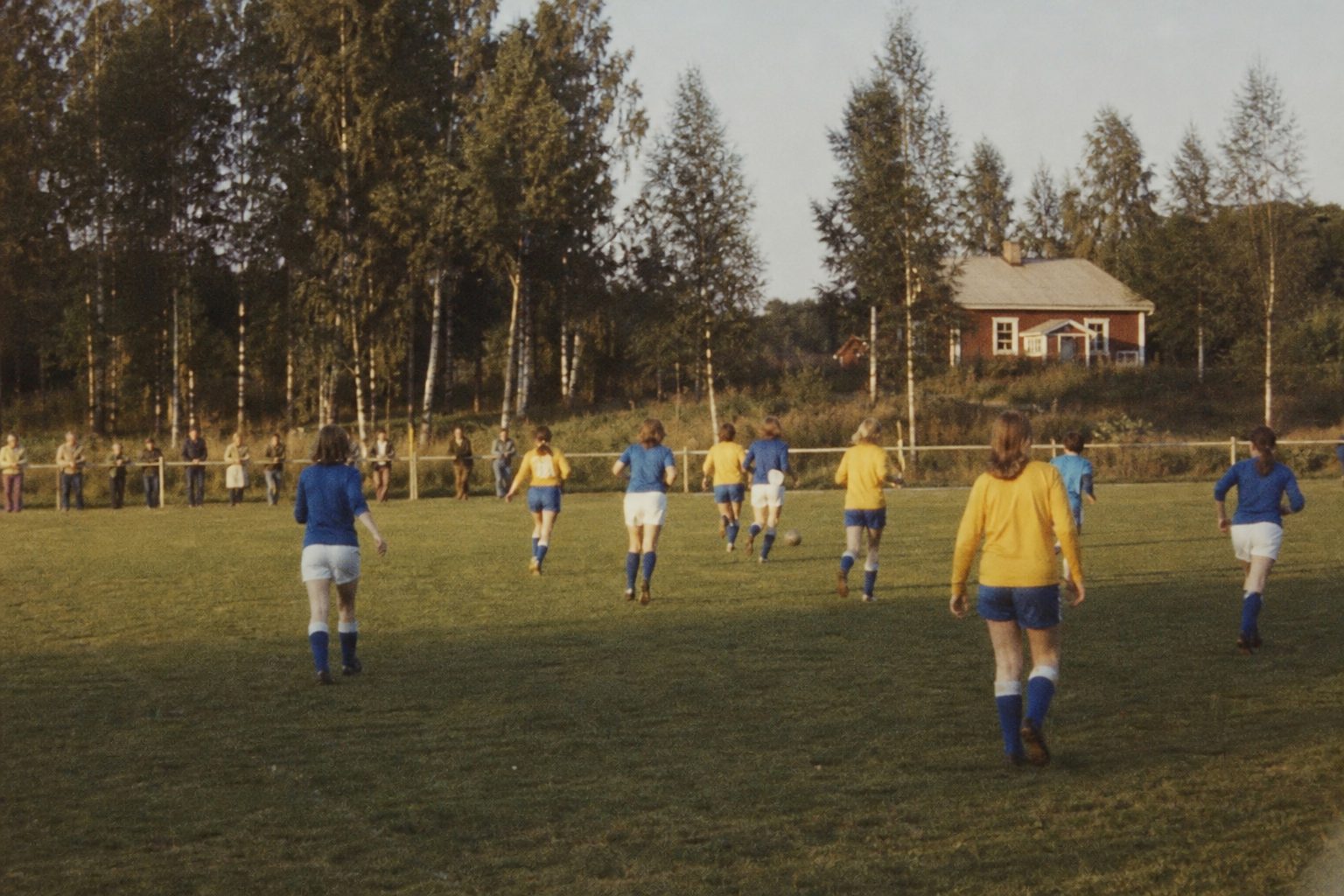
Shown on the Swedish public broadcaster SVT through June and July 2013, Den Andra Sporten (The Other Sport) is a fascinating series of documentaries charting the story of women’s football in Sweden, from its roots in the 1960s to the modern game.
A series for the summer of 2013
The timing was deliberate. In July 2013 Sweden hosted the UEFA Women’s European Championship, and interest in the women’s game was higher than ever. Sweden reached the semi-finals before losing 1–0 to Germany, who went on to beat Norway by the same score in the final at the Friends Arena in Solna. A documentary history of the sport, screened in the weeks around the tournament, gave viewers the background to a team many of them were watching closely for the first time.
The series is in three parts. The first episode, The Other Sport | Den Andra Sporten 1(3) [2013], was shared by the production company Freedom From Choice AB on Vimeo, and the second, The Other Sport | Den Andra Sporten 2(3) [2013], followed from Freedom From Choice AB on Vimeo as well, with the final part completing the set.
From the 1960s to a national league
Women’s football in Sweden, as in much of Europe, grew from almost nothing in the 1960s. Teams formed in towns and villages, often against indifference or open hostility from the football establishment, and the early players had to organise their own matches, find their own pitches and pay their own way.
The title of the series says a great deal. For decades women’s football was treated as the other sport, a curiosity alongside the real thing. In England the Football Association had banned women’s teams from its members’ grounds in 1921, and that ban was not lifted until 1971. Scandinavia moved faster than most, and Sweden in particular built a structured women’s game earlier than many larger football nations.
By 1988 Sweden had a national top division, the Damallsvenskan, which grew into one of the strongest women’s leagues in the world.
Sweden on the international stage
Swedish success came early. In 1984 Sweden won the first European competition for women’s national teams, beating England on penalties in a two-legged final. It was a landmark for the women’s game across the continent and a sign that Sweden was ahead of most of its neighbours.
In 1995 Sweden hosted the second Women’s World Cup, won by Norway. Eight years later, at the 2003 World Cup in the United States, Sweden reached the final and lost to Germany to a golden goal in extra time. It was the closest the country had come to a world title.
At club level, Umeå IK won the UEFA Women’s Cup in 2003 and 2004 and brought some of the world’s best players to northern Sweden, among them the Brazilian forward Marta. For a few years the small city of Umeå, far up the Gulf of Bothnia, was home to the most famous women’s footballer on the planet.
What the series adds
Documentaries about men’s football tend to focus on great teams and famous matches. A history of women’s football has to start further back, with the question of whether women should be allowed to play at all. That gives Den Andra Sporten a social dimension that most football films lack. It is a story about sport, but also about equality, work, family life and the slow change in attitudes across half a century of Swedish society.
Football history in general is full of unlikely beginnings, as the account of Darwen and the birth of professional football shows. Questions of who is welcome in the game run through other pieces too, from football’s gender divide to the story of Stonewall FC, the first gay men’s football club in the UK.
Since the series was made, Sweden has kept up its record: a silver medal at the 2016 Olympics in Rio, a bronze at the 2019 World Cup and another bronze in 2023. The other sport has become the main event for a great many Swedish households.