 ThreeMatchBan
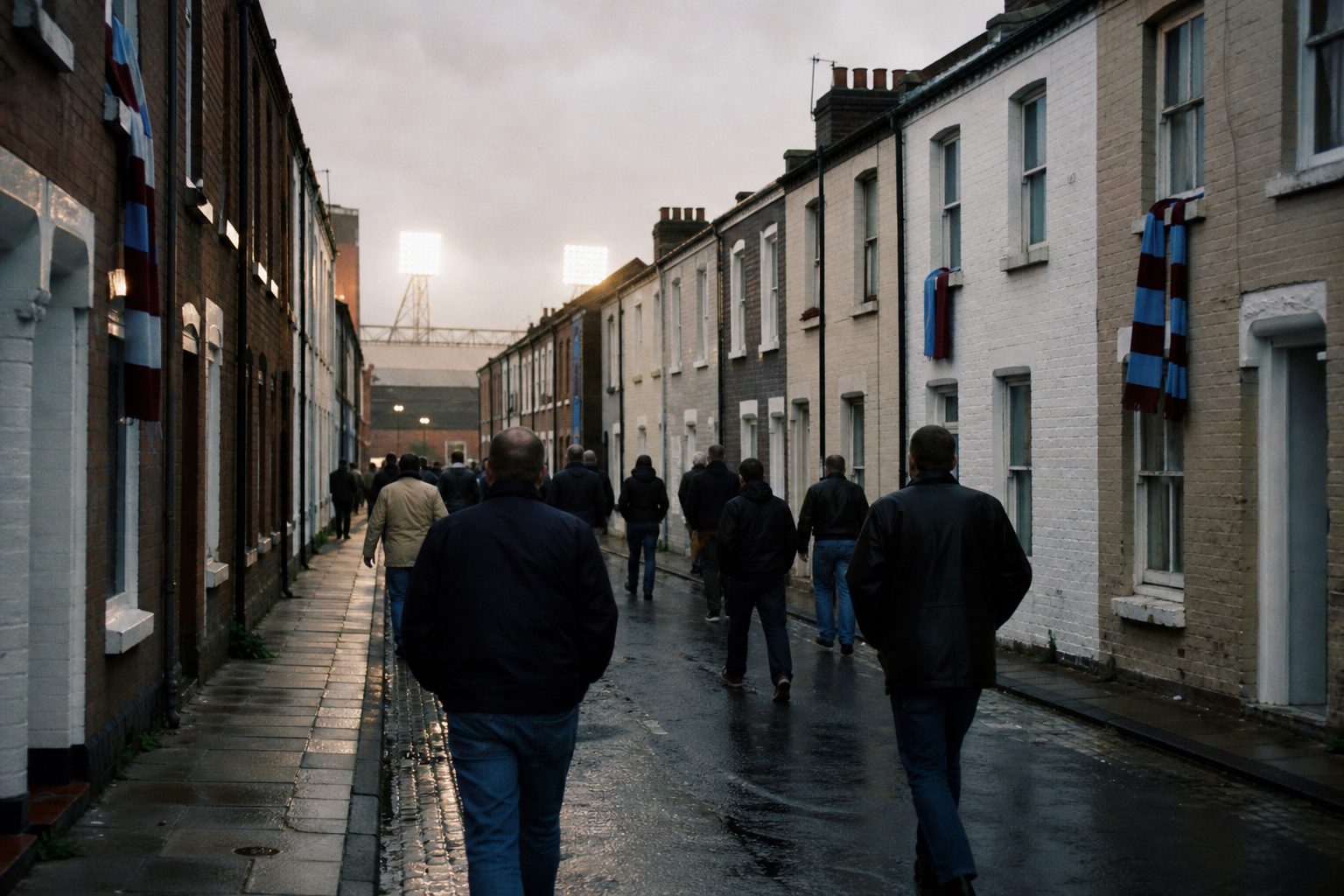
- 2014An online poll of supporters on the proposed design runs ahead of the move.
- 2016New crest launched to coincide with the move to the London Stadium; the castle removed and LONDON added.
- 2026Forging Our Future survey, 20 August to 13 September: supporters are asked whether the current crest should change.
- 2027Spring: if supporters back a change, they vote on crest options drawn up by a design agency after workshops.
- 2028Planned launch of a new crest, if the process goes ahead.
Few clubs ask their own supporters whether the badge should be scrapped. West Ham did exactly that in 2026. Between 20 August and 13 September the club ran a survey called "Forging Our Future", asking whether the current crest should change. The plan on the club's own crest page runs, if fans back a change, through workshops, a design agency and a supporter vote on options, with a final design in spring 2027 and a launch in 2028. As of October 2026 no result had been published.
The West Ham badge being replaced is only ten years old. To understand why supporters want rid of it so quickly, you have to go back to the last time the crest moved house.
What the 2016 West Ham crest took away
For more than a century West Ham played at the Boleyn Ground in Upton Park, and the crest that fans grew up with carried a castle alongside the crossed hammers. The castle referred to the Boleyn Ground itself, so it was a piece of local geography as much as heraldry. When the club prepared to leave for the London Stadium in Stratford, built for the 2012 Olympics, it launched a new crest to coincide with the move.
According to the kit press at the time, the redesign removed the castle and added the word "LONDON". It is easy to see the thinking: the old ground was going, the new stadium sat in one of the most famous Olympic parks in the world, and "London" travels better than "Upton Park" on a shirt sold overseas. Supporters were consulted in an online poll before launch, but the result never felt like their idea.
The last game at the Boleyn Ground, in May 2016, ended in a 3–2 win over Manchester United. A few months later the castle was gone from the chest as well as from the postcode.
Crossed hammers and the Thames Ironworks story
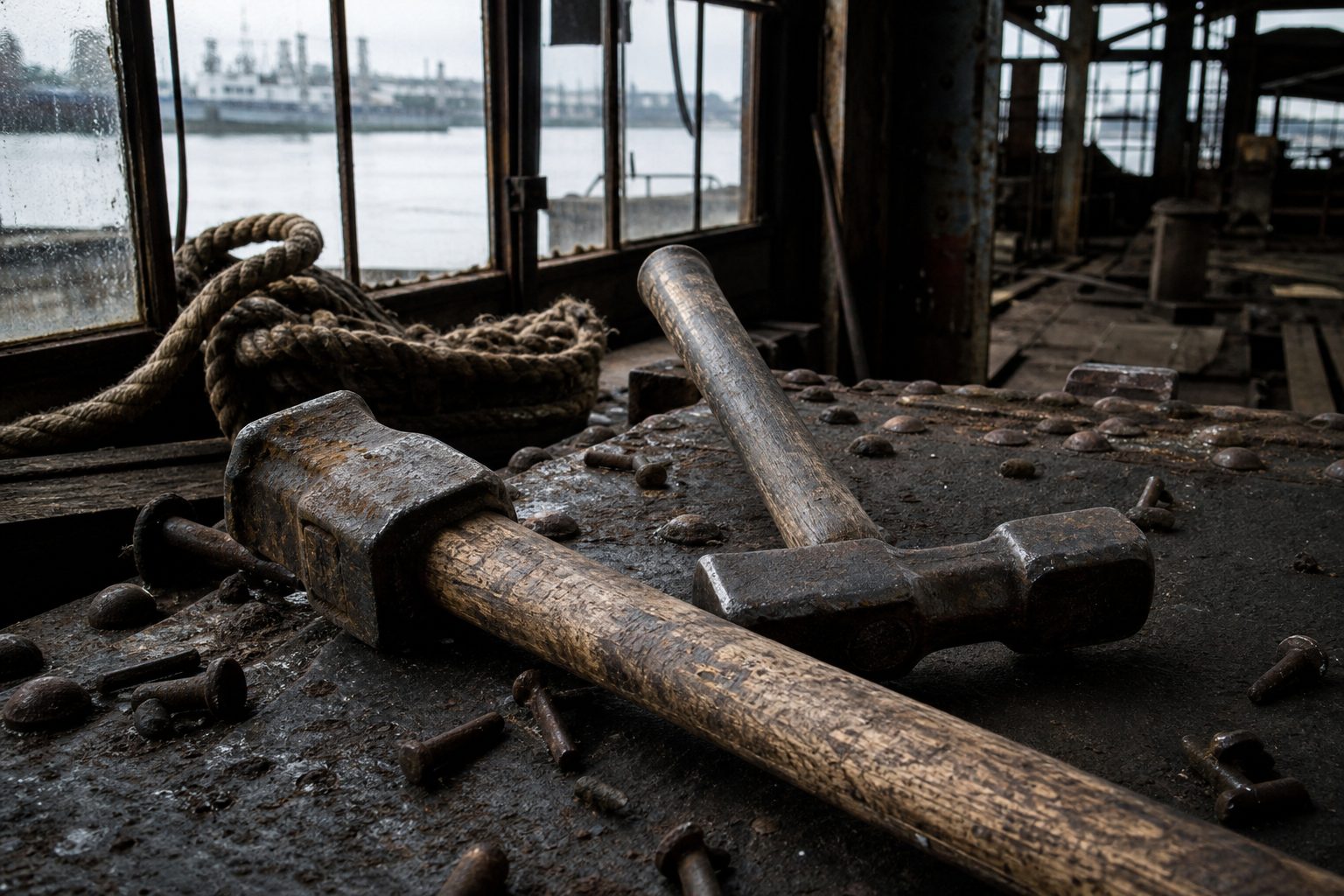
The hammers are the part nobody wants to touch. West Ham began life in 1895 as Thames Ironworks FC, the works team of a shipbuilding firm on the Thames, and became West Ham United in 1900. Two nicknames survive from that history. "The Hammers" comes from the name and the crest; "the Irons" goes back to the works team. On terraces and in pubs across east London both are still used, sometimes in the same breath.
The colours, claret and blue, are the other fixture. Aston Villa wear the same pair, and the two clubs are the obvious comparison in any discussion of claret-and-blue kits, but their crests could hardly be more different: a lion on one side, tools on the other.
The old West Ham badge and the castle campaign
Since 2016 the castle has become a rallying point. Sports-logo coverage of the 2026 consultation notes that fans want it back, and the case is easy to understand. The old West Ham badge, with castle and hammers together, belongs to the Upton Park years: the 1980 FA Cup win over Arsenal, the Billy Bonds and Trevor Brooking era, and cult heroes like Julian Dicks, whose left foot and temper made him a terrace favourite in the 1990s. For many supporters, castle and hammers together are simply what West Ham looks like.
The current version, by contrast, belongs to a decade at the London Stadium that has brought a European trophy, the 2023 Europa Conference League, but has never quite felt like home to everyone. A badge is an easy place to register that unease. Changing it costs far less than changing a stadium.
Whether any new design would bring the castle back is not yet known. The club has committed only to a process: workshops with supporters, a design agency, and a vote on options. The result could be a revival, a fresh idea or something in between.
West Ham badge history alongside its neighbours
West Ham are not alone in rethinking a crest in 2026. On Tyneside, the Newcastle United badge was replaced after a vote announced on 1 October 2026, keeping the castle and seahorses but redrawing them. Across London, the Tottenham Hotspur badge was given a "remastered" identity in November 2024, with a 1950s monogram revived. The trend is clear: clubs that once changed their badges quietly now do it in public, with a vote attached.
The rest of the run from Newcastle to Wolves is covered in the evolution of Premier League club badges from Newcastle United to Wolverhampton Wanderers, and every club history is listed on the football badges hub. Until any change, the 2016 crest stays on the shirt, which leaves plenty of time for one more argument about a castle.