 ThreeMatchBan
- 1950Liver bird crest in a red shield commissioned for the FA Cup final against Arsenal.
- 1955From November the liver bird is worn on the home shirt inside an oval emblem.
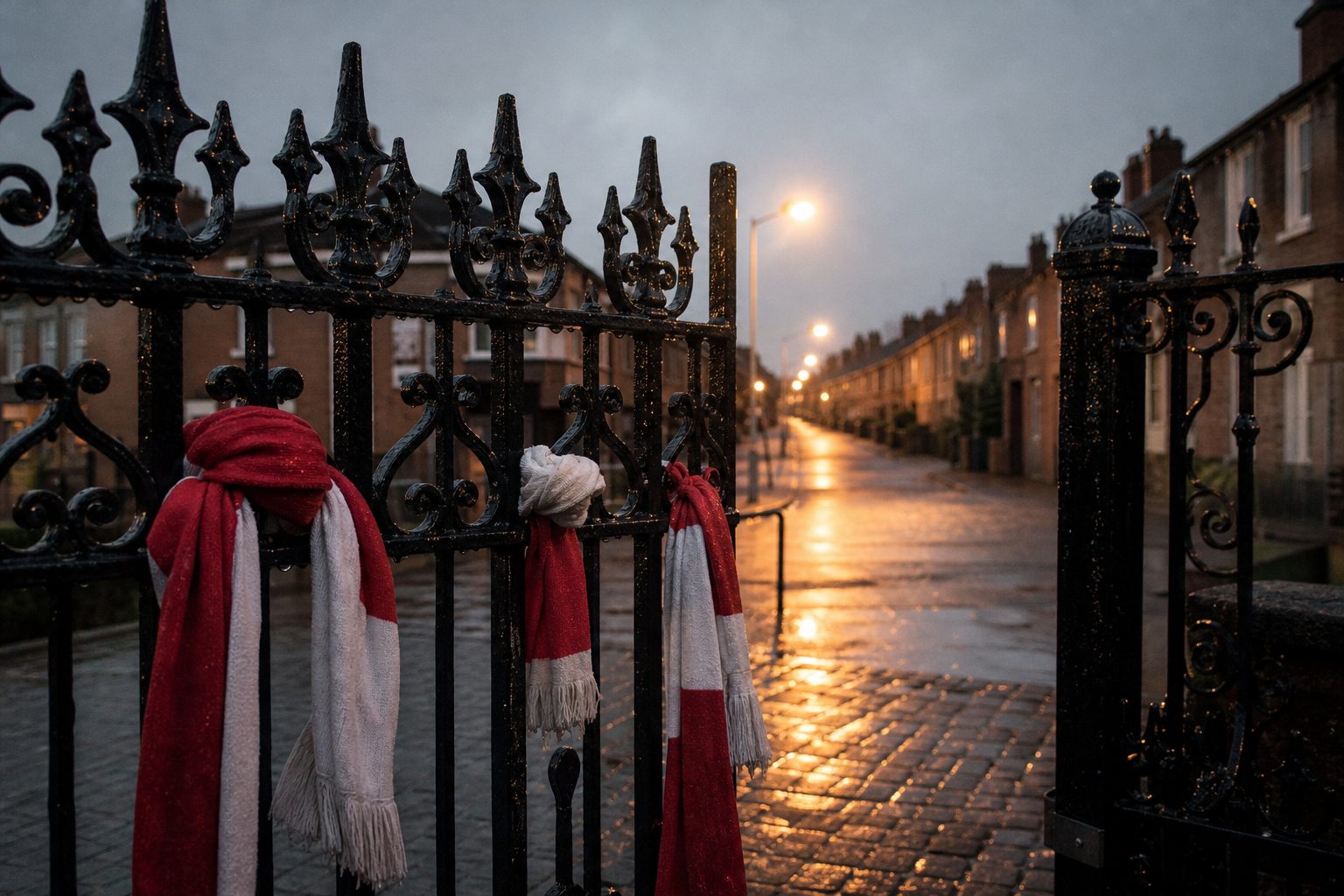
- 1989Hillsborough disaster; two eternal flames later become the memorial on the full crest.
- 2012Warrior kit for 2012/13: simple liver bird and LFC on the shirt, flames and 96 moved to the back.
Liverpool badge history starts with a bird that belonged to the city long before it belonged to a football club. The liver bird had been the emblem of Liverpool for centuries when the club first stitched it on to a red shirt, and every Liverpool crest since has been built around it. The Shankly Gates, the anthem and the twin flames came later, each one tied to a moment the club and its supporters did not want to forget.
What follows is the story of the Liverpool badge, from a one-off cup final shirt to the crest that sits above the Kop today, with the dates that can be pinned down and an honest gap where they cannot.
The liver bird arrives: 1950 and the first Liverpool crest
For most of their first half-century Liverpool played without any emblem at all. That was normal: English clubs of the era usually saved a crest for a special occasion, and a Wembley final was the most special occasion there was.
When Liverpool reached the 1950 FA Cup final, the club commissioned a liver bird crest inside a red shield for the shirts. Arsenal won the match 2–0, so the first Liverpool badge was worn in defeat, but the bird had made its debut and it never really went away.
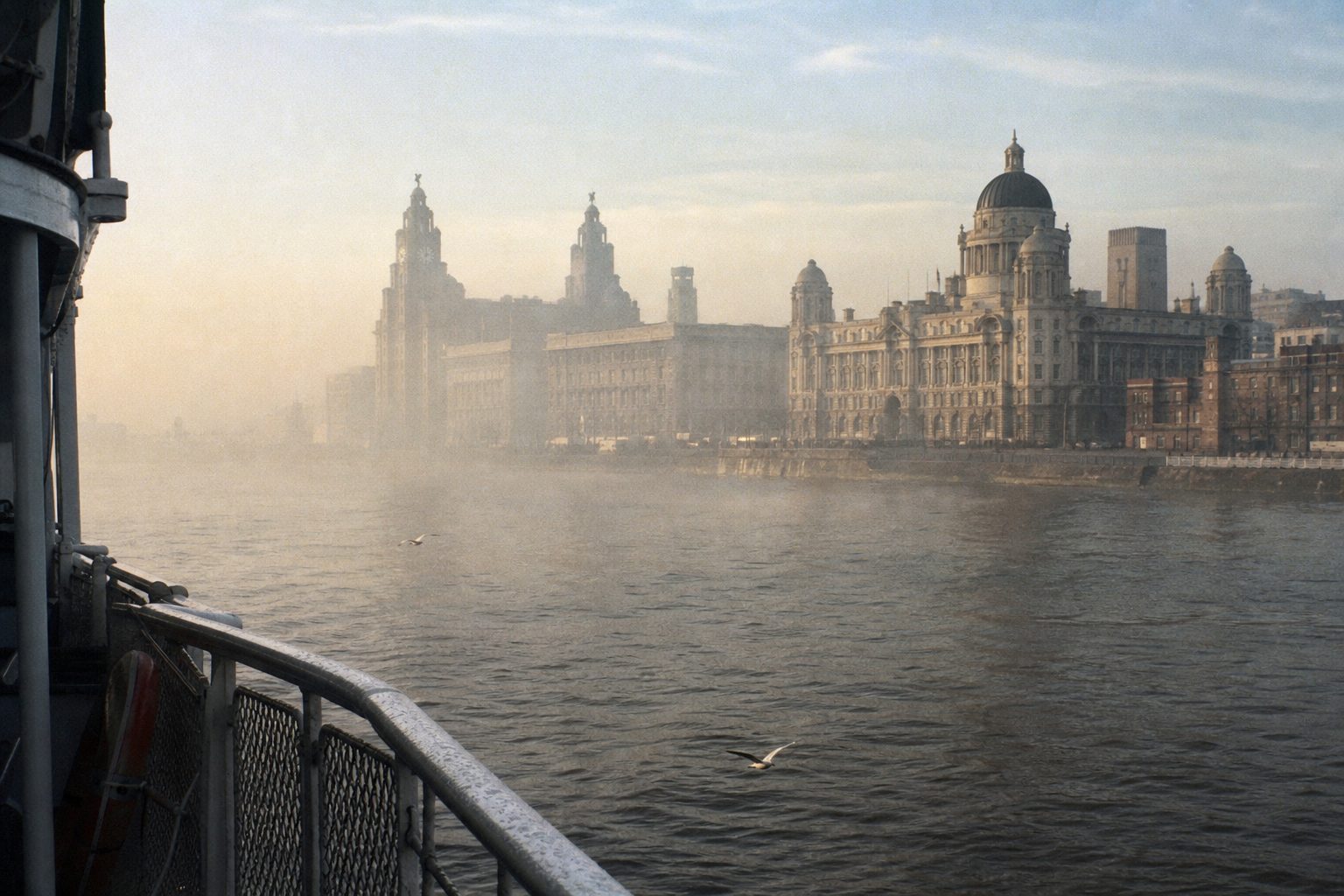
The liver bird is the city's own symbol, a cormorant-like creature usually drawn with a sprig of seaweed in its beak. Any visitor to the Pier Head knows it from the green-copper pair perched on the waterfront, looking out over the Mersey and back into town. Putting that bird on the shirt was a statement that the team represented Liverpool itself.
The oval years and the simple liver bird
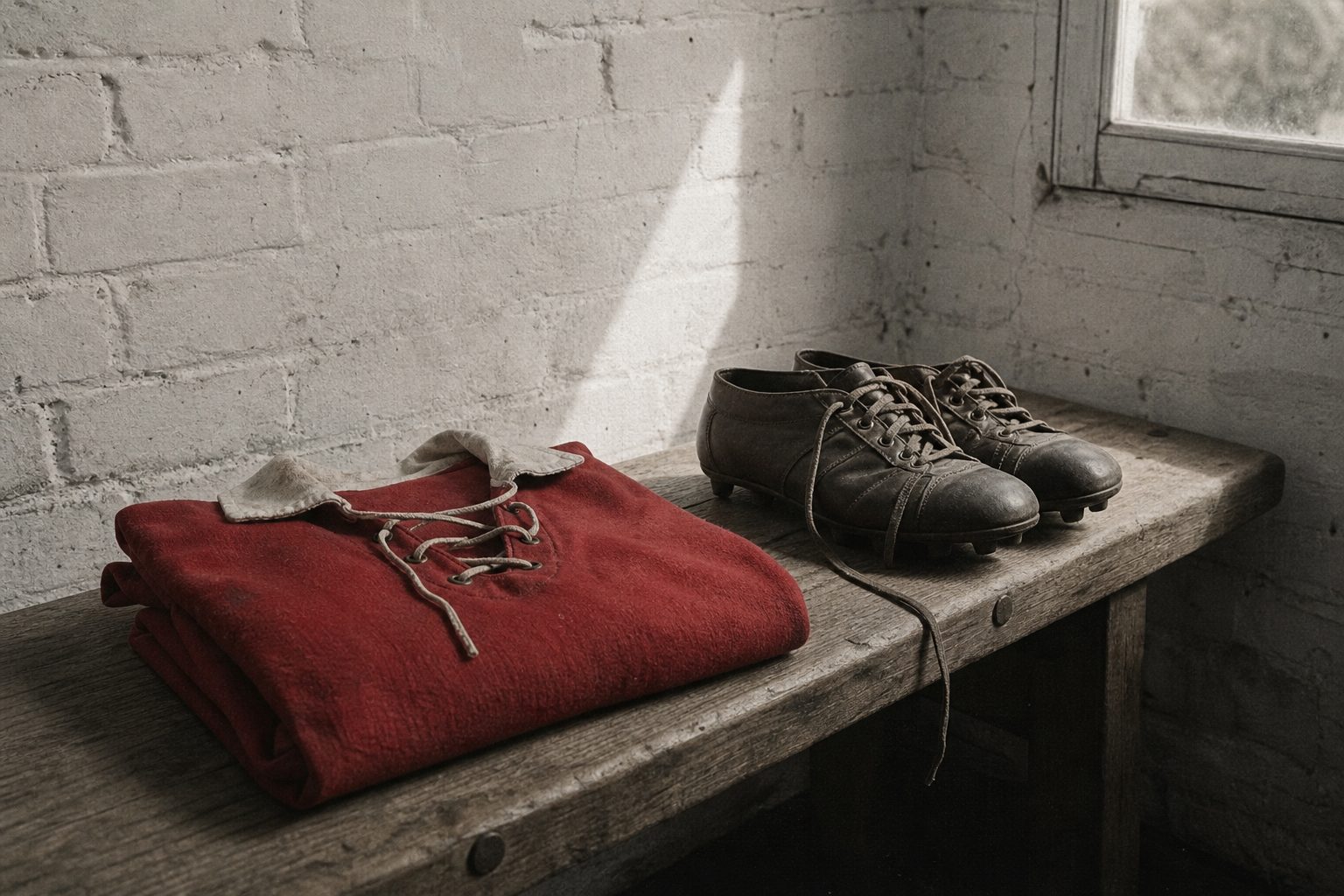
The step from cup final novelty to everyday shirt came in November 1955, when the liver bird appeared on the home shirt inside an oval emblem. From then on a Liverpool player in red was a Liverpool player with a bird on his chest.
Later shirts dropped the oval and carried the bird on its own with the letters LFC beneath it, the version older supporters picture when they think of the great sides of the 1970s and 1980s. Exactly when that switch happened is not settled by any official record, so the timeline on this badge history leaves it undated rather than guess.
That stripped-back old Liverpool badge has aged remarkably well. It was small, it was cheap to embroider and it looked the same on a cotton shirt in a black-and-white highlights package as it did in colour. Simplicity was the whole point, and the club returned to it decades later.
Shankly Gates, the anthem and the full Liverpool crest
The full Liverpool crest is a much busier object. The liver bird sits inside a shield, with the Shankly Gates drawn above it and the words "You'll Never Walk Alone" across the top, and an eternal flame burns on either side.
The Shankly Gates stand at Anfield in memory of Bill Shankly, the manager from 1959 to 1974 who built the modern club, and they were put up after his death in 1981. Including them in the crest turned a piece of ironwork into a permanent tribute, and it means the Liverpool crest carries a manager as well as a city. Few English clubs honour one man so directly on their badge.
"You'll Never Walk Alone" is the anthem, not a motto in the Latin sense that clubs such as Arsenal or Burnley once used. The line arrived on the terraces in the 1960s and it is now as much a part of the club's identity as the colour red.
When the gates and the anthem first appeared together on a club crest is often linked to the centenary in 1992, but that date has not been confirmed from an official source and is left out of the timeline below. The finished design is not in doubt. Its exact birthday is.
The Hillsborough flames on the Liverpool crest
The two flames on the full crest are a memorial to the supporters who died at Hillsborough in April 1989, at the FA Cup semi-final against Nottingham Forest. For years the number was 96; the official toll is now 97.
No badge element at any English club carries more weight. The flames are the reason the Liverpool crest is rarely discussed as a piece of design in the way that, say, the Everton or Manchester City crests are: changing it is not simply a question of fonts and colour palettes.
2012: why the Liverpool badge history took a simpler turn
The clearest modern change came with the 2012/13 kit made by Warrior. The shirt carried a simple liver bird above the letters LFC, much like the old Liverpool badge of earlier decades, and the Hillsborough flames together with the number 96 were moved to the back of the shirt, below the collar.
The design made visual sense and the club presented it as an honour, keeping the memorial close to the players. Some of the families of those who died were angered that they had not been consulted first, and the episode showed how sensitive any change to the crest is at Anfield. A sponsor's swoosh or a new collar can be argued about for a week. The flames are another matter.
Since then the pattern has held: a clean liver bird with LFC on the playing shirt, the full crest with gates, anthem and flames on the club's formal identity. It lets Liverpool look modern on the pitch without throwing away the layers the crest gathered over seventy years.
For comparison, neighbours across Stanley Park took a far more turbulent route, with a 2013 redesign that fans rejected, covered on the Everton badge page. Liverpool's great rivals from the other end of the East Lancs Road have their own story on the Manchester United badge page, and the Arsenal crest shows how a cannon, rather than a bird, can carry a club's identity.
The wider picture, club by club from Arsenal onwards, is in the evolution of Premier League club badges from Arsenal to Manchester United, and every club with its own page is gathered under football badges. Supporters who remember those simple liver bird shirts from Saturday evenings on the sofa will enjoy a look back at The Big Match, where that little red bird was rarely off the screen.
Seventy-odd years after Wembley, the bird on the shirt is still the city's bird. The seaweed is still in its beak, and for all the redesigns, the Liverpool badge history keeps coming back to it.