 ThreeMatchBan
- 1887Celtic Football Club is formed in the East End of Glasgow, with strong roots in the city's Irish community.
- 1888Celtic play their first match and open their first ground in the East End.
- 1892The club moves to the present Celtic Park site, still its home today.
- 1967Celtic become the first British club to win the European Cup, beating Inter 2–1 in Lisbon.
The Celtic badge is one of the simplest in British football. Where English clubs pile up castles, lions, ships and Latin, the old Celtic badge and the modern one both start from a single plant: the four-leaf clover, a lucky cousin of the shamrock. It sits on the green and white hoops as a reminder of where the club came from, and it has outlived every shirt sponsor, kit maker and stadium redevelopment around it.
A club born in the East End
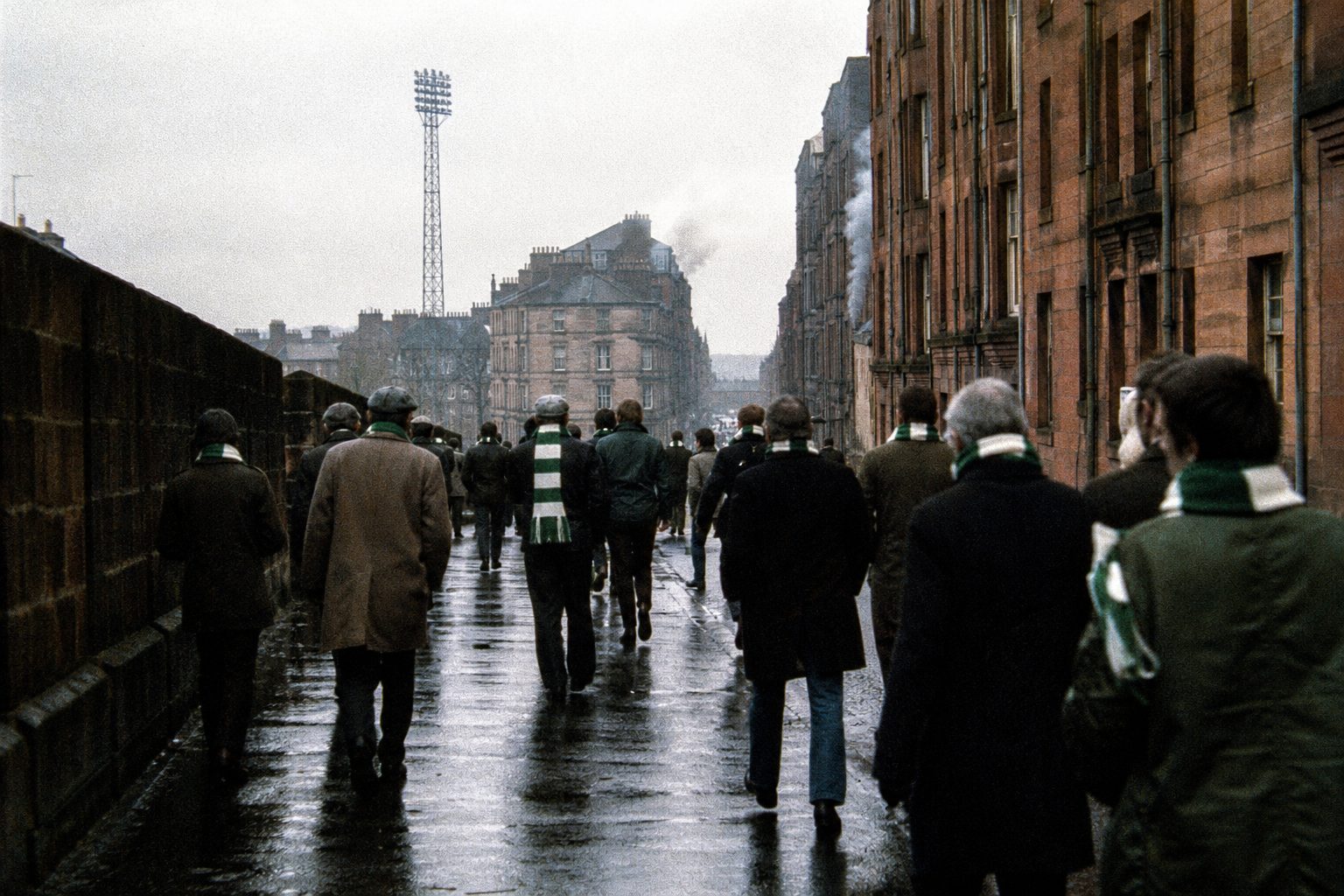
Celtic were formed in 1887 in the East End of Glasgow and played their first match in 1888. The club grew out of the city's large Irish community, and that origin explains almost everything about the way Celtic look: the green, the name, and the plant at the centre of the crest.
In 1892 the club moved to the site it still occupies, Celtic Park, known to generations of supporters simply as Paradise. The ground has been redeveloped more than once since, and the terraces that once held huge crowds were replaced by seats in the 1990s, but the address has not changed.
A club with that kind of community story did not need an elaborate coat of arms. It needed a symbol people could recognise at a glance, draw on a banner and stitch on a scarf.
The four-leaf clover and the shamrock tradition
The shamrock, a three-leaved plant, is the best-known emblem of Ireland. Celtic's crest uses the four-leaf version, the rare one that is said to bring luck. It keeps the Irish reference while adding a nod to fortune, which every football club could use on a wet night in the European Cup.
The clover is usually drawn in green, often inside a ring that carries the club's name. Over the decades its exact shape, the lettering around it and the tone of the green have been adjusted for different shirts and different eras, as happens with every crest that has to work on cotton, on polyester and on a phone screen.
What has not changed is the idea. Hunting for a dramatic redesign in Celtic badge history is mostly a waste of time; there was never a Leeds-style revolt or a modernist experiment that supporters had to fight off. The changes have been the kind of quiet redrawing that most fans would only notice with two shirts laid side by side.
Hoops first, Celtic crest second
For a lot of Celtic supporters the badge comes second to the hoops. The horizontal green and white bands are so distinctive that the shirt identifies the club even from the back row of the stand, at a distance at which no crest can be read.
That gives the Celtic crest a different job from the one a badge does at a club in plain colours. It does not have to announce the team; it confirms it. A small clover on the chest of a hooped shirt is enough. Kit makers have played with the width of the hoops, the collars and the exact shade of green over the years, and the clover has quietly survived every one of those experiments.
The finest night in the club's story underlines the point. In 1967 Celtic became the first British club to win the European Cup, beating Inter 2–1 in Lisbon with a side drawn almost entirely from around Glasgow. Photographs of the Lisbon Lions are remembered for the hoops, the sunshine and the celebrations, and very few people could describe the badge on those shirts from memory.
Comparing the Celtic badge with its neighbours
Across the city, the Rangers badge has gone down a different route, built around the club's initials and a lion. In England, clubs with strong civic roots usually reached for the town coat of arms, which is why the Liverpool badge has a liver bird and the Newcastle badge has seahorses.
Celtic are not a Premier League club, but the way English crests have changed over the decades makes a useful contrast, and the first half of that story is told in the evolution of Premier League club badges from Arsenal to Manchester United. All club histories are collected under football badges.
The future, of course, is already wearing the hoops: one six-year-old prospect caused a stir in a clip of Celtic's youngest talent.
Plenty of clubs have spent fortunes on design agencies to arrive at something as clean as a single green leaf.