 ThreeMatchBan
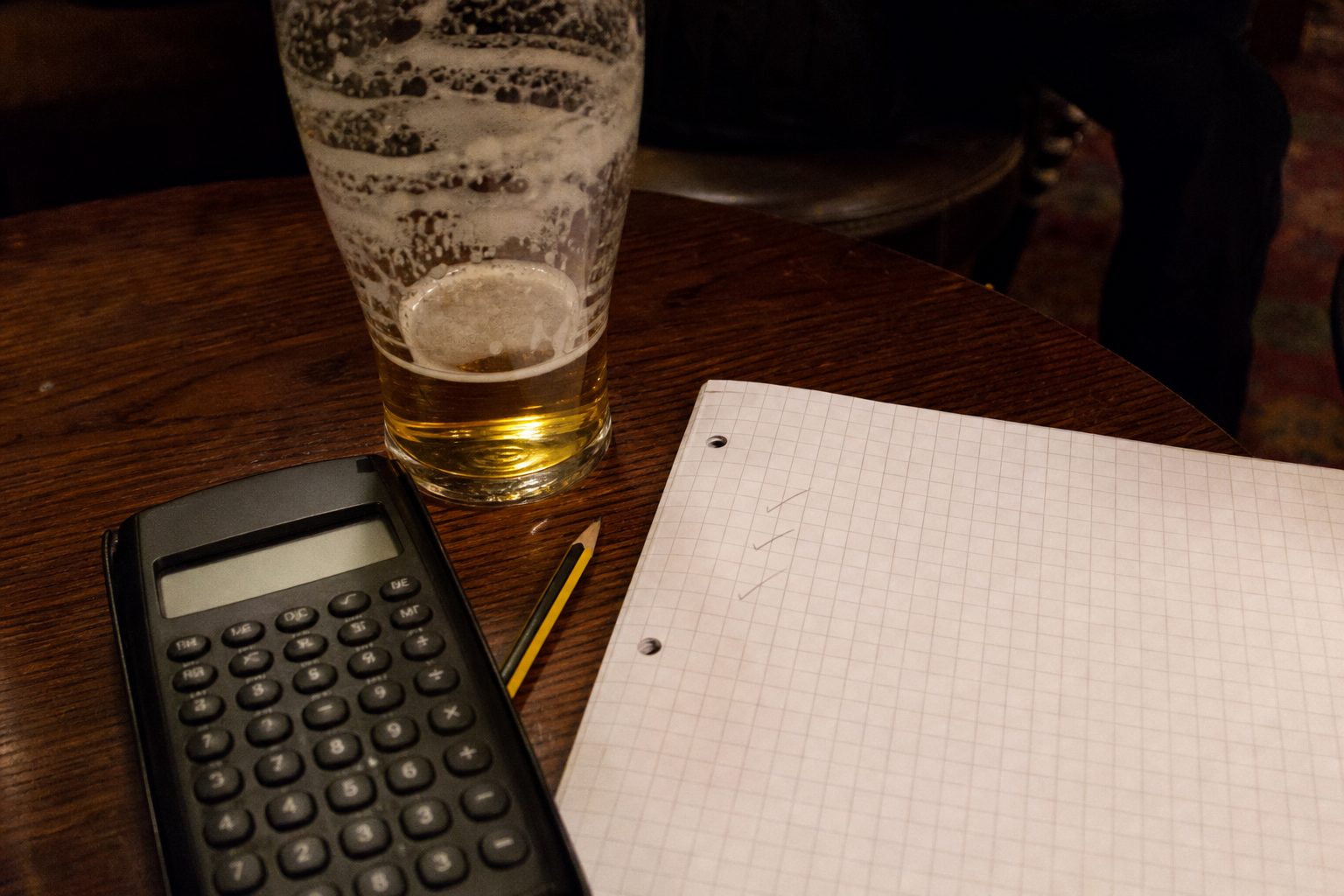
Some things in football are certain. One team will win the Premier League, three will go down, and the Saturday night pundits will spend the season stating the obvious at length. Everything in between is guesswork, which is exactly why a company called Betegy thought there was a gap for mathematics.
In November 2012 the title race was a blur of sky blue, red and blue, and at the other end a cluster of sides were producing the kind of under-par numbers usually only celebrated on a golf course. Picking a sure thing from that fixture list was, as ever, not simple.
A formula for the weekend
The pitch was straightforward. Betegy ran an algorithm over the possible outcomes of each match, then adjusted those probabilities using news analysis: a star striker ruled out on Friday, a goalkeeper short of fitness, a manager rotating before a European tie. The service then labelled each forecast by confidence, from a "recommended" pick down to an "extreme" one, and suggested an exact score.
That last part is the bold bit. Predicting a home win is one thing. Naming the scoreline is where most supporters, fuelled by optimism and the memory of last week's surrendered three-goal lead, come unstuck.
The appeal for the ordinary fan is obvious. Nobody has time to read every injury bulletin in two countries. A model that does it in seconds, and is not swayed by the fact that its owner supports the away team, removes the two biggest weaknesses of the Saturday morning punter: laziness and loyalty.
Four matches, two leagues
The test weekend of mid-November 2012 used two Premier League games and two from La Liga, each with an obvious favourite on paper:
- Aston Villa's trip to Manchester City, the champions, which looked doomed from the start for the visitors.
- Reading at home to an Everton side in strong form, flagged by Betegy as an "extreme" call.
- Barcelona against Real Zaragoza at the Camp Nou.
- Real Madrid against Athletic Club, another fixture where the bookmakers saw only one winner.
Three of the four were labelled as recommended. The game at the Madejski Stadium was the outlier. Exact-score bets were placed on the recommended lines through a handful of bookmakers, as the service directed.

The maths came out ahead. Three of the four outcomes went as forecast, and at the Camp Nou the algorithm called the precise scoreline, enough to cover the losing ticket and leave the weekend's stake intact. Not a fortune. A neat proof of concept, though, from a model that had never stood on a terrace.
What the numbers missed, and what came next
The season itself showed both the strength and the limit of the approach. The favourites largely held: Manchester United won the 2012–13 Premier League in Sir Alex Ferguson's final season, and Barcelona took La Liga with 100 points. At the bottom, Reading went down alongside Queens Park Rangers and Wigan Athletic, who won the FA Cup in the same campaign. No algorithm built on form tables would have offered much on that last combination.
Football's appetite for data has grown enormously since then. Expected goals, once a niche blog metric, became a fixture of Match of the Day graphics, and clubs such as Brentford and Brighton built recruitment models that would have looked like science fiction on a 2012 fixture list. The basic idea Betegy sold, that a computer reading team news can beat a supporter reading the table, is now standard practice inside the game.
The mathematics behind services like this is older than it looks. In 1982 the statistician Mike Maher showed that the goals a side scores in a match follow a Poisson distribution quite closely, so an attack rating and a defence rating for each team are enough to put a probability on every scoreline. In 1997 Mark Dixon and Stuart Coles corrected the model for the low-scoring draws it underrated and gave recent matches more weight. Most exact-score forecasts still start from that pair of papers.
The fan, meanwhile, still has a hunch about Saturday. That has not changed at all, and it still loses to the spreadsheet more often than anyone admits in the pub.
Please gamble responsibly. GambleAware.org 18+