 ThreeMatchBan
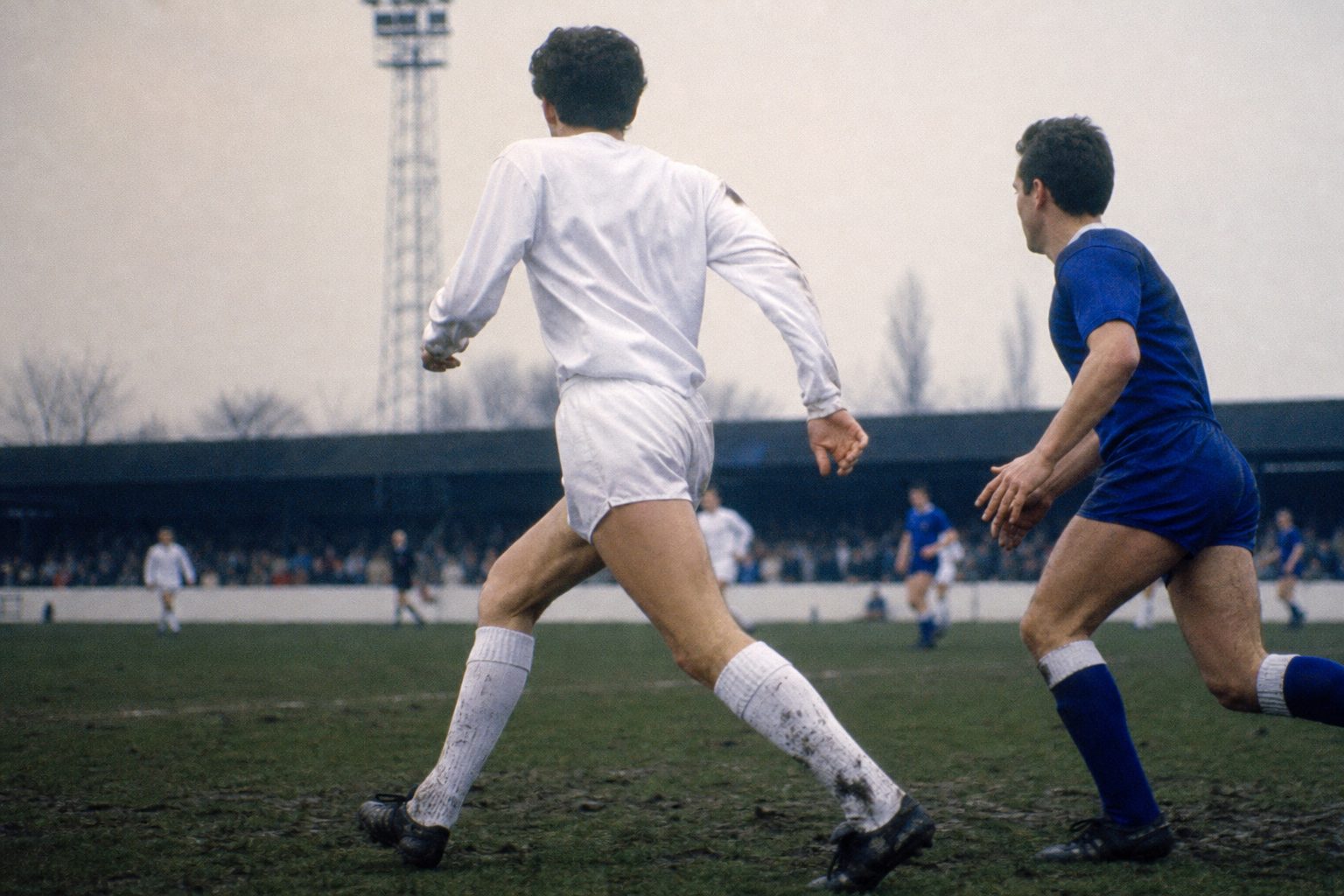
Few footballers of the 1990s were as instantly recognisable as Carlton Palmer. It was not the haircut or the boots. It was the legs: long, thin and apparently capable of reaching any loose ball within a five-yard radius without the rest of him needing to move.
Palmer was a central midfielder whose game was built on energy, reach and a willingness to tackle anything. He was rarely pretty to watch, and he was often the target of jokes, but managers kept picking him, including the England manager.
From the Hawthorns to Edgeley Park
Palmer came through at West Bromwich Albion in the mid-1980s and made his name at Sheffield Wednesday under Ron Atkinson, part of the lively Wednesday side of the early 1990s. A move to Leeds United followed in 1994, then spells at Southampton, Nottingham Forest and Coventry City as the decade went on.
He moved into management as player-manager at Stockport County and later took charge at Mansfield Town. Since leaving the dugout he has become a familiar voice in the media, rarely short of an opinion and never short of a long word.
His international career came under Graham Taylor. Palmer won 18 England caps, went to Euro 92 in Sweden, and scored once, in a 6–0 win over San Marino at Wembley in 1993. For many England fans he became a symbol of the Taylor years, fairly or not. The criticism was often unkind, and he took most of it with good humour.
The pros
The best compliment came from Ron Atkinson, who knew him well: “Carlton Palmer can trap the ball further than I can kick it.” It is a joke, but it is also a backhanded tribute to a player who covered huge amounts of ground and never hid.
There was more to like. Palmer was durable, honest and had a habit of turning up at both ends of the pitch in the same move. Managers at Leeds and Wednesday trusted him in big games, and teams rarely ran over the midfield when he was in it.
The cons
The sharpest line is usually credited to Dave Jones, his manager at Southampton, who suggested Palmer covered every blade of grass mainly because his first touch sent the ball so far away. It is a harsh line, and one that followed him for years.
Critics pointed to the same things for a decade. His passing range was limited, his touch could be heavy, and his tackling sometimes arrived a fraction after the ball had left. In the more technical game that arrived with the Premier League's foreign imports, players like Palmer began to look like relics of an earlier era.
The conclusion
Long legs. It really is that simple. No player of his generation could be identified more easily from a single silhouette. Anyone in the stands could pick him out from the far end of the ground.
Palmer belongs to a proud line of 1990s players who were remembered as much for how they looked as how they played, alongside the moustaches and sideburns in the top 10 of football facial hair. He wore the colours of Leeds, whose story is traced in the Leeds United badge history, and of Forest, whose tree crest appears in the Nottingham Forest badge timeline.
In the spring of 2012, as the countdown to the European Championship began, bookmakers were everywhere, and one invitation to fans simply read Bet on Euro 2012. England went out to Italy on penalties in the quarter-finals that summer. A midfielder who could cover every blade of grass in Kyiv's heat might not have gone amiss.
Please gamble responsibly. GambleAware.org 18+