 ThreeMatchBan
Before Roy Keane gave the corporate football fan a name, British comedy had already spotted him. The Fast Show, the BBC Two sketch show created by Paul Whitehouse and Charlie Higson, was full of characters who loved football in one way or another, and the clip that pairs the show with the prawn sandwich fan sits right on the fault line between the old game and the new.
The Fast Show and its football characters
The Fast Show ran for three series between 1994 and 1997, with specials afterwards. Its formula was speed: dozens of tiny sketches, catchphrases repeated until they became national property, and characters who appeared for thirty seconds and then vanished until next week. Whitehouse, Higson, Simon Day, John Thomson, Mark Williams, Caroline Aherne and Arabella Weir made up the core cast.
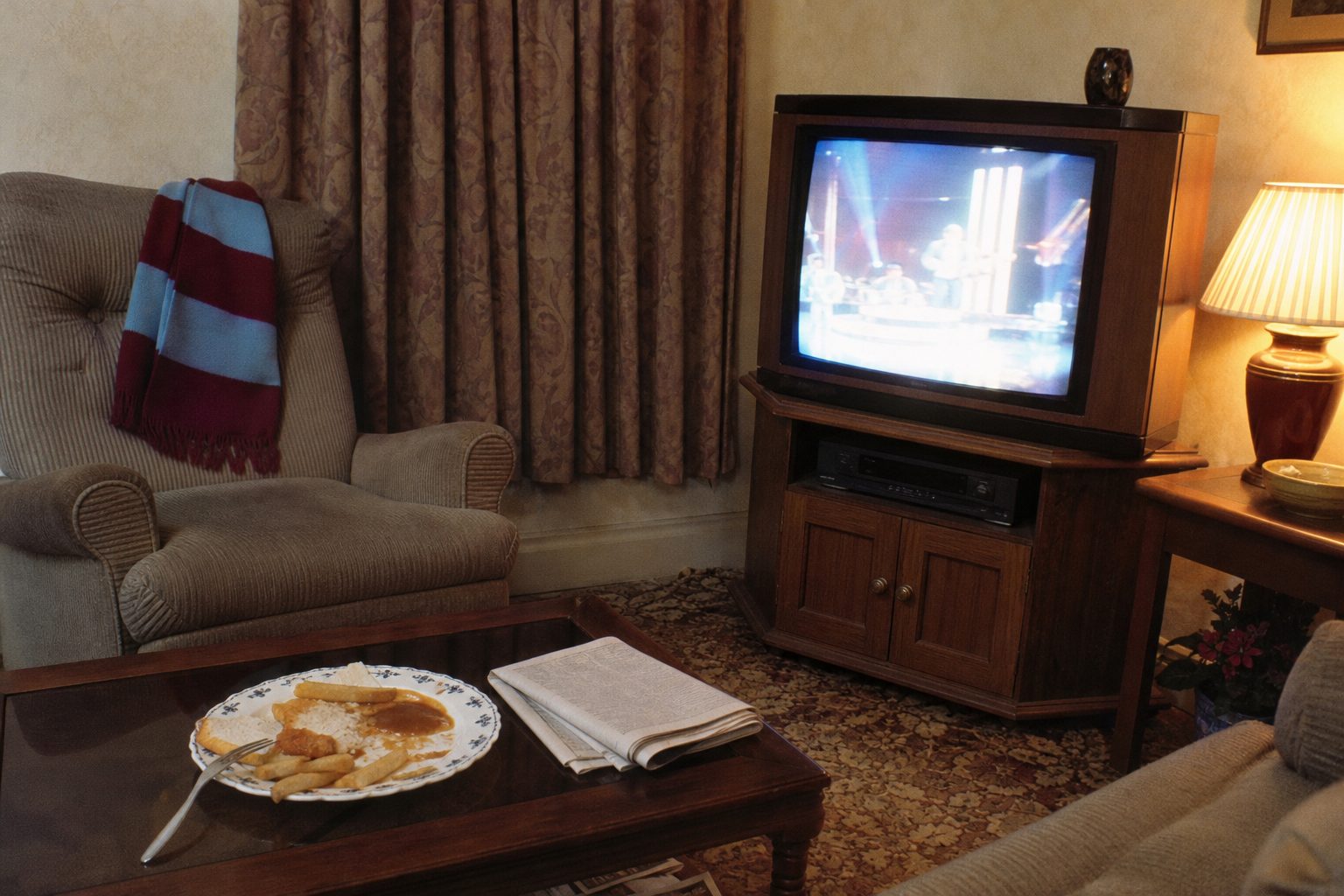
Football ran through it. The best known football creation was Ron Manager, played by Whitehouse, a rambling pundit lost in memories of small boys, jumpers for goalposts and muddy park pitches. His trademark “Marvellous, isn’t it?” became shorthand for a certain kind of misty-eyed nostalgia about the game before the money arrived. Any football fan of a certain age has heard it quoted in a pub.
Ron Manager worked because the target was real. In the mid-1990s English football was changing faster than at any time since the war. The Premier League had launched in 1992, Sky’s money was pouring in, all-seater stadiums had replaced terraces after the Taylor Report, and ticket prices were climbing. Old supporters felt something slipping away, and Ron Manager gave voice to that feeling while gently mocking it.
Where the prawn sandwich came from
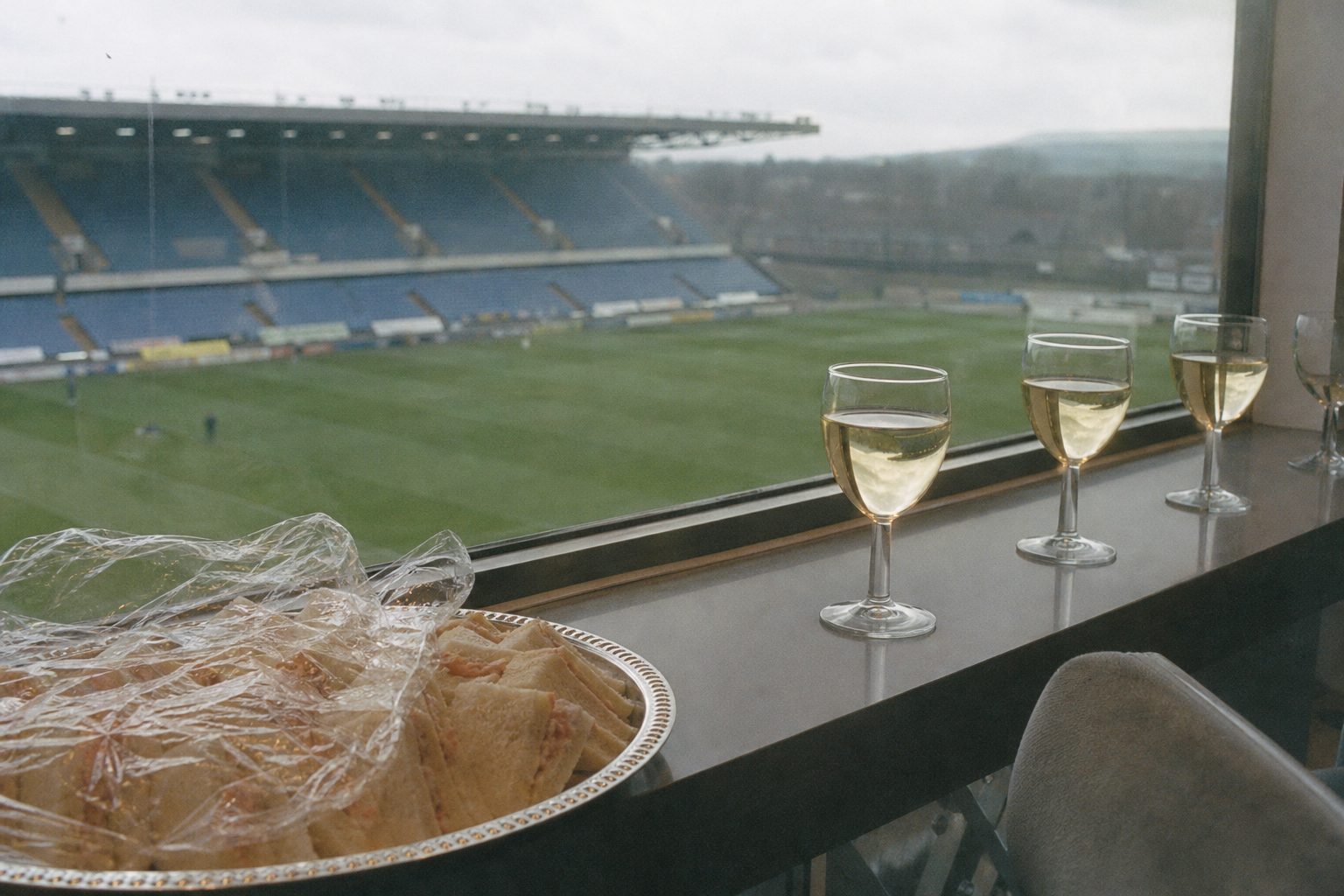
The phrase “prawn sandwich brigade” belongs to Roy Keane. In November 2000, after a Champions League game against Dynamo Kyiv at Old Trafford, the Manchester United captain complained about the atmosphere among parts of the home crowd. Away from home, he said, the fans were fantastic, but at home some of them had a few drinks and “probably the prawn sandwiches” and did not realise what was happening on the pitch.
It was meant as a rebuke to the corporate seats, and it stuck instantly. Within days “prawn sandwich” had become the standard insult for any supporter who seemed more interested in hospitality than in the match. Two decades and more later, it is still used in exactly that sense.
The comedy of the corporate fan, then, predates the phrase. The comic type of the man who goes to football for the free bar, talks through the game and cannot name the left-back was already a familiar figure in the late 1990s. Keane simply gave him a menu.
Why football comedy suited the format
Sketch comedy and football share a love of the instantly recognisable. A good sketch character, like a good terrace chant, depends on a phrase that everyone knows and can repeat. The Fast Show built its whole structure on that idea, and football fans, who spend their lives repeating songs and catchphrases, were a natural audience.
There was also an affection in the writing that much football television lacked. The show laughed at football people, but it clearly knew them. The bluster of the pundit, the fan who thinks money has ruined everything, the newcomer who has bought a seat but not the culture: all of these were drawn from life.
Football broadcasting itself has supplied plenty of material since. The gloomier side of modern punditry gets a going-over in the piece asking when co-commentary became so serious and miserable, and one former defender’s studio manner is examined in Martin Keown on Match of the Day.
The prawn sandwich fan today
The corporate supporter never went away. Grounds built or redeveloped since the late 1990s have far more hospitality space than the old stadiums ever had, and executive boxes are now a central part of every big club’s income. For an account of a day spent at the fancier end of a modern Premier League ground, read the visit to a day at the Emirates.
The joke has softened a little, too. Plenty of fans who mocked the prawn sandwich brigade in 2000 now take a client or a relative to a hospitality lounge once a season and enjoy every minute of it.
Ron Manager would have something to say about that. Probably something about jumpers.