 ThreeMatchBan

Episode 124. Before it starts, the standard advice: watch Inazuma Eleven in a well-lit room, and do not sit too close to the screen. The series is fast, loud and full of flashing special moves, and that warning is more relevant than it sounds.
The clip is episode 124 of the original Japanese series, shared on Dailymotion as inazuma eleven episode 124 by the uploader ultrablue77, and it comes from the closing stretch of a run that lasted well over a hundred episodes.
From games console to Saturday morning
Inazuma Eleven started life as a video game. Level-5, the Fukuoka studio behind Professor Layton, released it on the Nintendo DS in Japan in 2008, and it mixed a role-playing adventure with football matches that played out like turn-based battles. Inazuma means lightning, which tells you roughly how subtle it intended to be.
The anime followed the same year. Produced by OLM and shown on TV Tokyo, it ran from 2008 to 2011 and turned a niche game into a franchise. The games reached Europe in 2011, published by Nintendo, and in English the hero became Mark Evans and his school Raimon Junior High.
The goalkeeper as hero
The central character, Mamoru Endou, is a goalkeeper. That alone sets the series apart. Most football fiction, from Roy of the Rovers to Captain Tsubasa, puts its faith in a striker or a playmaker. Inazuma Eleven gives the lead to the one player who spends most of the match waiting.
Endou inherits his love of the game from his grandfather’s old training notebooks and spends the early episodes trying to keep Raimon’s football club alive with barely enough players to make a team. The rivals are elite academies with sinister coaches. The saves are named, shouted and illustrated with giant glowing hands. The God Hand is the signature move, and every big shot has a name too.
It is completely absurd and entirely sincere, which is the same combination that made Roy of the Rovers such a fixture of British childhoods. Melchester Rovers never had a striker whose shots caught fire, but the principle of the hero who wins every match in the last minute is much the same.
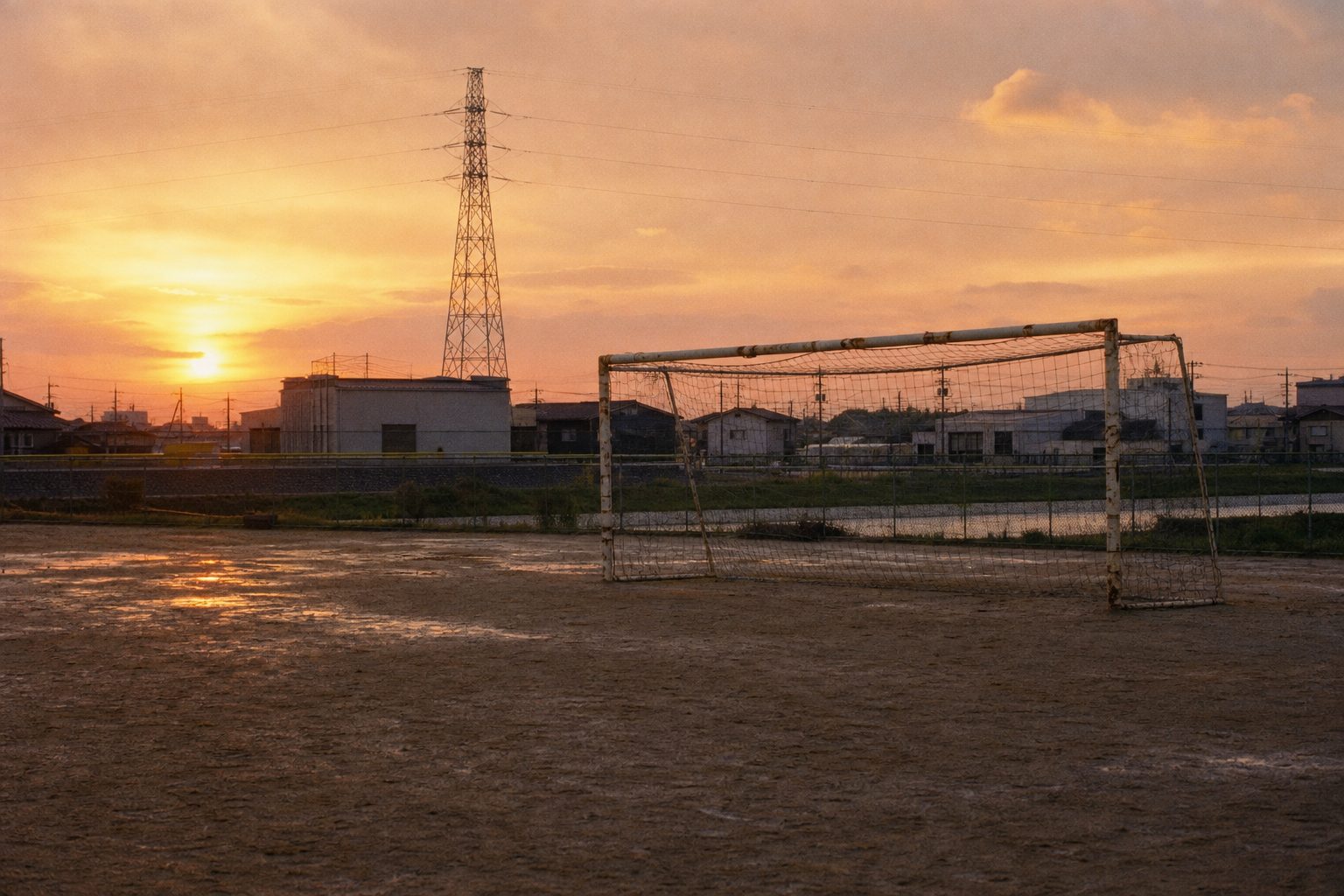
Near the end of the original series
By episode 124 the story had moved a long way from a struggling school club. The third and final arc of the original series took Endou and his team-mates into the Football Frontier International, a world tournament for youth sides, playing as Inazuma Japan against teams from other countries, each with its own set of impossible techniques.
The finish was close by then. Shortly afterwards the series gave way to Inazuma Eleven GO, set a decade later with a new generation of players at Raimon and Endou returning as a coach, and further games and spin-offs followed in the years after that.
Why the warning matters
The advice about lighting and distance has a specific history. In December 1997 an episode of Pokémon broadcast in Japan contained a sequence of rapidly flashing red and blue frames, and hundreds of children were taken to hospital with symptoms including seizures. Japanese broadcasters responded with guidelines on flashing images, and many cartoons since then have opened with a caption telling young viewers to keep the room bright and sit back from the television.
A series in which footballers fire lightning bolts at goal is exactly the kind of programme those captions were written for.
Japan’s football cartoons
Inazuma Eleven belongs to a long tradition. Captain Tsubasa, which began as a manga in 1981, is the best known, and its fans include professionals across Europe and South America. Shoot!, another 1990s favourite, is among the Japanese football anime clips in the videos section.
The oddest relative of all may be a live-action film, the 2006 comedy Crab Goalkeeper, which suggests that Japanese storytellers have thought harder about goalkeeping than anyone else. Endou would approve. He would probably also try to learn the crab’s special move.