 ThreeMatchBan
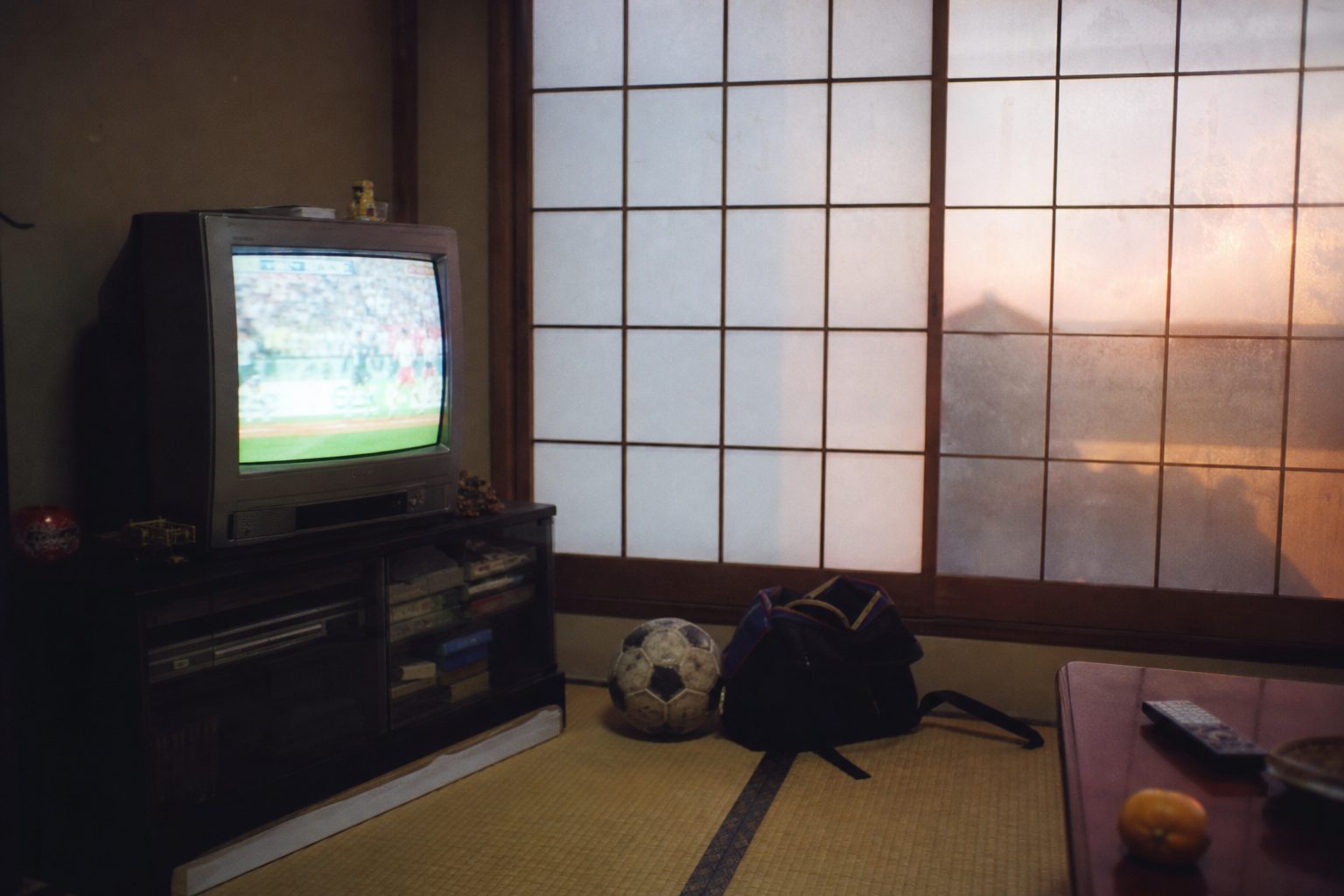
Here is a football cartoon that British audiences were sadly denied. Aoki Densetsu Shoot!, usually translated as Blue Legend Shoot!, was made for Fuji TV between November 1993 and December 1994, and for a generation of Japanese children it sat alongside the J.League as proof that football had arrived.
The story of Blue Legend Shoot!
The series follows Toshihiko Tanaka, a boy who has just started at Kakegawa High School. He has chosen the school for one reason: to play football with his idol, the gifted older player Yoshiharu Kubo. What follows is classic sports anime territory. Training sessions, rivalries with other schools, injuries, team-mates who need persuading and the slow realisation that talent alone does not win matches.
The anime was adapted from a manga, Shoot!, which ran in Kodansha’s Weekly Shōnen Magazine through the 1990s. Manga and anime fed each other in Japan at the time, and a successful comic strip was the obvious route to a television series.
The opening titles, still easy to find online as Aoki densetsu Shoot Opening, uploaded by kidabashasha, are a perfect slice of early-1990s Japanese pop television. Bright colours, speed lines, dramatic close-ups of boots striking a ball and an upbeat theme song that sticks in the head for days.
Japan, football and the timing of the show
The timing was no accident. The J.League kicked off in May 1993, six months before the first episode aired, and it was an immediate phenomenon. Big crowds, colourful kits, foreign stars such as Zico and Gary Lineker, and a level of merchandising that football in Japan had never seen before. Suddenly every child wanted a ball.
The national team was riding the same wave. In October 1993, Japan came within seconds of qualifying for the 1994 World Cup, only for Iraq to equalise in stoppage time in Doha. The match is still remembered in Japan as the Agony of Doha. Shoot! went out on Fuji TV in the weeks after that heartbreak, feeding a country that had fallen hard for the game and was hungry for more of it.
Living in the shadow of Captain Tsubasa
Any football anime of the period is measured against Captain Tsubasa. The original manga began in 1981 and its anime adaptation of the 1980s became a hit far beyond Japan. In Italy it went out as Holly e Benji, in France as Olive et Tom, and across Latin America and the Middle East it was a staple of children’s television. Plenty of professional footballers have said they grew up watching it.
Shoot! is a different animal. Where Tsubasa leans into impossible overhead kicks and pitches that seem to curve over the horizon, Shoot! keeps its feet nearer the ground. It is a school drama as much as a sports story, more interested in friendship and the pressure of living up to an idol than in superhuman shots.
That relative realism may be one reason it never travelled as widely. Tsubasa had already claimed the international market, and broadcasters outside Japan had little appetite for a second football cartoon.
Why Britain missed out
British children’s television in the early 1990s did not have much room for Japanese animation, football-themed or otherwise. The football cartoon most British children knew was a home-grown comic hero instead: Roy Race, whose strip ran for decades before the original weekly comic closed in 1993. There is more on that in the piece on the return of Roy of the Rovers.
The appetite was there, though. The same generation spent hours on football video games imported from Japan, such as the Konami series covered in the International Superstar Soccer 64 retrospective. Cartoon versions of real footballers have their own charm too, as the round-up of football characters drawn as cartoons shows.
Watch the opening titles once and the gap is obvious. Somewhere in a parallel 1994, British children came home from school, switched on the television and argued about whether Tanaka would ever be as good as Kubo.
Instead they got repeats of the same three cartoons. Japan got the better deal.