 ThreeMatchBan
- 1889Sheffield United founded at Bramall Lane.
- 1907A newspaper cartoon draws Wednesday as an owl and United as a blade, fixing the Blades nickname.
- 1925A badge based on the city arms is worn for the FA Cup final.
- 1936The city arms badge appears again for another FA Cup final.
- Late 1950s–1970sCrossed blades and a white Yorkshire rose emerge; the year they became the official crest is disputed.
- TodayRoundel with two white crossed blades on black, a white rose above, SHEFFIELD UNITED F.C. and 1889.
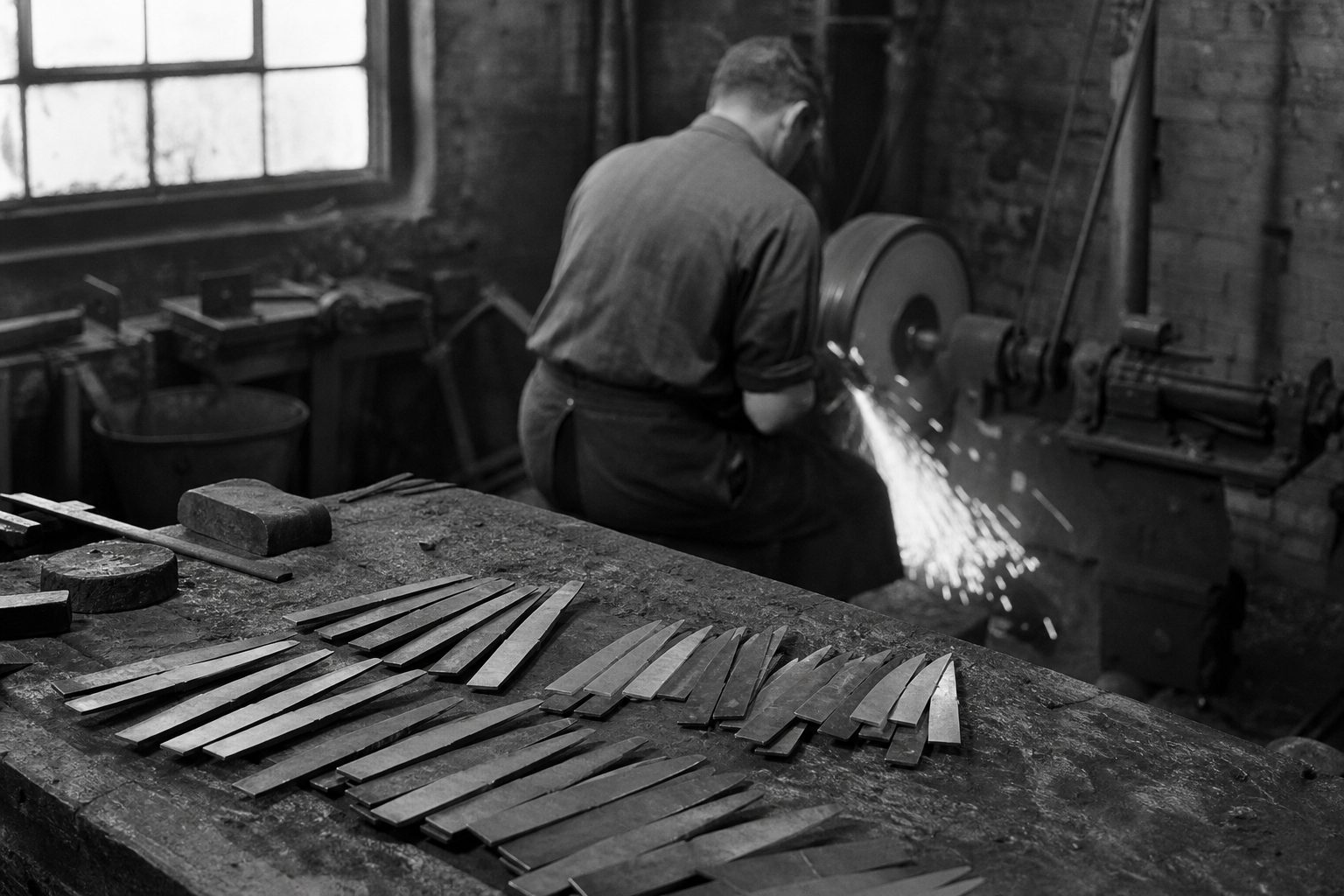
Sheffield United were the Blades long before they wore blades on the chest. The nickname belongs to the city: Sheffield made its name on steel and cutlery, and in 1907 a newspaper cartoonist drew the two clubs as an owl for Wednesday and a blade for United. The badge took decades to catch up. Today the Sheffield United crest is a black roundel with two white crossed blades, a white Yorkshire rose above them, the club name around the top and 1889 at the bottom. It is about as direct a piece of local symbolism as English football has.
Blades before badges: the 1907 cartoon
Sheffield United were founded in 1889 at Bramall Lane, a ground that had already hosted cricket for decades. It was the rivalry with Wednesday, and the newspapers that covered it, that fixed the names. In 1907 a cartoon showed Wednesday as an owl, after their Owlerton home, and United as a blade. Both names stuck.
Plenty of clubs got their nicknames that way, from a cartoonist looking for a quick visual shorthand. Few took the shorthand so literally onto the shirt.
City arms for the cup finals of 1925 and 1936
Before the blades, badge historians record that a crest based on the arms of the City of Sheffield was used only for the big occasions: the FA Cup finals of 1925 and 1936.
The first of those was a good day. United beat Cardiff City 1–0 at Wembley in 1925 to win the cup for the fourth time. The second was not; Arsenal beat them 1–0 in 1936. Both finals belong to a period when English clubs often wore civic arms for a cup final and plain shirts for league matches, which is why so many old badges are really borrowed town crests.
When the crossed blades arrived
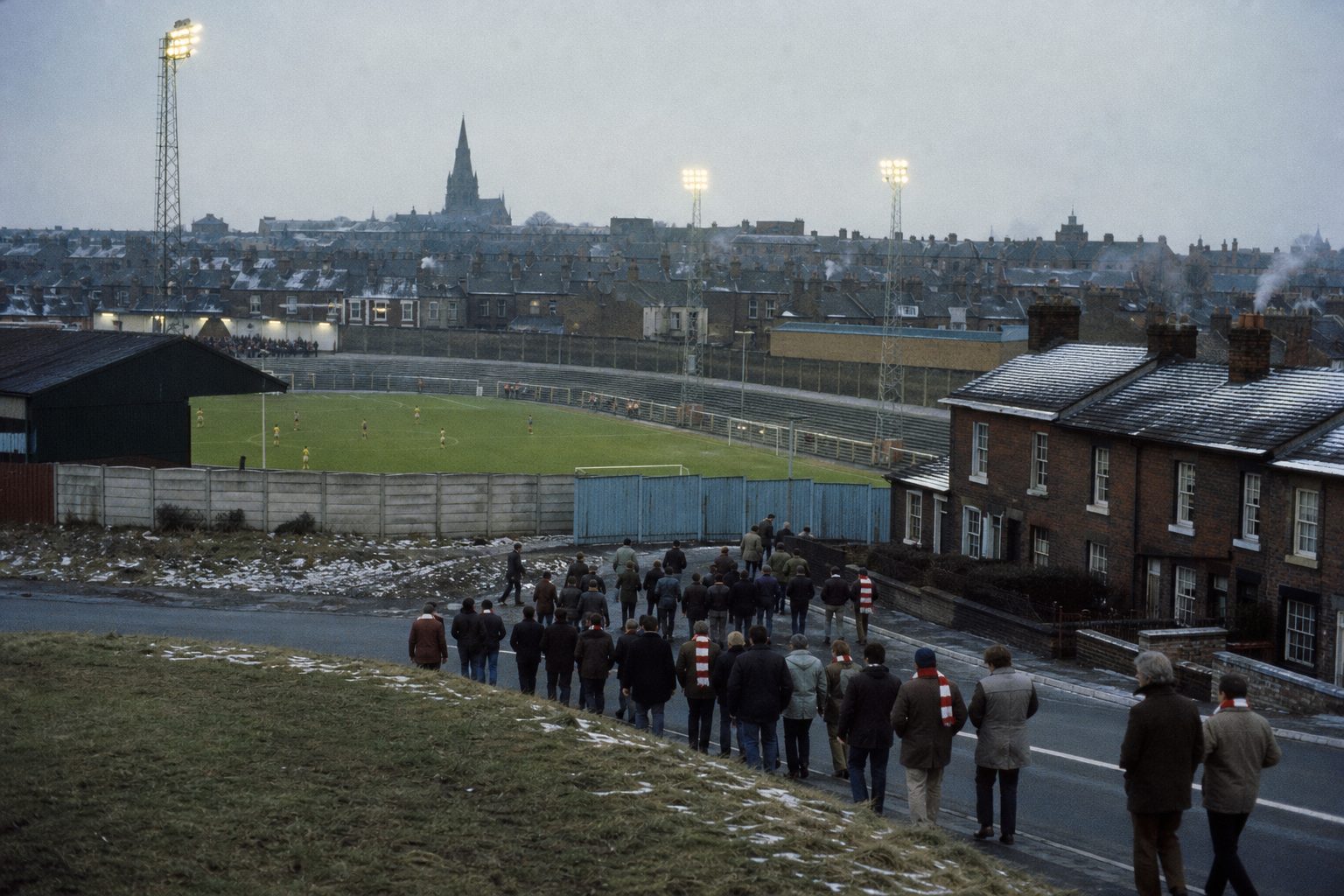
The crossed blades and white rose first appeared in the late 1950s. When exactly they became the official Sheffield United badge is less clear. Different sources give the early 1970s or 1977, and none of them is solid enough to settle it, so the honest answer is that the old Sheffield United badge grew into the official one at some point in that period.
The design itself is not in doubt. Two crossed blades, white on black, sit at the centre, with the white rose of Yorkshire above. The black field sets the badge apart from the red and white stripes of the shirt.
The white rose is shared with another Yorkshire club. The Leeds United badge carries it on a shield, and its absence from the 2018 "Leeds Salute" design was one of the main reasons that crest was dropped within days.
The Sheffield United crest today
The current roundel reads "SHEFFIELD UNITED F.C." across the top and "1889" at the bottom, with the blades and the rose inside on a black field. No change since 2011 has been recorded in badge-history sources. In an era when many clubs have reworked their crests for new stadiums, anniversaries or global audiences, Sheffield United's has stayed close to the design fans have known since the 1970s.
There is no motto on the crest, or at least none that any reliable source records. The badge does not need one. Steel and Yorkshire are the whole message.
A good comparison sits across the Peak District in the Potteries. The Stoke City badge is built around the same idea, with a bottle kiln for the local industry, and for 2026/27 the club based a new crest on its 1977 version after years with a plainer shield. Sheffield United never went through that cycle.
Sheffield United badge history in one sentence
A nickname from a 1907 cartoon, borrowed city arms for two cup finals, then crossed blades and a white rose from the late 1950s onwards: that is the whole Sheffield United badge history, and it has barely needed a rewrite. The rest of the club histories are on the football badges hub, and the wider run of crests from Newcastle onwards is in the evolution of Premier League club badges from Newcastle United to Wolverhampton Wanderers. Bramall Lane opened in 1855 as a cricket ground; the steel on the badge tells an older Sheffield story still.