 ThreeMatchBan
When Michael Jackson died on 25 June 2009, the coverage ran for weeks. Television schedules filled with his videos, his albums climbed back up the charts and a new generation of listeners discovered Thriller and Off the Wall for the first time. Almost none of it mentioned Exeter City.
Yet for one afternoon in the summer of 2002, the most famous entertainer on the planet was the guest of a small, struggling Football League club in Devon. It remains one of the oddest days in the history of the English game.
How the King of Pop ended up at St James Park
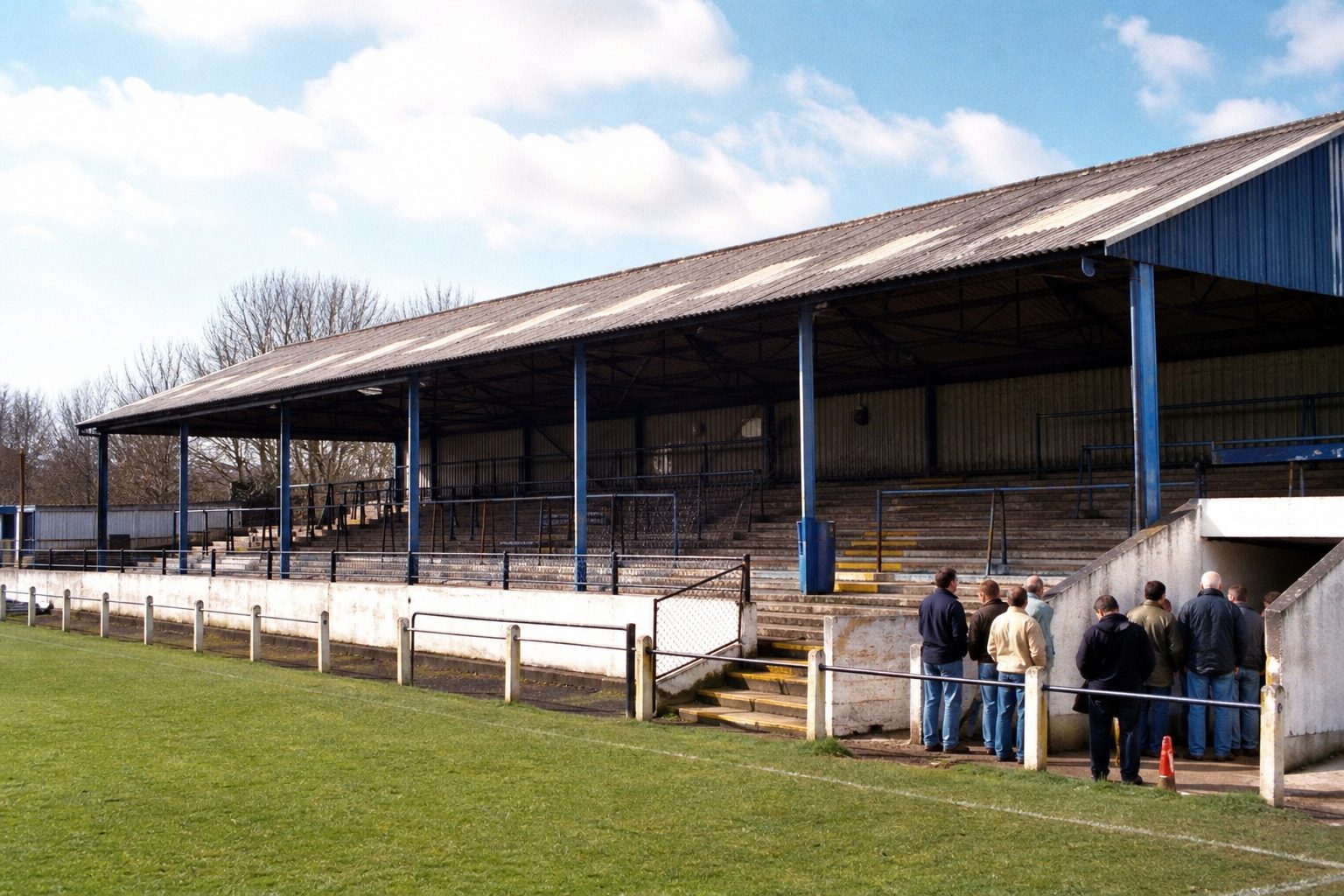
The connection was Uri Geller. The spoon-bending television personality had become co-chairman of Exeter City, and he counted Jackson among his friends. In June 2002 he brought the singer to St James Park, the club's old ground near the city centre, where Jackson addressed a crowd, spoke about peace and children, and was named an honorary director of the club.
It was a bewildering sight. Exeter were a Third Division side used to modest gates and long trips to places like Hartlepool and Carlisle. Suddenly the press from around the world were in the West Country, crowding around a stadium that had rarely seen a camera crew outside of an FA Cup run.
Supporters who were there still talk about it. For a club of that size, the publicity was enormous.
A bad omen for the Grecians?
Whatever the glamour of the day, it did nothing for results. The 2002–03 season ended with Exeter relegated from the Football League into the Conference, the first time the club had dropped out of the league since being elected to it. Off the pitch the finances were in a serious state, and the ownership of the period left deep scars. The Exeter City Supporters' Trust took control in 2003 and has run the club ever since, which makes the Grecians one of the best-known fan-owned clubs in England.
It would be unfair to blame a pop star for a relegation. Exeter's problems were about money, recruitment and a squad that was simply not good enough, and the guest of honour had nothing to do with any of that. Still, the contrast between the global spectacle of June 2002 and the grim reality of the following May is hard to ignore.
The recovery took five years. Exeter won the Conference play-off final at Wembley in 2008, beating Cambridge United, and climbed straight out of League Two the following season, so by the time Jackson died in 2009 they were preparing for life in League One.
Not his first brush with the game
Exeter fans who liked to think they were his only football love had a surprise in store. A photograph from 1983 shows Jackson wearing an OGC Nice shirt and striking the sort of stiff catalogue pose more often seen in a high-street clothing advert. It later surfaced on the website of the French sportswear firm Le Coq Sportif.
So the honorary directorship at St James Park was, at the very least, his second flirtation with football. There is no evidence he followed either club in any meaningful way.
His strangest football legacy came later, and it was not in Devon. In 2011 Mohamed Al Fayed unveiled a statue of Jackson outside Craven Cottage, a tribute to a friend who had once attended a Fulham match as his guest. Plenty of Fulham supporters found it baffling, and the club removed it in 2013 after Al Fayed sold up. The story of that statue, and the arguments it caused, is told in the piece on the Jackson statue at Fulham.
Celebrities, football and the odd photo opportunity
Jackson's day at Exeter belongs to a long tradition of famous faces wandering into football for reasons nobody quite understands. Elton John genuinely shaped Watford as chairman. Others turn up once, wave to the cameras and are never seen at the ground again. Exeter's honorary director fell firmly into the second group.
The summer of 2009 was full of these crossovers. It was the same close season in which Roger Federer's Wimbledon outfit was compared to a football away kit, a story covered in Federer and the Arsenal third shirt, and when spotting footballers who resembled celebrities became a pastime of its own, as the football lookalikes gallery shows.
The Exeter episode lasted a single afternoon, but it has outlived most of the club's results from that era. Ask a Grecians supporter of a certain age about the 2002 season and the conversation tends to begin with a relegation, then drift, inevitably, to the day the most famous man in pop music stood in front of the old grandstand and talked about healing the world.
The honorary title, as far as anyone knows, was never formally revoked.