 ThreeMatchBan
Every World Cup leaves behind a handful of pictures that refuse to fade. USA 94 had Diana Ross sending a penalty wide at the opening ceremony while the goal fell apart anyway. France 98 had the mystery of Ronaldo's fit on the day of the final. Germany 2006 ended with Zinedine Zidane's head-butt on Marco Materazzi. Specific results go cloudy over time, but some moments stay in full Technicolor.
They rarely belong to the final. Memory has little interest in the importance of a fixture and a great deal of interest in charm. A month of afternoons spent quietly avoiding work, watching match after match after four years without a tournament, builds up a personal picture of the competition. Even the dull games play their part, as anyone who sat through Paraguay against Japan, settled on penalties after 120 goalless minutes, can testify.
South Africa 2010 ended on 11 July with Spain beating the Netherlands 1–0 after extra time in Johannesburg, Andrés Iniesta scoring the winner. These are the moments from around that final that lingered.
Vuvuzelas and Maradona
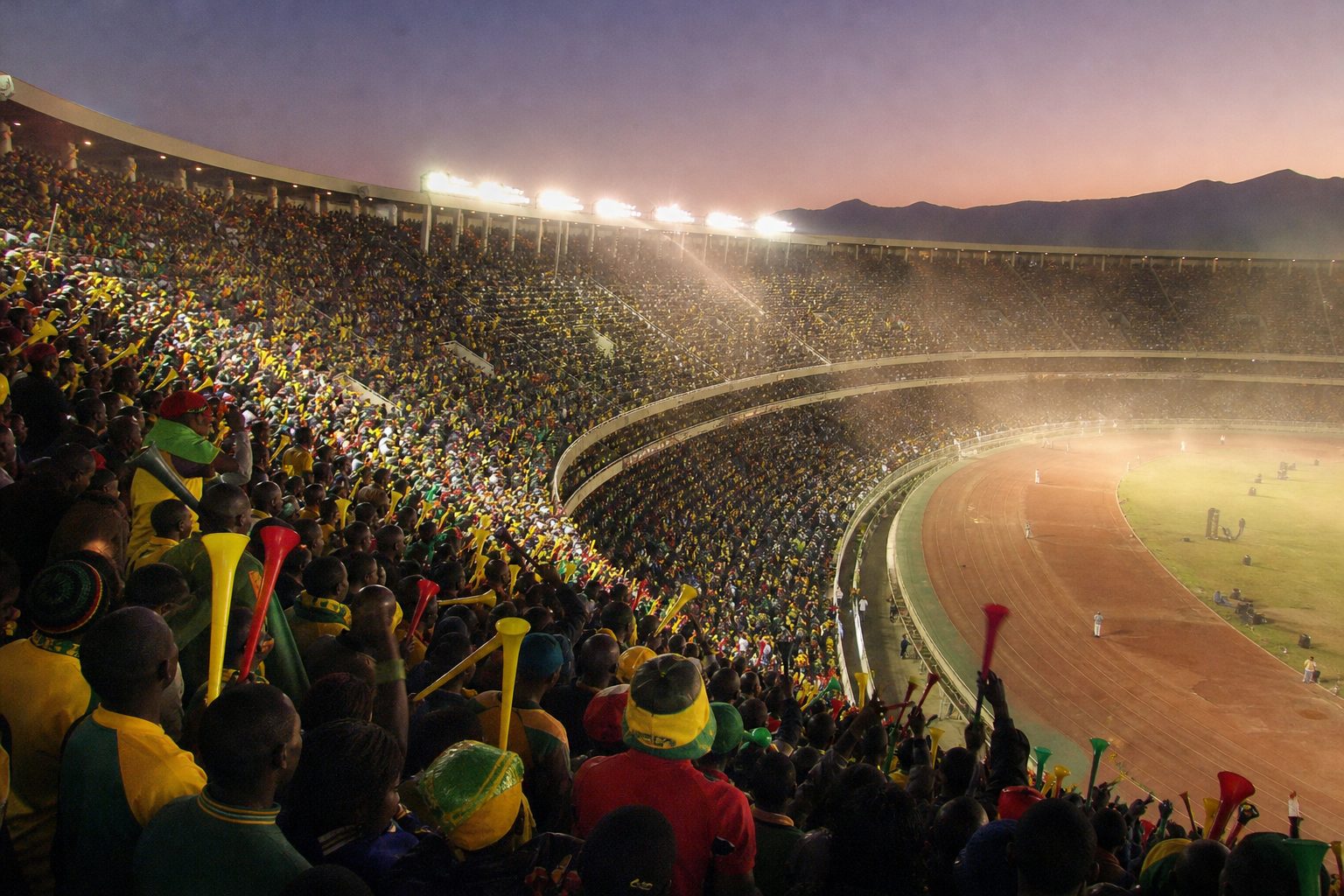
No previous tournament had such a distinctive soundtrack. The vuvuzela, a long plastic horn, droned through every match like a swarm of angry bees that had moved into the viewer's ear. Some supporters defended it as the one thing that gave the tournament its own identity, and they had a point. It certainly separated 2010 from every World Cup before it. Broadcasters struggled to filter it out, and the noise even drowned out some commentary, which was not always a loss.
Then there was Diego Maradona. Any legend returning as a manager is worth watching, but Maradona in charge of Argentina was something else. He left a squad full of world-class players at home, picked Newcastle's Jonás Gutiérrez at right-back and had earlier been banned for two months by FIFA for a foul-mouthed outburst at journalists after qualification. His team attacked with real fluency until Germany took them apart. The burden of being compared with him is explored in the story of the many new Maradonas.
England and the goal that never was
England's tournament was a different kind of failure. There was no penalty shoot-out heartbreak and no plucky defeat. After a goalless draw with Algeria in Cape Town, booed off by their own supporters, Wayne Rooney complained to a television camera about the reaction. Then came Bloemfontein, where Germany won 4–1, England's heaviest World Cup defeat.
At 2–1, Frank Lampard's shot hit the bar and bounced well over the line, yet no goal was given. On the same day Carlos Tevez scored for Argentina against Mexico from a clearly offside position. Sepp Blatter, who had long resisted the idea, admitted that it would be "nonsense not to reopen the file on goal-line technology". It took another two years: the lawmakers approved it in July 2012, and it was used at the 2014 World Cup in Brazil.
Ghana against Uruguay
On paper the quarter-final in Johannesburg looked like a tentative meeting of two overachievers. Instead it produced the most dramatic finish of the tournament. With the score at 1–1 in the last moments of extra time, Luis Suárez punched a goal-bound header off the line and was sent off. Asamoah Gyan, with the chance to take an African team into a World Cup semi-final for the first time, hit the bar with the penalty.
In the shoot-out Gyan bravely stepped up first and scored. It was not enough. Sebastián Abreu chipped the decisive kick down the middle, and Uruguay went through 4–2 on penalties. Slow-motion replays, a feature of the coverage that brought viewers closer to the action than ever before, caught the realisation on Gyan's face in agonising detail.
Germany, the old enemy reborn
The team that knocked England out also produced the best football of the tournament. Gone was the old reputation for joyless efficiency. Mesut Özil, Bastian Schweinsteiger, Sami Khedira and the young Thomas Müller played with a thrilling appetite for goals, and the 4–0 win over Argentina in Cape Town was the finest attacking display of the month. It was hard to resent them. Four years later most of that group won the World Cup in Brazil.
Elsewhere, the 2006 finalists France and Italy managed three points between them from six group matches and went home early. Chris Waddle's furious verdict on English football on BBC Radio 5 Live became a small classic of its own.

An unlikely pundit
One of the more refreshing voices of the summer came from outside football altogether. Lynne Truss, best known for her book on punctuation, Eats, Shoots & Leaves, became an unexpected World Cup commentator for BBC Radio 4. Her monologues were funny, well informed and clearly written by somebody who actually followed the game rather than someone jumping on the bandwagon that rolls through town every four years. They made a welcome contrast with the familiar clichés of the television studios, the kind dissected in a look at how co-commentary lost its sense of fun.
The Spanish commentators deserve a mention too. Their passion, heard on clips that did the rounds online, made English coverage sound positively sleepy. Another reason, that summer, to wish to be Spanish. Players from that tournament who later turned out in England feature in the top 10 World Cup finalists in the Premier League.