 ThreeMatchBan
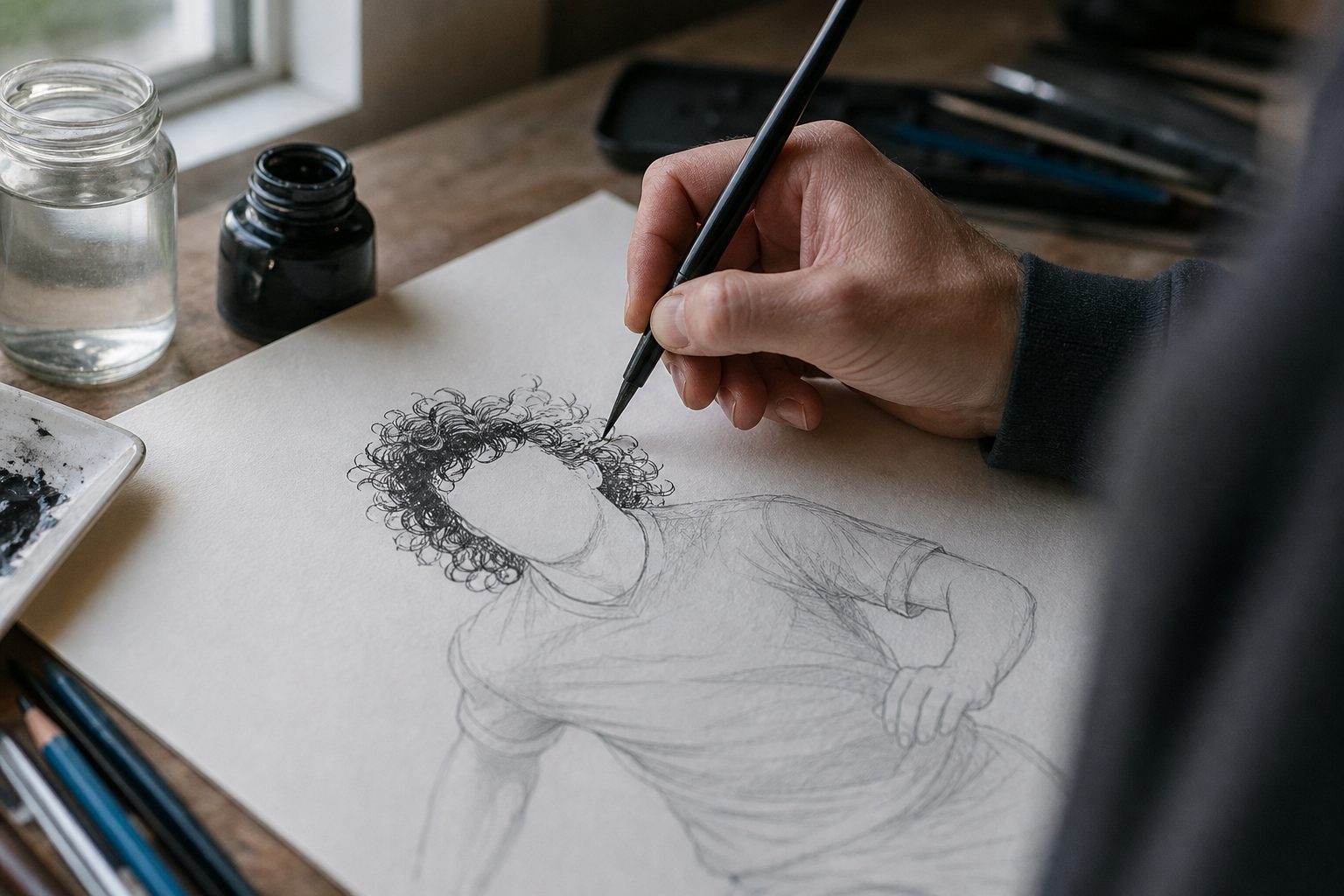
Some footballers seem to have been designed with a cartoonist in mind. Carlos Valderrama arrived at three World Cups with a cloud of blond curls that needed no caption. Others are almost impossible to draw: neat haircut, regular features, a kit with nothing to grab hold of. The football caricaturist spends most of the working day deciding which of those two kinds of player is sitting on the page.
Davey Blackett's set of inked players, introduced here with a few of his deft pen strokes, sits firmly in the first camp. The longer study of the five cartoon cards and the lives behind them covers Koeman, Laudrup, Valderrama, Llorente and Riquelme one by one. This piece is about the craft itself: why a few strokes can carry a whole career.
An old trade in the back pages
Drawing footballers is as old as the popular sports page. Before photographs could be printed quickly and cheaply, newspapers relied on illustrators to show readers what a match or a player looked like. Tom Webster's sports cartoons for the Daily Mail between the wars and Roy Ullyett's long run at the Daily Express kept the habit alive well after cameras took over the news. Their job was never accuracy. It was recognition at a glance, plus a joke.
Comics took the same skills in a different direction. Roy of the Rovers first appeared in Tiger in 1954 and won his own weekly title in 1976, and generations of children learned what a footballer "looked like" from those panels: square jaw, tidy hair, shirt always tucked in. The real players of the 1970s and 1980s were far less tidy, which is exactly what made them fun to draw. The return of that comic strip is covered in a look at Roy Race's comeback.
What makes a player drawable
Caricature works by exaggeration, so it needs something to exaggerate. In football that usually means one of four things.
- Hair. A perm, a mullet, a mop of curls or a shaved head with a single tuft. Valderrama is the obvious case, but Ruud Gullit's dreadlocks and Alexi Lalas's ginger goatee did the same job.
- Facial hair. A moustache is a gift to an artist: two or three strokes and the player is instantly identified. The finest examples of the breed are ranked in the top 10 of football facial hair.
- Posture. Some players are recognisable from the way they stand. Riquelme's hunched, heavy-lidded stroll and Eric Cantona's upturned collar are as personal as a signature.
- The kit. Stripes, hoops, sashes and big collars tell the reader where the player belongs before the face does any work.
The hardest subjects are the clean-cut professionals. A tidy midfielder with a short back and sides gives the artist almost nothing to push, so the drawing has to lean on expression instead: a frown, a grin, a raised eyebrow. That is where real skill shows.
The sticker album influence
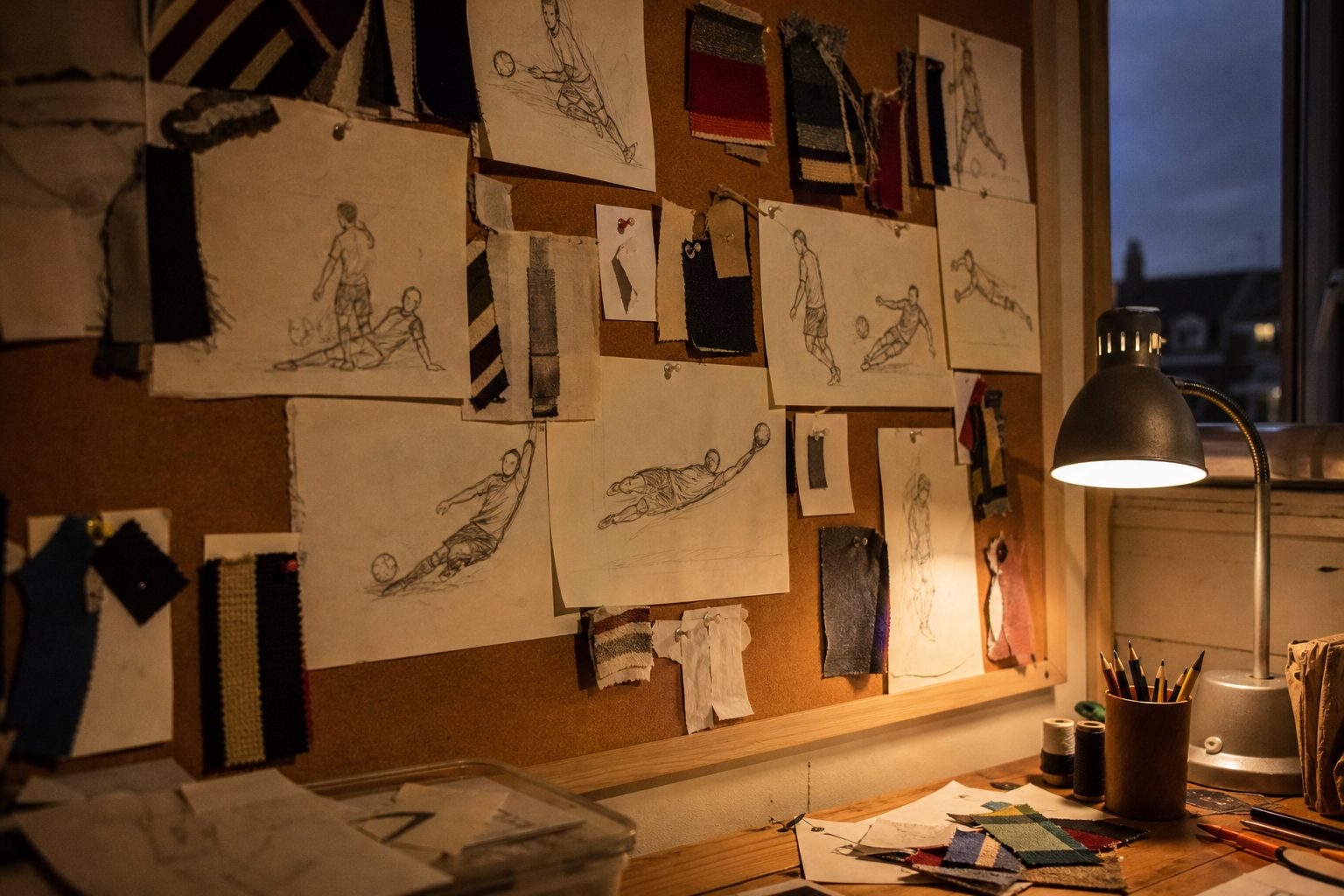
Blackett's style borrows heavily from the sticker album: a head-and-shoulders portrait, a plain background, a name across the top. That format has shaped how football fans picture players since Panini produced its first World Cup album for Mexico 1970. A sticker reduces a footballer to a face and a collar, and so does a good caricature. It is no coincidence that the two sit so comfortably together.
Anyone who spent childhood pocket money on packets of stickers will recognise the pull, described at length in a love letter to football stickers. The cartoon version adds what the photograph cannot: an opinion. A sticker shows how a player looked on picture day. A caricature shows how supporters felt about him.
Line, not likeness
The best football cartoons are not detailed. Blackett's portraits use thick outlines and flat colour, and leave out almost everything a photograph would include. The skill lies in what stays: the exact curve of a fringe, the angle of a moustache, the way a collar sits open at the neck. Get those right and the rest of the face can be little more than a suggestion.
Kits get surprising care in this kind of work. A slightly wrong shade of red or a stripe of the wrong width will annoy a supporter far more than a misplaced nose, because the shirt carries the memory of a whole era. The faces are playful; the collars are researched.
Players from the 1980s and 1990s suit the treatment best. Their hair was bigger, their shirts were louder and television had not yet polished them into identical athletes. A modern squad photo, all skin fades and slim-fit training tops, is a far tougher assignment.
More from the drawing board
The selection here was only a taste. More of Davey's cracking craftsmanship could be found on The World Cup Draw, a project built around the players of football's biggest tournament, and he shared new sketches as they came off the desk on Twitter. For anyone who prefers to test their memory of those faces rather than admire them, the facially fuzzy sticker quiz is full of moustaches that would keep a caricaturist busy for a month.