 ThreeMatchBan
Over 600 club appearances. 125 caps for Brazil. A World Cup winner’s medal and two Copa América titles. When Roberto Carlos da Silva Rocha announced his retirement in 2012, at the age of 39, he left behind a career that changed what people expected of a left-back.
The tribute here is mostly about that left foot. There is a compilation, Recordando a Roberto Carlos from Jorge Aguilar on Vimeo, and then a second clip that shows a different side of him: a pitch invader asks for an autograph and gets one.
From Palmeiras to the Bernabéu
Roberto Carlos was born in 1973 in Garça, in the state of São Paulo. He made his name at Palmeiras, winning the Brazilian championship twice in the mid-1990s, and in 1995 he moved to Europe with Inter. The single season in Milan did not work out, and he was soon on the move again.
Real Madrid had no such doubts. He arrived in 1996 and stayed for eleven seasons, a fixture on the left through the Galácticos era. Madrid won the European Cup in 1998, 2000 and 2002 with him in the side, along with four league titles. In 2002 he finished second in the Ballon d’Or voting, an almost unheard-of position for a full-back.
Brazil had produced attacking full-backs before. Nílton Santos won two World Cups in 1958 and 1962, and Carlos Alberto scored the final goal of the 1970 World Cup final against Italy from right-back. What Roberto Carlos added was sheer power and pace over ninety minutes, up and down the touchline, and a shot that goalkeepers feared from almost anywhere in the opposition half.
The free kick in Lyon
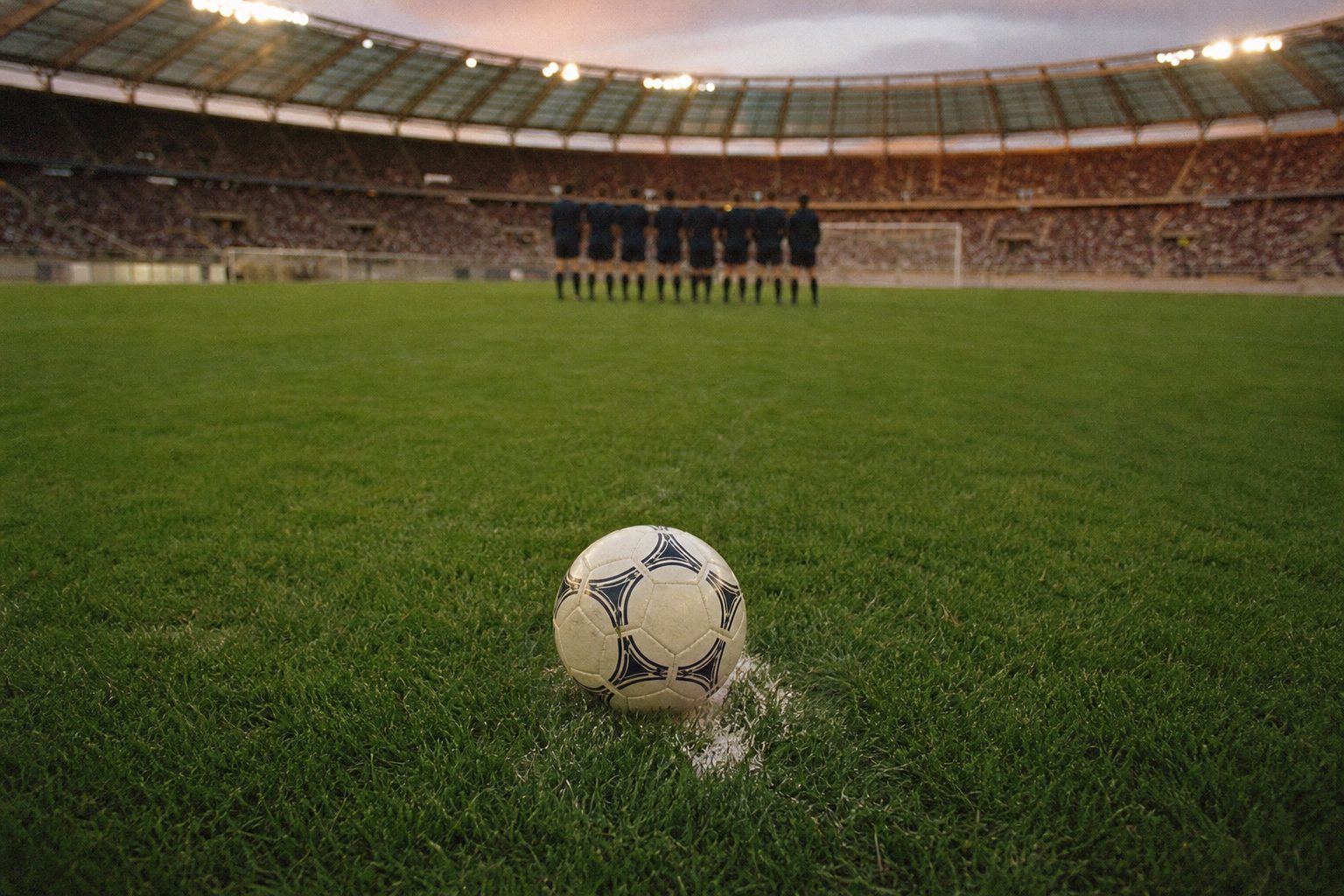
Every tribute comes back to one moment. On 3 June 1997, in the Tournoi de France, a warm-up tournament for the World Cup a year later, Brazil were awarded a free kick around 35 yards out against France. Roberto Carlos took a long run-up and hit the ball with the outside of his left foot.
It started so far wide of the wall that it looked to be heading for the crowd. Then it bent back, sharply and late, and went in off the inside of the post, with Fabien Barthez in the French goal left to watch. Physicists have written papers about it since.
There were other strikes almost as good. Against Tenerife in 1998 he chased a ball towards the byline and somehow bent it into the far corner from an angle where crossing was the only sensible option.
Brazil
For Brazil he was a constant for a decade. He won the Copa América in 1997 and 1999, the Confederations Cup in 1997, and reached the 1998 World Cup final, lost 3–0 to France in Paris. Four years later in Yokohama, Brazil beat Germany 2–0 to win the World Cup for a fifth time, with Roberto Carlos on the left of a side built around Ronaldo, Rivaldo and Ronaldinho.
His international career ended less happily. In the 2006 quarter-final against France, he was caught adjusting his sock as Thierry Henry volleyed the only goal. A guide to the Copa América giants Argentina and Brazil shows how quickly the side moved on after that generation.
The long goodbye
After Madrid came Fenerbahçe in Turkey, Corinthians back in Brazil and finally Anzhi Makhachkala in Russia, where he also briefly took charge as coach. He later managed in Turkey and India.
Players who look fearsome on the pitch are not always generous off it. The second clip suggests he was. A spectator runs on, reaches him, and asks for an autograph. Roberto Carlos signs it.
His career also makes him a natural answer in the World Cup finalist transfer history quiz, where Palmeiras, Inter, Real Madrid and Fenerbahçe would give the game away almost instantly. The Copa América sticker quiz is harder.
The thighs, the shaven head and the run-up are still the first things people mention. Then the ball in Lyon, still curling.