 ThreeMatchBan
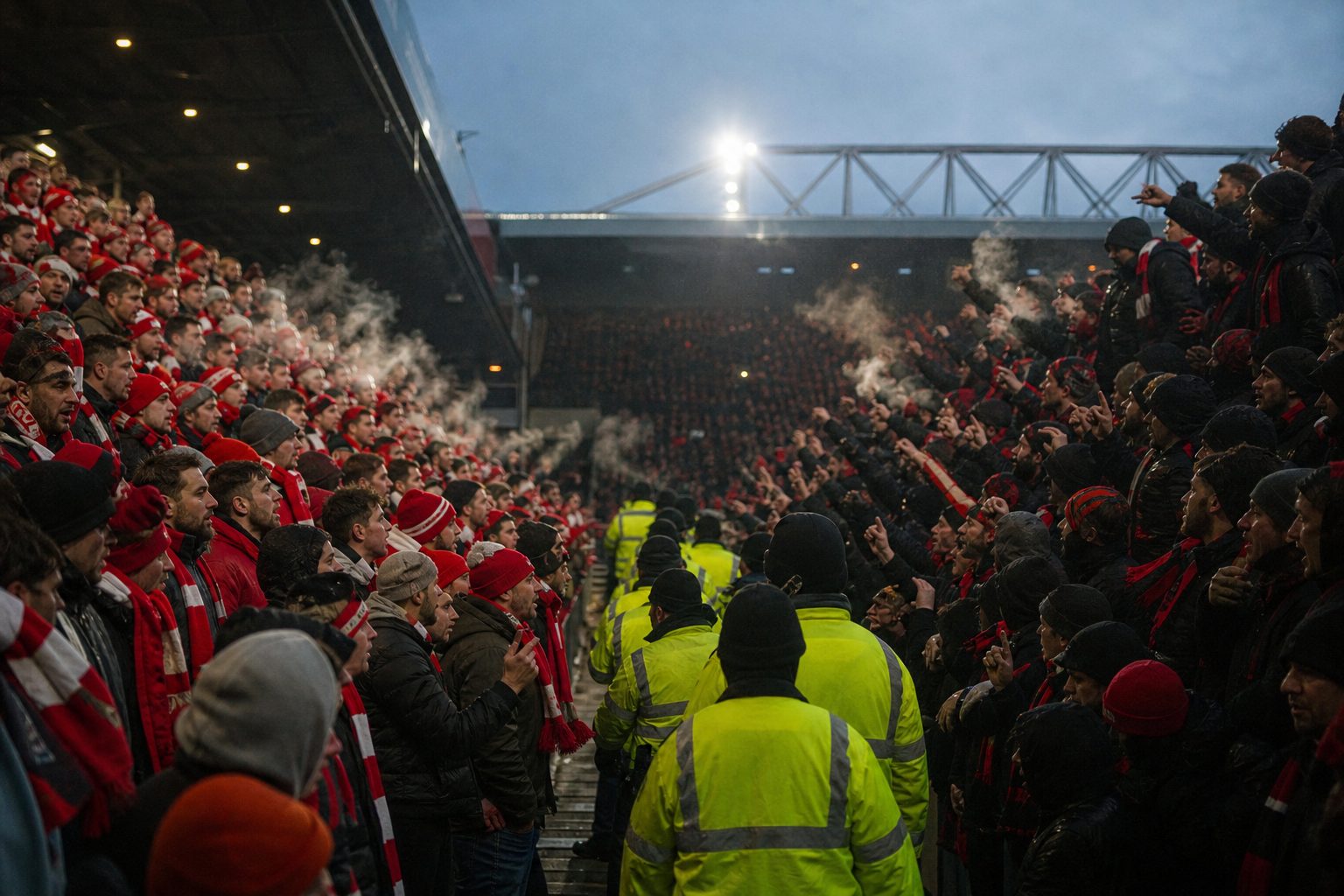
Liverpool against Manchester United has never needed help to turn nasty. In July 2012 Luis Suarez gave it some anyway. Talking about the hardest year of his career, the Uruguayan told a television show back home that “in England, Manchester United's political power is strong and you must respect that and shut your mouth.”
It was the kind of line that travels fast, and it landed on two sets of supporters who were still raw from the Patrice Evra case that had dominated the previous season.
The interview on RR.Gol
Suarez, then 25, was speaking to the Uruguayan programme RR.Gol. In December 2011 an FA commission had found him guilty of racially abusing Evra during the 1–1 draw at Anfield that October, and banned him for eight matches with a £40,000 fine. The return fixture at Old Trafford in February 2012 had made things worse, when Suarez refused to shake Evra's hand before kick-off.
Rather than let the matter fade over the summer, he went further. “People at Liverpool are sure that it was a way that Manchester United used to put me out of the team and stop Liverpool,” he said, before the line about political power.
That is an extraordinary thing for a club's leading forward to say on camera. It does not argue that the verdict was wrong on the evidence. It suggests the whole process was steered by a rival.
An old grievance given a new face
The idea that United get the rub of the green from the authorities is not new. Opposing fans have muttered it for decades, usually about added time at Old Trafford or penalties that were or were not given. Even Howard Webb was not spared: the referee of the 2010 World Cup final became the target of a mocking fan campaign that cast him as United's most reliable performer, and supporters of half the clubs in the country joined in.
The difference here was the messenger. A complaint on a terrace or a phone-in is background noise. The same complaint from the most talked-about player at Anfield, about the case that had cost him eight games, gave every argument between the two sets of fans a fresh and bitter angle.
For years the rivalry had run on what happened on the pitch: the title races of the late 1980s, Eric Cantona's winners, Gary Neville running the length of Old Trafford to celebrate in front of the away end. After the Evra case it carried something much uglier, and Suarez's words kept it alive.
Bringing the game into disrepute
There was an obvious risk for the player. Suggesting that a rival club controls the politics of the game, and that Sir Alex Ferguson's side could bend a disciplinary process, is close to the definition of bringing the game into disrepute. The FA had charged people for less.
The claim also sat awkwardly with the facts. United had been punished plenty in the months before the case. In April 2011 Wayne Rooney was banned for two matches after swearing into a television camera while celebrating his hat-trick at Upton Park, a suspension that kept him out of the FA Cup semi-final against Manchester City. A month earlier Alex Ferguson received a five-match touchline ban and a £30,000 fine for his comments about referee Martin Atkinson after a defeat at Chelsea.
Neither looks like the treatment of a club that runs the system.
Old Trafford in July, Anfield in September
The timing was poor in another way. Suarez had been picked in Uruguay's squad for the London Olympics, and their opening game against the United Arab Emirates on 26 July was at Old Trafford. He was booed through the evening by a crowd that had not forgotten February. Uruguay won 2–1, with Suarez among the scorers, but they went out at the group stage.
Then came the league. The first meeting of the 2012–13 season was set for Anfield on 23 September, and the build-up was always going to be tense. In the end the week before the game was dominated by something far more important: the Hillsborough Independent Panel report, published on 12 September, and both clubs made a point of a shared tribute before kick-off. United won 2–1, with Robin van Persie scoring the late penalty.
Suarez stayed two more seasons at Liverpool, scored 31 league goals in 2013–14 and nearly won the title before leaving for Barcelona. His time in England produced some of the most thrilling football the Premier League has seen. The interview with RR.Gol showed the other side, the player who could not let a grievance go, and supporters on both sides of the M62 treated it as one more reason to shout. You can read more on how Liverpool coped after his exit in a look at their 2014 summer business, or compare the Liverpool crest and the Manchester United badge through the decades of this feud.
For Spanish speakers, the full RR.Gol interview was on YouTube that summer, and the political-power line comes with a shrug that says plenty.