 ThreeMatchBan
By the autumn of 2013, football east of the Danube was earning an unwanted reputation. A season still in its early weeks had already produced ethnic tension spilling onto the terraces in four countries, poisoning relations that were fragile to begin with.
Lech Poznan were fined €5,000 for racially aggravated chanting during their Europa League tie with Zalgiris Vilnius in August, and Budapest Honved were sanctioned for similar offences in Vojvodina. Both cases fitted the familiar picture of nationalist thuggery, the kind of brazen abuse that UEFA's disciplinary panel tends to notice. But something more insidious linked them. In Poland and in Hungary, the chanting was aimed inwards at long-established minority communities, stirring up civil discord and unsettling diplomacy along old fault lines.
A once great football nation on its knees
Hungary had once ruled the football world with revolutionary flair. Ferenc Puskas and the Mighty Magyars of the early 1950s beat England 6–3 at Wembley in 1953 and reached the 1954 World Cup final. Sixty years later that seemed impossibly distant.
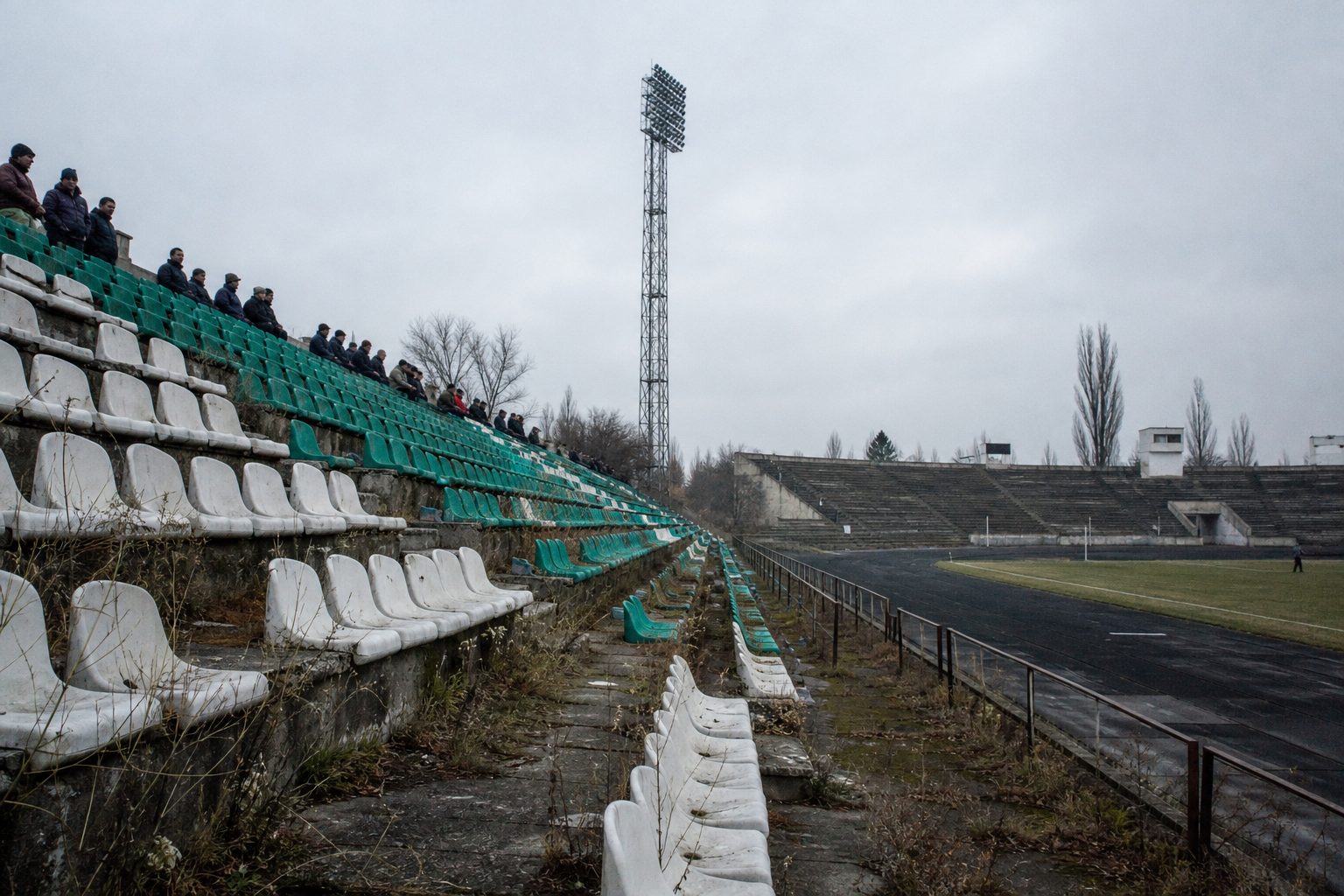
Two decades of chronic under-investment, from both business and the state, had left the domestic game in ruins: empty and crumbling stadiums, a shortage of talent at youth and senior level, and average league crowds of around 3,000. The number of people for whom football was still a priority had fallen sharply since the early 1990s.
The collapse had its roots in the slow death of communism. In the high communist era, the Budapest derby between Ferencvaros and Ujpest regularly drew 70,000. Afterwards the public sector could no longer pay for football and the new private sector would not, judging that a run-down domestic league had little chance of capturing the public imagination. Sponsors and broadcasters who might have joined the European football boom of the 1990s looked elsewhere.
Orban's stadium plan
That began to change after Viktor Orban's conservative government won a landslide in 2010. Orban, a devoted football fan and a supporter of Ferencvaros, made the revival of the game something close to a personal mission.
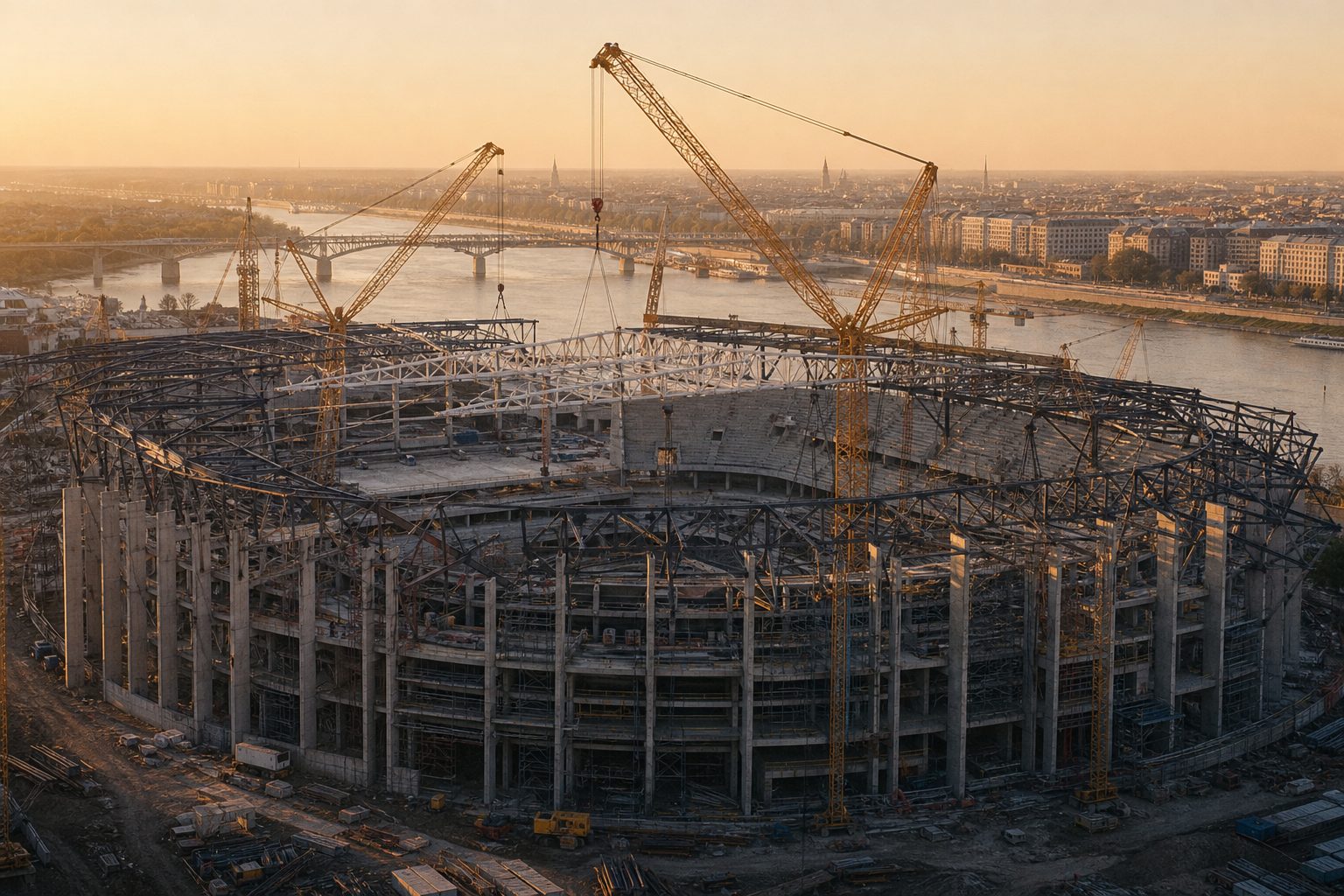
By 2013 work had started on a $57 million project to replace Ferencvaros's dilapidated Florian Albert Stadium in Budapest, with a new ground at Debrecen to follow and, eventually, a national stadium of around 65,000 seats. The government and the Hungarian football federation, the MLSZ, drew up a joint plan to lift average domestic attendances from 3,000 to 10,000 by 2018. Poor facilities had been identified as a key reason fans stayed away, and figures of that kind had not been discussed in Hungarian football for decades.
With an election due in 2014, Orban's party was betting that success on the pitch was what voters and businesses alike wanted to see.
The racism problem
If football was to become a vote-winner, the reputation of Hungarian grounds as hotbeds of racist abuse would have to be cleaned up. The national team had been ordered to play a World Cup qualifier against Romania in Budapest behind closed doors, a FIFA punishment for anti-Semitic chanting during a friendly against Israel. The return match in Bucharest in 2013 brought further trouble, with fans on both sides arrested on racially aggravated charges. Representatives of the Hungarian minority in Romania blamed the home fans for provoking the visitors, but anti-Romanian chanting and damage to the stadium caused by travelling Hungarians showed how far there was to go.
Orban said the right things. "The Hungarian government has asked from the MLSZ that racist or uncultured, primitive behaviour is not given a place in our stadia," he said during a visit by UEFA president Michel Platini. "These venues should become popular with Hungarian families for matches to which everyone can feel comfortable taking their children." At the time, though, there was little detail on how the federation, the government and UEFA would change a football culture so deeply touched by ethnic and political tension.
There was also a protest movement asking how the government could justify lavish spending on stadiums alongside a worsening budget deficit and one of the heaviest debt burdens in Europe. On that question Orban stayed largely silent, beyond a few remarks about protecting the health of young people. Further commentary on the politics of football in the region can be found on this blog and on Twitter.
What happened next
The concrete arrived on schedule. Ferencvaros moved into their new stadium in 2014, Debrecen opened a new ground the same year, and the Puskas Arena, built on the site of the old Nepstadion and holding around 67,000, opened in 2019. It later staged matches at Euro 2020 in front of full crowds, at a time when most of Europe was still playing to restricted attendances.
The national team did revive. Hungary missed the 2014 World Cup, but qualified for Euro 2016, their first major tournament since the 1986 World Cup, and won a group that included Portugal before losing to Belgium in the last sixteen. They went on to reach Euro 2020 and Euro 2024 as well.
The racism problem did not disappear with the new seats. UEFA continued to punish Hungary for discriminatory behaviour by supporters, including stadium closures, which suggests the cleaning-up job was harder than building a roof. A generation that had never seen a strong Hungary team now has, but the legend of Puskas is still the yardstick, and the new stadium carries his name.